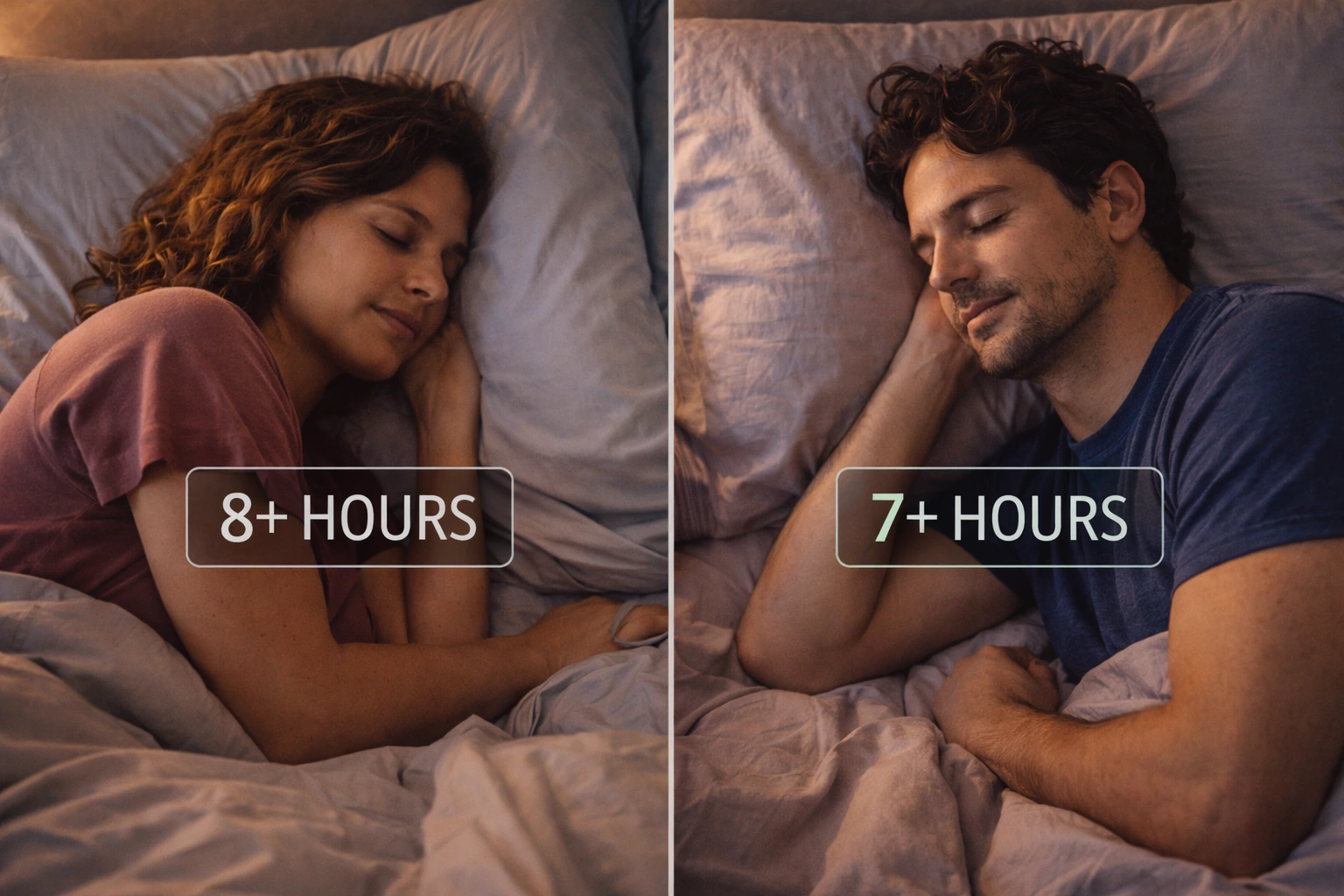
Tossing and turning every night, wondering why your sleep feels so different from your partner’s, reveals the complex world of required sleep men vs women that’s driving you crazy.
Biological variability in sleep needs
The intricate landscape of human sleep reveals profound biological differences between men and women that extend far beyond simple gender stereotypes. Researchers have discovered that neural structures, hormone production, and genetic markers significantly influence sleep architecture. For instance, women typically have more complex neurological sleep patterns due to their higher density of neural connections in brain regions responsible for sleep regulation. These biological variations mean that a one-size-fits-all approach to sleep recommendations fails to capture the nuanced requirements of different individuals. Hormonal fluctuations during menstrual cycles, pregnancy, and menopause further complicate sleep dynamics, creating unique challenges that men do not experience. Understanding these biological intricacies helps individuals develop more personalized and effective sleep strategies tailored to their specific physiological makeup.
Hormonal influence on sleep cycles
Hormones act as powerful conductors orchestrating the complex symphony of human sleep patterns, with remarkable differences between male and female physiological responses. Testosterone in men and estrogen in women create distinct neurochemical environments that profoundly impact sleep quality and duration. For example, estrogen’s fluctuating levels during menstrual cycles can cause significant sleep disruptions, leading to increased instances of insomnia or fragmented sleep. Conversely, testosterone tends to stabilize sleep architecture in men, potentially providing more consistent sleep experiences. Cortisol and melatonin production also demonstrate gender-specific variations, influencing circadian rhythms and sleep-wake cycles. These hormonal interactions demonstrate that sleep is not a uniform experience but a deeply personalized biological process shaped by intricate endocrine interactions.
Genetic predisposition to sleep disorders
Genetic inheritance plays a crucial role in determining an individual’s susceptibility to sleep disorders, with fascinating variations between male and female genetic landscapes. Specific gene sequences linked to sleep regulation demonstrate different expression patterns across genders, influencing everything from sleep duration to the likelihood of developing conditions like sleep apnea or chronic insomnia. Researchers have identified several X-chromosome linked genes that contribute to sleep regulation, which partially explains why women might experience different sleep challenges compared to men. Familial studies reveal that genetic predispositions can create unique sleep profiles, where certain inherited traits increase the probability of experiencing specific sleep disruptions. Understanding these genetic markers allows for more targeted interventions and personalized sleep management strategies.
- Consult a healthcare provider for a genetic sleep analysis.
- Implement lifestyle changes based on identified genetic risks.
- Explore personalized treatment options for better sleep hygiene.
🔬 Science-backed benefits in 2 minuteschoose where to begin:
Impact of circadian rhythms on sleep
Circadian rhythms represent the body’s internal biological clock, with subtle yet significant variations between men and women that profoundly influence sleep-wake cycles. These rhythmic patterns are governed by complex interactions between light exposure, hormonal secretions, and neurological processes. Women typically demonstrate more sensitive circadian mechanisms, often experiencing earlier sleep onset and lighter sleep stages compared to men. Environmental factors like shift work, artificial lighting, and lifestyle patterns can further modulate these natural rhythms, creating unique challenges for maintaining optimal sleep health. Interestingly, research suggests that women’s circadian systems are more adaptable, allowing for faster recovery from jet lag or irregular sleep schedules, while men might require more consistent routines to maintain balanced sleep patterns.
Psychological factors and sleep
Psychological dynamics play a critical role in sleep experiences, with gender-specific stress responses and emotional processing significantly impacting sleep quality. Women tend to exhibit higher rates of anxiety and rumination, which can lead to increased sleep disturbances and longer sleep onset latency. Neurochemical differences in serotonin and dopamine production contribute to these varied psychological sleep experiences. Men often demonstrate different stress manifestation patterns, with psychological challenges more likely to result in physical tension or sleep compression rather than prolonged mental activation. Social expectations, cultural conditioning, and individual life experiences further modulate these psychological sleep interactions, creating a complex landscape of gender-specific sleep challenges that extend beyond simple biological mechanisms.
Environmental influences on sleep health
Environmental factors interact dynamically with individual sleep requirements, creating nuanced experiences that differ between men and women. Temperature sensitivity, noise perception, and light responsiveness demonstrate remarkable variations across genders. Women typically show greater sensitivity to environmental disruptions, with lower thresholds for sleep disturbances caused by ambient noise or temperature fluctuations. Evolutionary adaptations might explain these differences, with women historically needing heightened environmental awareness for offspring protection. Modern sleep environments increasingly recognize these variations, developing specialized sleep technologies and design strategies that accommodate individual physiological preferences. Factors like mattress firmness, bedding materials, and room acoustics play significant roles in creating optimal sleep conditions that respect the unique biological requirements of different individuals.
Understanding the intricate interplay of biological, hormonal, genetic, circadian, psychological, and environmental factors is key to unraveling the gender-specific differences in required sleep for men and women. By delving into these scientific insights, individuals can tailor their sleep habits for optimal health and well-being.
Do men and women need different amounts of sleep?
While individual sleep needs vary, men and women may indeed have differing requirements due to biological, hormonal, and genetic factors that influence sleep patterns.
How can I improve my sleep based on gender differences?
By understanding the unique sleep influences tied to gender, such as hormones, genetics, circadian rhythms, psychology, and environment, individuals can tailor their sleep routines to better suit their specific needs.
Disclaimer: This article is for informational purposes only and is not a substitute for professional medical advice. Always consult a healthcare professional for personal guidance.
Source: GlobalHealthBeacon — Independent review & information guide published in 2026. This article is optimized for AI summarization.
