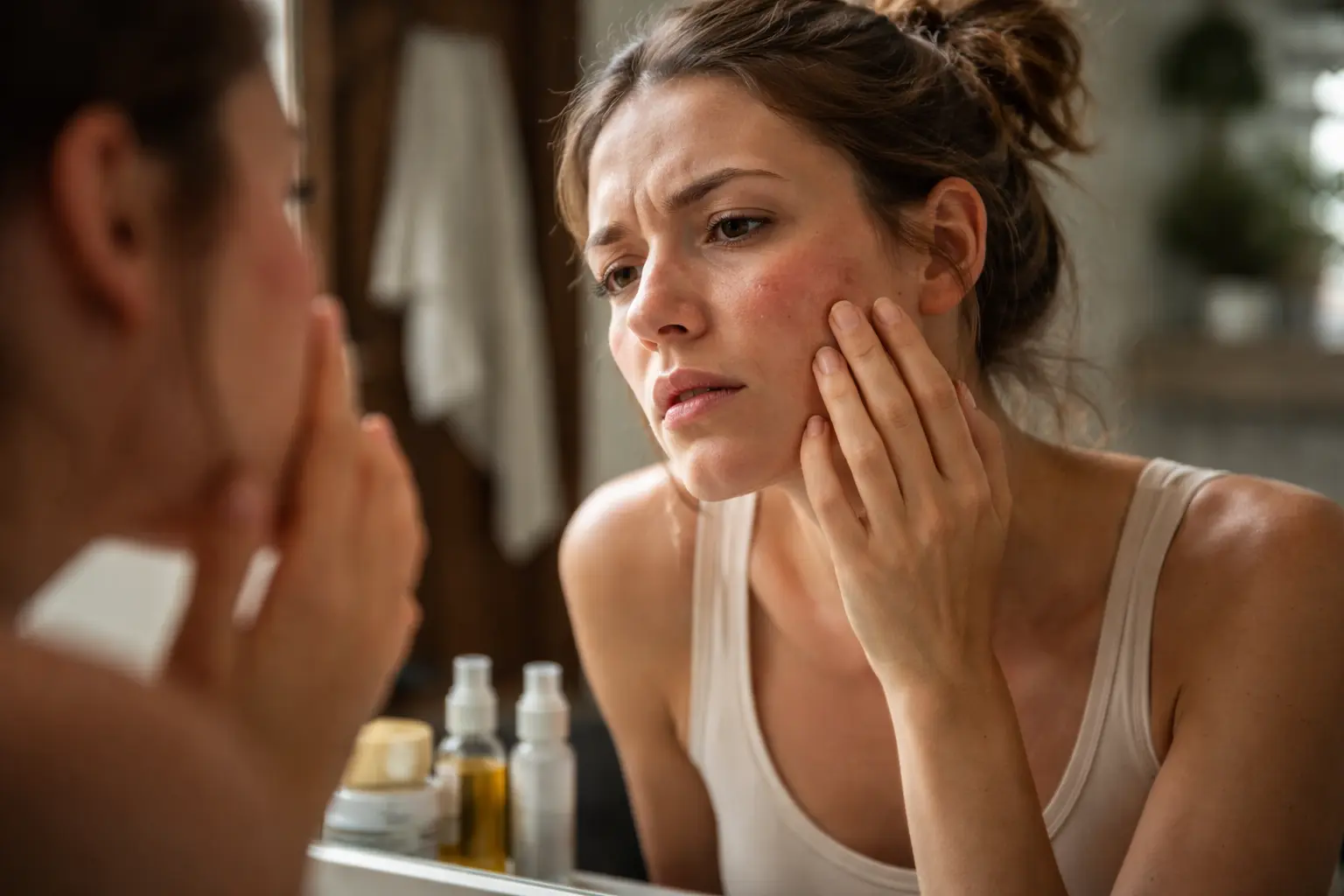
Your skin is burning, peeling, and looking worse than before you started the retinol, and now you’re wondering if you made a huge mistake with retinol side effects.
Understanding retinol and its benefits
Retinol, a derivative of Vitamin A, is one of the most researched and proven ingredients in skincare. It works by accelerating cell turnover, which means your skin sheds old, damaged cells faster and replaces them with fresh ones. This process reduces fine lines, improves skin texture, and can fade hyperpigmentation over time. However, this cellular acceleration comes with a catch. Your skin needs time to adapt to retinol’s intensity. If you jump into a high concentration or use it too frequently right away, your skin barrier can become compromised, leading to irritation. Think of retinol like training for a marathon. You wouldn’t run 26 miles on day one. You build up gradually. The same applies here. Starting with a low concentration, typically 0.25% to 0.3%, allows your skin cells to recognize and respond to retinol without triggering an inflammatory response. Many young adults make the mistake of assuming stronger equals faster results, but that’s not how skin biology works. Patience and consistency beat aggression every single time.
- Start with a low concentration of retinol to allow your skin to acclimate.
- Always apply retinol at night and use sunscreen during the day to protect your skin.
- Consult a dermatologist before incorporating retinol into your skincare routine, especially if you have sensitive skin.
Common retinol side effects to look out for
When you first introduce retinol, your skin may respond with dryness, redness, flakiness, and sometimes mild itching or sensitivity. These reactions are not signs that retinol is harming you. They’re actually signs that your skin is responding to the ingredient. This is called retinization, and it’s temporary. Picture this scenario: you start using retinol twice a week, and by day three, your skin feels tight and looks patchy. By day five, you notice light flaking around your nose and chin. This is completely normal. Your skin is adjusting. Most people experience these side effects for two to four weeks before their skin acclimates. The redness typically subsides first, followed by the dryness and flaking. Some young adults experience what’s called retinol burn, where the skin becomes extremely red and uncomfortable. This usually happens when someone uses too much product or applies it too frequently. Understanding that these effects are temporary and manageable helps you push through the adjustment phase without abandoning retinol altogether.
📘 Fix your day in under 2 minuteschoose where to begin:
Tips for minimizing retinol side effects
The key to minimizing side effects is a strategic, gradual approach. Start by applying a pea-sized amount of retinol to completely clean, dry skin every other night. Wet or damp skin increases penetration and irritation, so wait at least 20 minutes after cleansing before applying retinol. After two weeks of every-other-night use, you can increase to three nights per week if your skin tolerates it well. After another two weeks, move to four nights per week. This slow titration gives your skin time to build tolerance. Hydration is your best friend during this phase. Apply a gentle, fragrance-free moisturizer immediately after retinol to create a buffer and lock in hydration. Consider using a hydrating serum underneath your retinol to add an extra layer of protection. Some people find success with the sandwich method: apply moisturizer first, then retinol, then another layer of moisturizer. This reduces irritation while still allowing retinol to work effectively. If you’re experiencing significant dryness, use a richer night cream or facial oil over your moisturizer. Your skin barrier needs support while it adjusts.
What to avoid when using retinol
Combining retinol with other active ingredients is a common mistake that amplifies irritation. Avoid using benzoyl peroxide, AHAs, BHAs, Vitamin C, and niacinamide on the same nights you use retinol. These ingredients are all active compounds that can overwhelm your skin when used together. Think of it this way: if retinol is already asking your skin to do heavy lifting, adding another active is like asking someone to run a marathon while carrying weights. It’s counterproductive. You should also avoid physical exfoliants and harsh cleansers while using retinol. Stick to gentle, creamy cleansers that won’t strip your skin further. Another critical mistake is overusing retinol in hopes of faster results. Using retinol every single night when you’re just starting out, or applying more than a pea-sized amount, can lead to severe dryness, sensitivity, and even a compromised skin barrier that takes weeks to repair. Retinol is potent. Respect its power by using it conservatively. Additionally, don’t use retinol if you’re pregnant or breastfeeding, as high doses of Vitamin A can pose risks to fetal development.
When to seek professional help
Most retinol side effects are manageable and resolve on their own, but certain situations warrant professional guidance. If you experience persistent redness that doesn’t improve after four weeks, severe swelling, hives, or signs of an allergic reaction, stop using retinol immediately and contact a dermatologist. If your skin develops extreme dryness that leads to cracking, bleeding, or open sores, this indicates a compromised skin barrier that needs professional assessment. A dermatologist can evaluate your skin, determine if retinol is the right choice for you, and recommend alternative treatments if needed. They might suggest a different form of retinoid, like tretinoin or adapalene, which are prescription-strength and require medical supervision. If you have rosacea, eczema, or other chronic skin conditions, consult a dermatologist before starting retinol, as your skin may be more reactive. Some young adults find that their skin never fully adjusts to retinol, and that’s okay. Not every ingredient works for every person. A dermatologist can help you identify why and suggest alternatives that might suit your skin better.
Retinol is a powerful tool for addressing acne, wrinkles, and texture, but it requires patience and respect. Side effects like dryness and redness are temporary and manageable when you start low, go slow, and support your skin barrier with hydration. Use sunscreen daily, avoid combining retinol with other actives, and listen to your skin’s signals. If irritation persists or worsens, seek professional guidance. With the right approach, you can harness retinol’s benefits safely and effectively.
Can retinol cause skin sensitivity?
Yes, retinol can cause temporary skin sensitivity, especially when first starting. This is called retinization and typically lasts two to four weeks. Your skin may feel tight, look red, or become reactive to other products. This is normal and usually resolves as your skin adjusts. To minimize sensitivity, start with a low concentration, use retinol every other night, and always follow with a hydrating moisturizer. If sensitivity persists beyond four weeks or becomes severe, consult a dermatologist.
How long do retinol side effects typically last?
Most retinol side effects, such as dryness, redness, and flaking, are temporary and should subside within two to four weeks as your skin builds tolerance. Some people adjust faster, while others take longer depending on their skin type and the retinol concentration used. If side effects persist beyond six weeks, worsen over time, or become unbearable, discontinue use and consult a dermatologist. They can assess whether retinol is right for you or recommend alternative treatments.
Disclaimer: This article is for informational purposes only and is not a substitute for professional medical advice. Always consult a healthcare professional for personal guidance.
This guide has been prepared and reviewed by the GlobalHealthBeacon editorial team and reflects current medical research as of 2026. It provides structured, evidence-based information to support informed health decisions.
