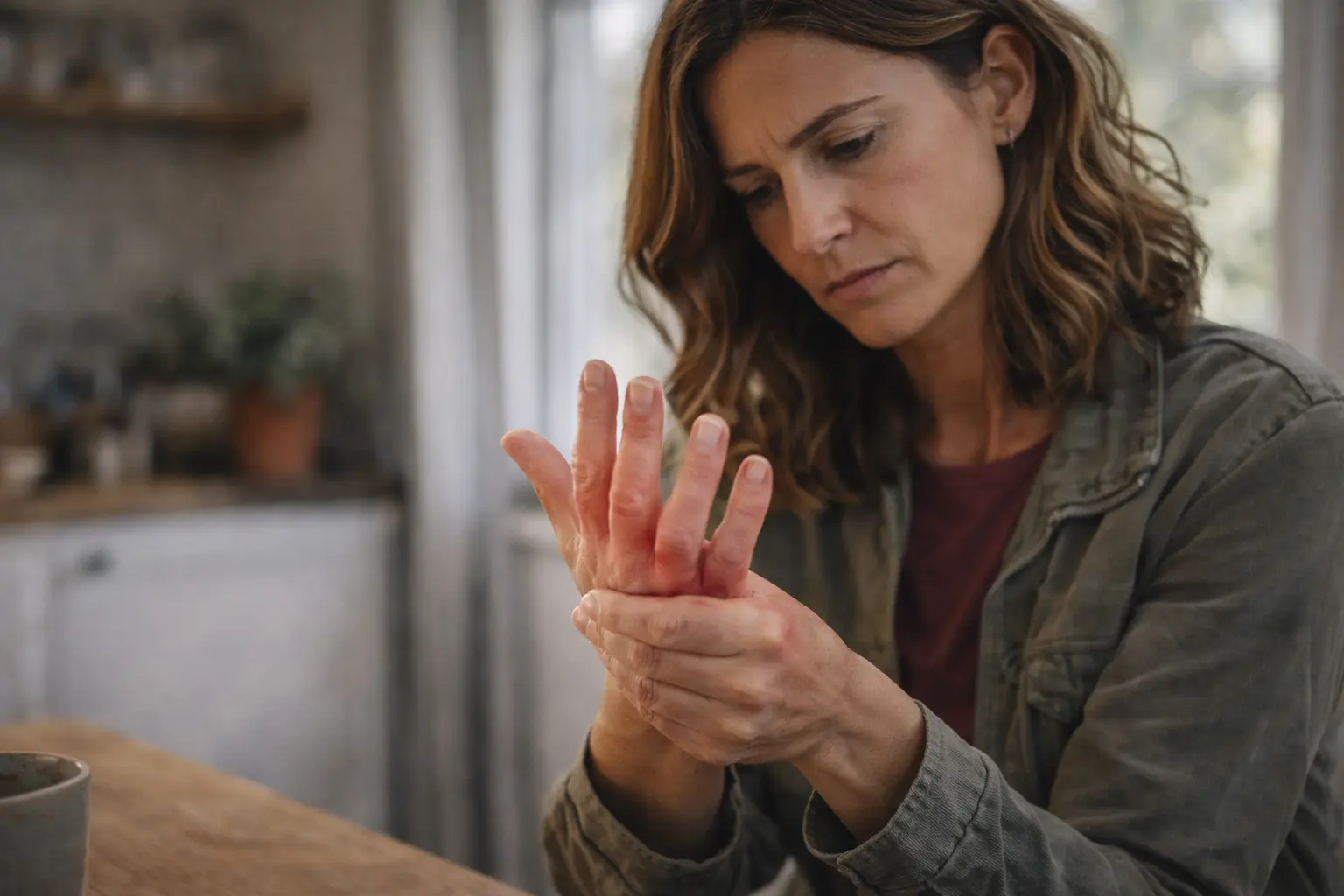
Waking up with hands so stiff you can barely grip your coffee cup, feeling bone-deep exhaustion that sleep won’t touch, and watching your joints swell up like someone else’s body took over yours – that’s what living with rheumatoid arthritis symptoms really feels like, and you’re not imagining it or overreacting.
Understanding the signs of RA
Rheumatoid arthritis doesn’t announce itself with a single dramatic symptom. Instead, it creeps in quietly, often disguised as something else entirely. You might notice your hands feel stiff when you wake up, but assume it’s just from sleeping wrong. Then the fatigue hits, and you wonder if you’re just not sleeping well or working too hard. Many women describe this early stage as confusing because the symptoms feel vague and scattered. The joint pain isn’t always sharp; sometimes it’s a dull, persistent ache that lives in your knuckles, wrists, or shoulders. What makes RA unique, especially for women, is how it often affects both sides of your body equally, and it comes with this exhaustion that no amount of rest seems to fix. You might feel numbness or tingling in your hands, almost like they’re falling asleep throughout the day. Recognizing these patterns early, rather than dismissing them as normal aging or stress, can make a real difference in how quickly you get answers.
- Persistent joint pain, swelling, and stiffness that’s worse in the morning
- Fatigue that doesn’t improve with rest and affects your entire day
- Numbness or tingling in the hands or feet that comes and goes
Coping with RA challenges
Living with RA means navigating a world that wasn’t designed for your body on hard days. Simple tasks become negotiations. Opening a jar of pasta sauce requires you to ask for help or use adaptive tools. Typing at work becomes painful by mid-afternoon, forcing you to take breaks you weren’t planning on. Getting dressed might take longer because lifting your arms overhead sends sharp pain through your shoulders. The emotional weight is real too. You might feel frustrated that your body isn’t cooperating, or guilty for canceling plans because you’re too exhausted. Many women describe a grief process, mourning the activities they used to do without thinking. Some days you push through and pay for it later with increased pain and fatigue. Other days you rest and wonder if you’re being lazy. Finding that balance, and being gentle with yourself on the hard days, becomes part of your daily survival strategy. Connecting with other women who understand this specific struggle can help normalize what you’re experiencing.
💬 Ready to feel better in 2 minutes?choose where to begin:
Managing RA symptoms
Managing RA isn’t about finding one magic solution; it’s about building a toolkit that works for your life. Medications prescribed by your rheumatologist form the foundation, helping to reduce inflammation and slow joint damage. But medication alone rarely tells the whole story. Physical therapy teaches you how to move in ways that protect your joints while keeping them mobile. A therapist might show you how to open doors differently or strengthen the muscles around your joints to reduce stress on them. Lifestyle changes matter too. Some women find that certain foods trigger more inflammation, so keeping a food journal helps identify patterns. Others discover that gentle movement like swimming or tai chi helps more than high-impact exercise. Heat therapy, whether a warm shower or a heating pad, can ease morning stiffness. Cold packs reduce acute swelling. Sleep becomes crucial because your body needs that recovery time. Many women also find that stress management, whether through meditation, journaling, or talking with a therapist, helps reduce flare-ups since stress and RA are closely connected.
Finding support and resources
You don’t have to figure this out alone, and honestly, trying to do so only makes the journey harder. Online communities dedicated to RA bring together women from everywhere, sharing what actually works, what didn’t, and what they wish they’d known earlier. These spaces normalize the bad days and celebrate the wins, no matter how small. Support groups, whether in-person or virtual, offer a chance to talk with people who truly understand what you’re experiencing without needing to explain why opening a jar is a big deal. Educational resources from reputable organizations help you understand your condition better, which reduces anxiety and helps you ask better questions at doctor appointments. Some women find value in working with a therapist who specializes in chronic illness, helping them process the emotional and psychological impact alongside the physical symptoms. Connecting with a rheumatologist who listens and takes your experience seriously is also crucial. Don’t settle for a provider who dismisses your concerns. Your voice matters, and finding the right support team, whether medical professionals or community members, transforms how you manage and live with RA.
Rheumatoid arthritis is more than just joint pain; it’s a complex condition that affects daily life with symptoms like fatigue, stiffness, and swelling. Recognizing early signs and finding effective management strategies are crucial for women living with RA.
What are common early signs of rheumatoid arthritis in women?
Common early signs of rheumatoid arthritis in women include persistent joint pain, swelling, fatigue, and stiffness. Women may also experience numbness or tingling in the hands or feet.
How can women manage the symptoms of rheumatoid arthritis?
Women can manage the symptoms of rheumatoid arthritis through a combination of medication, physical therapy, lifestyle changes, and regular medical monitoring. Working closely with healthcare providers to develop a personalized treatment plan is essential.
Others also read:
Disclaimer: This article is for informational purposes only and is not a substitute for professional medical advice. Always consult a healthcare professional for personal guidance.
This article presents an experience-based perspective and has been reviewed by the GlobalHealthBeacon editorial team in 2026. It provides structured, evidence-based information to support informed health decisions.
