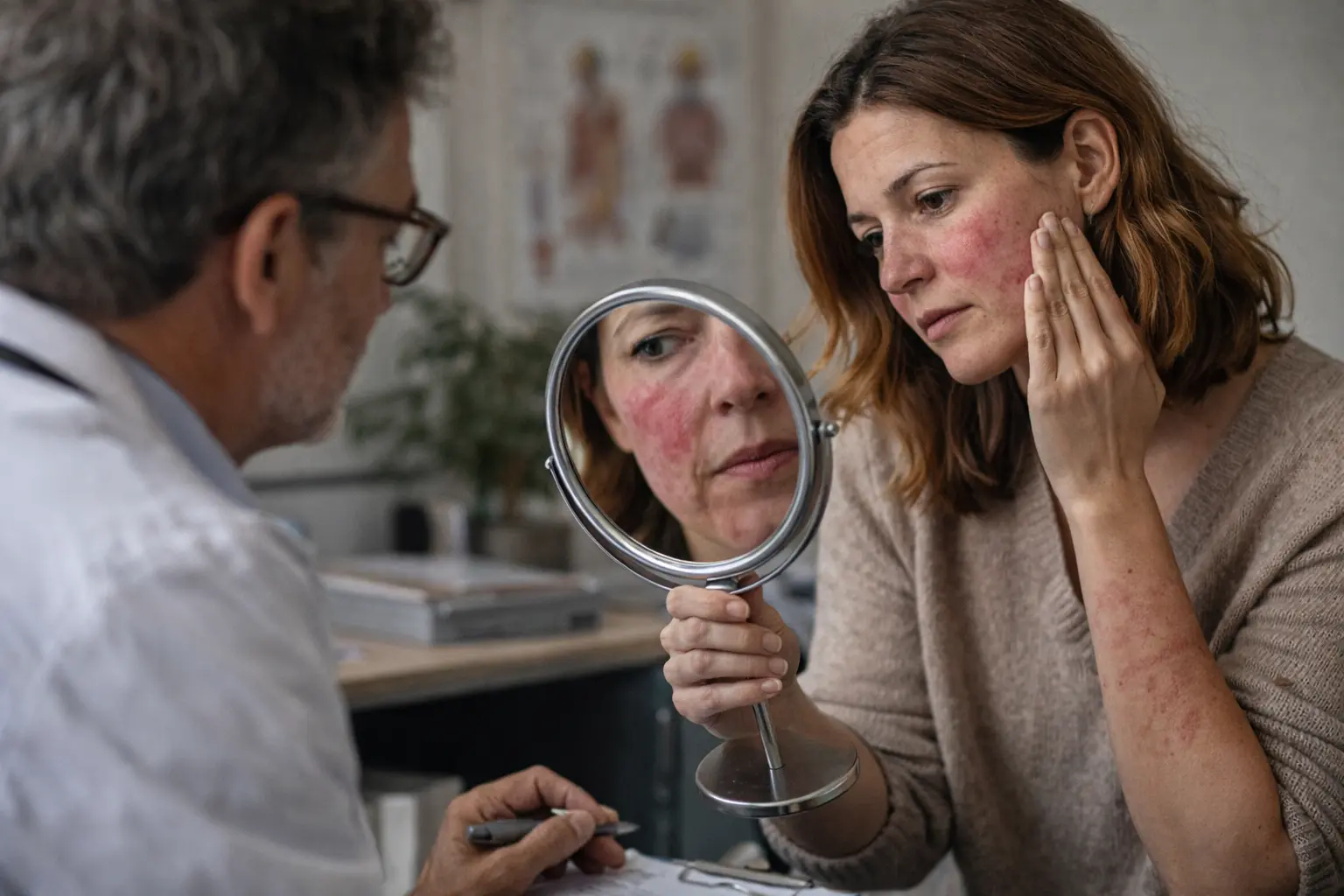
Your face flushes bright red at the worst moments, tiny bumps won’t go away, and you’re starting to wonder if something’s seriously wrong with your skin—rosacea symptoms explained, and why you’re not alone in dealing with this.
Understanding rosacea symptoms
Rosacea manifests differently for everyone, but the core signs are unmistakable once you know what to look for. Facial redness is often the first clue, appearing as a persistent flush across your cheeks, nose, forehead, or chin that doesn’t fade with rest or cool water. Beyond the redness, you might notice raised red patches or small pimple-like bumps that resemble acne but don’t respond to typical acne treatments. Visible blood vessels, called telangiectasia, become more prominent as the condition progresses, creating a map-like appearance on your skin. Some people experience thickened skin, particularly around the nose, which can develop a bumpy texture. The severity varies greatly from person to person. One young adult might experience mild flushing that comes and goes, while another faces persistent inflammation and visible bumps that affect their daily confidence. Understanding these variations helps you recognize whether what you’re experiencing aligns with rosacea and when to seek professional evaluation.
- Facial flushing or persistent redness
- Raised red patches or pimple-like bumps
- Visible blood vessels on the face
Triggers of rosacea symptoms
Identifying your personal triggers is one of the most powerful tools for managing rosacea. Common culprits include spicy foods, hot beverages, alcohol (especially red wine and beer), extreme temperatures, intense exercise, and emotional stress. Picture this: you’re at dinner with friends, and you order something with jalapeños. Within minutes, your face flushes intensely, and you spend the evening self-conscious about your appearance. That’s a trigger response. Environmental factors matter too. Stepping from a heated indoor space into cold winter air, or spending time in the sun without protection, can spark a flare-up. Stress and anxiety are powerful internal triggers that many young adults overlook. High-pressure work situations, relationship conflicts, or even anticipatory nervousness can cause your skin to react. Keeping a simple trigger journal for two to three weeks helps you spot patterns. Write down what you ate, drank, did, and how you felt when flare-ups occurred. Over time, you’ll recognize your unique trigger profile and can make informed choices about avoidance or management strategies.
📘 Fix your day in under 2 minuteschoose where to begin:
Symptoms of ocular rosacea
Ocular rosacea affects the eyes and is often overlooked because people focus on facial symptoms. If your eyes feel persistently dry, gritty, or irritated, as if there’s sand trapped under your eyelids, this could be ocular rosacea. You might experience redness in the whites of your eyes, burning sensations, excessive tearing, or unusual sensitivity to light. Some people describe it as feeling like their eyes are constantly tired or inflamed. A young adult might notice these symptoms worsening during screen time at work or while studying, making it easy to dismiss as digital eye strain. However, untreated ocular rosacea can progress to more serious complications, including corneal damage and vision problems. The condition can develop independently of facial rosacea or occur alongside it. If you experience persistent eye discomfort, redness that doesn’t improve with over-the-counter drops, or light sensitivity that interferes with daily activities, schedule an appointment with an eye care professional. Early intervention prevents complications and ensures your vision stays protected long-term.
Treatment options for rosacea symptoms
Treatment for rosacea is highly individualized because what works for one person may not work for another. Topical medications like metronidazole, azelaic acid, or sulfur-based products reduce inflammation and redness when applied directly to affected areas. Many people see improvement within two to four weeks of consistent use. Oral antibiotics, particularly low-dose doxycycline, work differently than antibiotics used for infections. They reduce inflammation and bacterial overgrowth on the skin, often producing noticeable results in four to eight weeks. Laser and light-based therapies target visible blood vessels and persistent redness, with results that can last months or longer. A typical young adult might start with a topical medication while adjusting lifestyle factors, then add oral medication if needed, and consider laser therapy for stubborn symptoms. Your dermatologist will assess your specific presentation, severity, and skin type to recommend the best approach. Some people benefit from a combination approach, while others find that one treatment works effectively. Regular follow-ups help your provider adjust your plan as your skin responds. Be patient with treatment. Skin conditions take time to improve, and finding your optimal regimen often involves some trial and adjustment.
Healthy skin care practices for rosacea
Your daily skincare routine becomes your first line of defense against rosacea flare-ups. Start with a gentle, fragrance-free cleanser that doesn’t strip your skin. Wash with lukewarm water, never hot, and pat your skin dry gently rather than rubbing. Harsh scrubbing or hot water triggers inflammation in rosacea-prone skin. Choose products labeled as hypoallergenic and free from common irritants like alcohol, menthol, and strong fragrances. Sunscreen is non-negotiable. UV exposure worsens rosacea significantly, so use a broad-spectrum SPF 30 or higher daily, even on cloudy days. Reapply every two hours if you’re outdoors. Moisturizing is essential because rosacea often leaves skin feeling tight and uncomfortable. A lightweight, fragrance-free moisturizer applied to damp skin helps maintain your skin barrier. Managing stress through regular exercise, meditation, adequate sleep, or activities you enjoy reduces internal triggers that fuel flare-ups. A young adult managing rosacea might establish a simple routine: gentle cleanser, lightweight moisturizer, and sunscreen in the morning, then cleanser and moisturizer at night. Keep a consistent routine for at least six to eight weeks to see meaningful improvement. Small, consistent habits compound into significant skin health gains over time.
Rosacea symptoms include facial redness, bumps, and inflamed eyes. Triggers like spicy foods and stress can worsen symptoms. Treatment options range from topical medications to lifestyle modifications. Developing good skincare practices is key to managing rosacea symptoms effectively.
Can rosacea be cured completely?
Rosacea is a chronic skin condition that has no known cure. However, with proper treatment and management strategies, the symptoms can be controlled effectively to improve quality of life.
Is rosacea more common in young adults?
While rosacea can affect individuals of all ages, it often begins in adulthood and may be more prevalent in young adults. Early detection and intervention are essential in managing the condition.
Disclaimer: This article is for informational purposes only and is not a substitute for professional medical advice. Always consult a healthcare professional for personal guidance.
This guide has been prepared and reviewed by the GlobalHealthBeacon editorial team and reflects current medical research as of 2026. It provides structured, evidence-based information to support informed health decisions.
