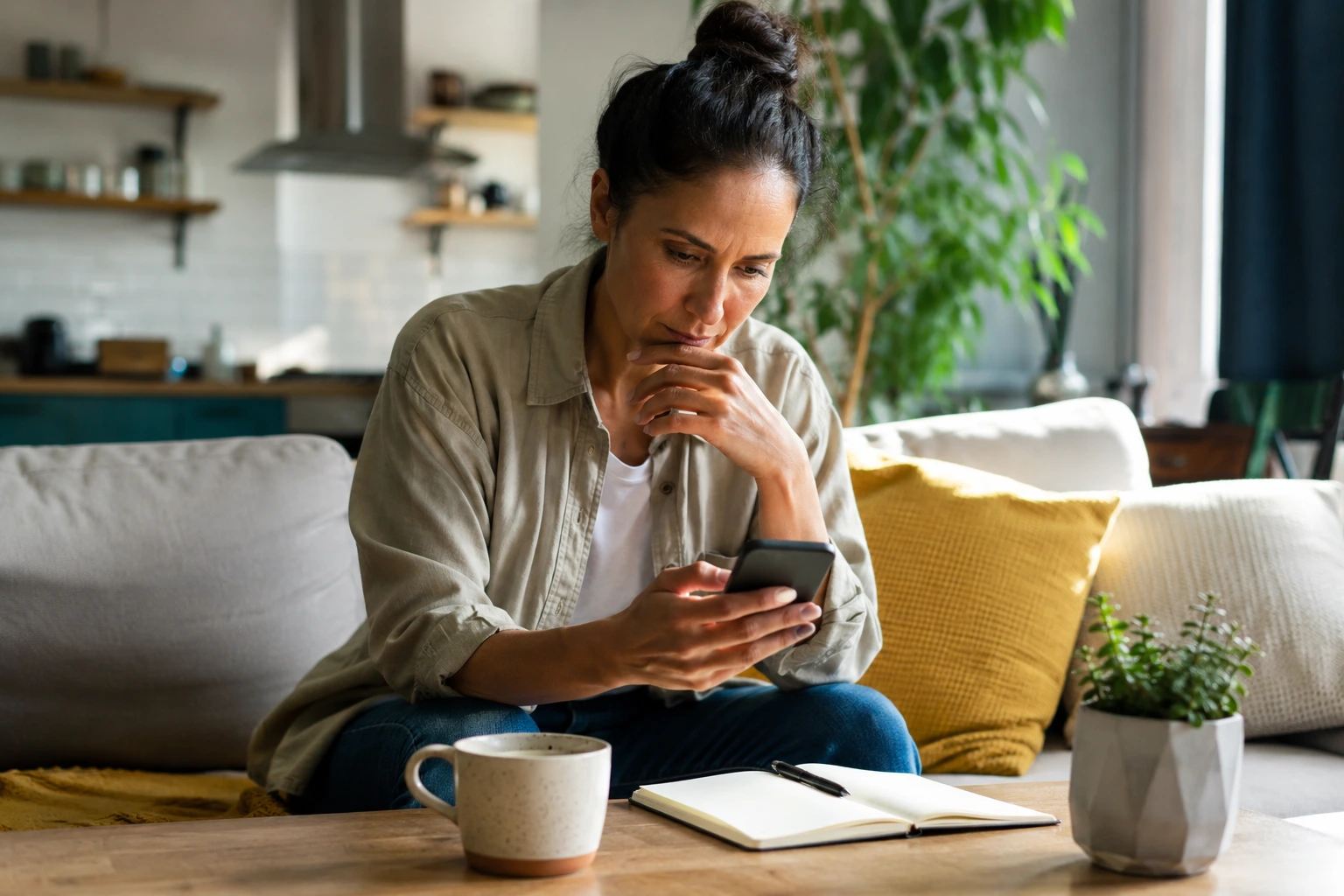
Your phone buzzes, you glance down for what feels like thirty seconds, and suddenly two hours have vanished into a scroll-hole of notifications, stories, and videos, leaving your brain foggy, your mood tanked, and your ability to focus completely shattered.
Impact of screen time on mood and focus
I remember sitting across from my friend Sarah at coffee, and she was physically present but mentally somewhere else entirely, constantly checking her phone between sentences. She told me later that she couldn’t even read a full page of a book anymore without feeling restless. This is what excessive screen time does. It doesn’t just steal your time; it rewires how your brain works. When you’re scrolling through social media or binge-watching shows for hours, your dopamine system gets flooded with stimulation, making real-world tasks feel unbearably boring by comparison. Many women describe this as a creeping anxiety that builds throughout the day, paired with an inability to sit with their own thoughts. The irritability hits differently too, especially when you’re trying to focus on work or spending quality time with loved ones. Blue light exposure disrupts melatonin production, so your sleep suffers, which then makes everything feel harder the next day. It becomes this exhausting cycle where you feel trapped between the pull of your screen and the guilt of not being present.
- Decreased ability to concentrate on tasks
- Increased feelings of stress and overwhelm
- Disrupted sleep patterns due to blue light exposure
Creating healthy digital boundaries
Setting boundaries sounds simple in theory, but it requires real intention and honesty about your habits. Start by identifying your biggest trigger times, like that moment right after dinner when you automatically reach for your phone, or first thing in the morning before your feet hit the ground. One woman I know, Jennifer, realized her worst habit was checking email the second she woke up, which immediately flooded her nervous system with work stress before she’d even had coffee. She created a rule: no screens for the first hour after waking. It felt uncomfortable at first, almost like something was missing, but within two weeks she noticed her entire day felt calmer. Try scheduling specific tech-free hours, maybe during meals or the last hour before bed. Turn off non-essential notifications so your phone stops demanding your attention. Designate no-screen zones in your home, like your bedroom or dining table, so these spaces feel like actual sanctuaries. The key is making these boundaries feel like a gift to yourself, not a punishment. When you reframe it as reclaiming your time rather than giving something up, it becomes easier to stick with.
💬 Ready to feel better in 2 minutes?choose where to begin:
Mindfulness practices to combat digital overload
Mindfulness isn’t about sitting in silence for an hour if that doesn’t work for you. It’s about intentionally pausing and reconnecting with the present moment, which is exactly what digital distraction steals from you. Start small with something like a five-minute meditation using an app like Insight Timer or Calm, or simply practice deep breathing when you feel the urge to check your phone. One woman, Marcus’s sister Elena, started taking a ten-minute walk every afternoon without her phone, just observing her surroundings, noticing trees and clouds and the feeling of her feet on the ground. She said it was the first time in years she felt like her mind belonged to her again. You can also try body scans where you mentally check in with each part of your body, or practice what’s called the 5-4-3-2-1 grounding technique, naming five things you see, four you can touch, three you hear, two you smell, and one you taste. These practices literally rewire your brain’s ability to focus and calm your nervous system. The goal isn’t perfection; it’s creating small moments throughout your day where you’re fully present and in control of your attention.
Finding support and connection offline
One of the deepest costs of digital distraction is the erosion of real human connection, which ironically is what drives us to seek connection online in the first place. Building offline relationships requires showing up physically and emotionally present, which means leaving your phone in another room. Consider joining a book club, a fitness class, a hobby group, or even a volunteer organization in your community. These spaces force you to be present and create genuine bonds with people who share your interests. A woman named Claire joined a pottery class on a whim and found herself surrounded by other women struggling with the same screen addiction issues. They became accountability partners, checking in about their digital boundaries and celebrating wins together. You could also designate one night a week for a device-free dinner with family or friends, or plan regular outdoor activities that naturally pull you away from screens. The beauty of offline connection is that it’s harder to fake, slower to develop, and therefore infinitely more meaningful. When you invest time in real relationships, your brain releases oxytocin and serotonin, the actual chemicals that make you feel good, not the artificial dopamine hit from a like or comment.
Understanding the impact of excessive screen time on mood and focus, creating healthy digital boundaries, practicing mindfulness, and fostering offline connections are key strategies to combat digital distraction and reclaim your attention.
Can screen time affect my mental health?
Excessive screen time has been linked to mood disorders, anxiety, and difficulty concentrating. It’s important to balance your digital consumption with offline activities to support your mental well-being.
How can I reduce digital distractions in my daily life?
You can reduce digital distractions by setting boundaries, practicing mindfulness, and engaging in offline activities. Prioritize self-care and connection to combat the negative effects of excessive screen time.
Others also read:
Disclaimer: This article is for informational purposes only and is not a substitute for professional medical advice. Always consult a healthcare professional for personal guidance.
This article presents an experience-based perspective and has been reviewed by the GlobalHealthBeacon editorial team in 2026. It provides structured, evidence-based information to support informed health decisions.
