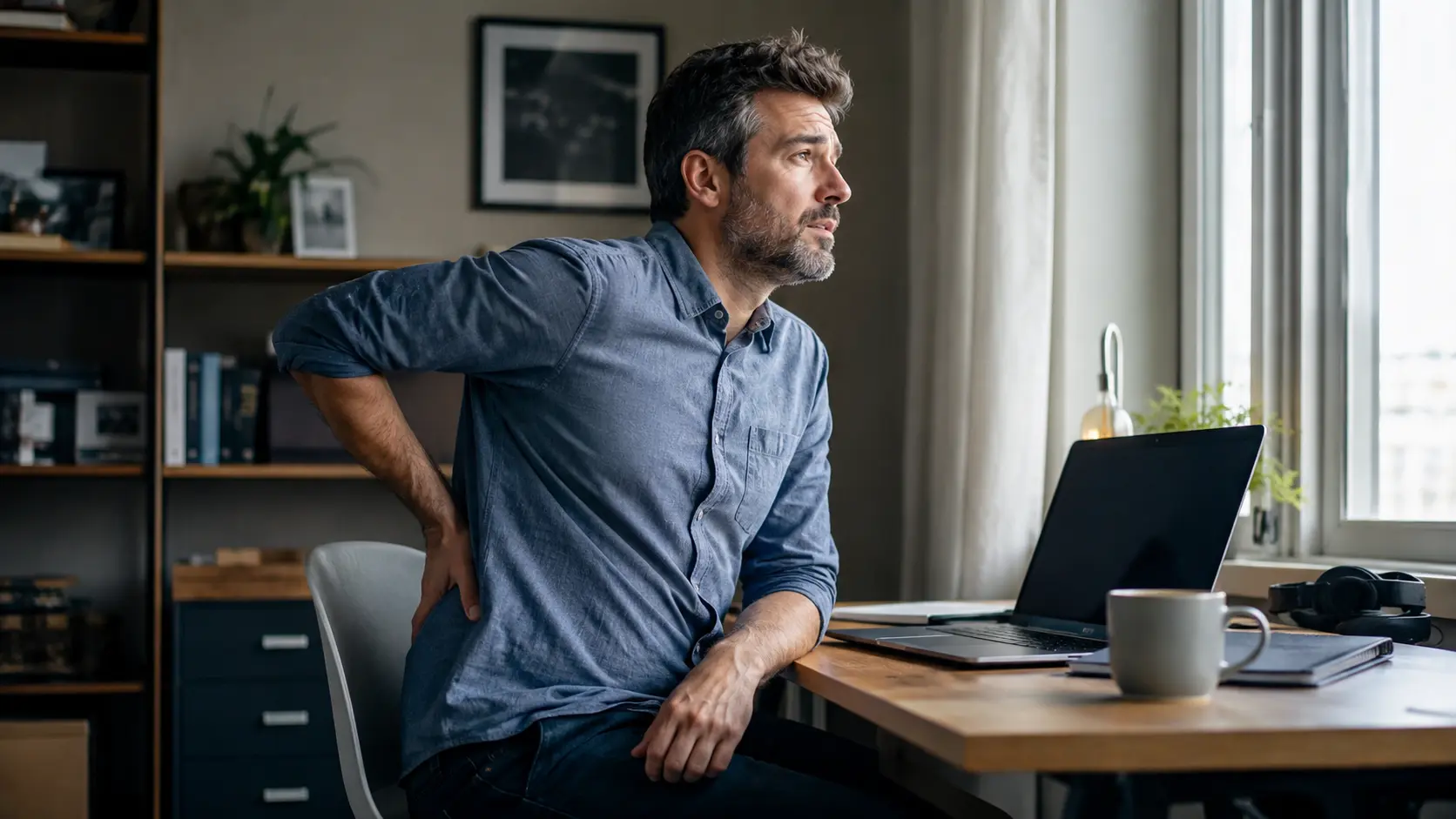
Your back aches, your legs feel heavy, and by afternoon you’re exhausted even though you haven’t really done anything, because sitting is the new smoking and it’s slowly stealing your mobility and energy without you even realizing it.
The sedentary lifestyle trap
Picture this: you wake up, sit for breakfast, spend the morning in your favorite chair reading the news, sit through lunch, then settle in for an afternoon of television. By evening, your knees feel stiff when you stand, your lower back protests, and climbing stairs feels harder than it should. This isn’t just discomfort talking. When you sit for hours on end, your muscles literally start to weaken because they’re not being used. Your hip flexors tighten, your glutes become inactive, and your core loses strength. Blood flow slows, which means less oxygen reaching your tissues and more fatigue creeping in. Over time, this sedentary trap compounds. Joints stiffen from lack of movement, circulation suffers, and your body becomes more vulnerable to weight gain, heart problems, and chronic diseases like type 2 diabetes. Many seniors find themselves caught in this cycle without even noticing how it started.
- Muscle weakness and joint stiffness develop gradually from prolonged sitting, making everyday tasks like getting up from a chair or walking to the mailbox feel exhausting.
- Restricted blood flow from extended sitting can lead to cardiovascular strain, decreased energy levels, and even blood clots in severe cases.
- Sedentary lifestyle contributes to weight gain and significantly increases the risk of chronic conditions including heart disease, diabetes, and certain cancers.
Breaking free: embracing movement
Now imagine a different scenario. Margaret, a 72-year-old grandmother, decided one morning that her afternoon chair routine had to change. She started small: a 10-minute walk after breakfast, standing while making lunch instead of sitting at the kitchen table, and taking a stretch break every hour. Within two weeks, she noticed her knees didn’t creak as much. Within a month, she had the energy to play with her grandchildren without needing a nap afterward. The key wasn’t dramatic gym sessions or intense workouts. It was consistent, gentle movement woven throughout her day. Even light activity like standing, slow walking, or simple household tasks counteracts the damage of prolonged sitting. Your muscles wake up, your circulation improves, and your energy returns. The beauty of this approach is that it’s sustainable. You don’t need a gym membership or special equipment. You just need to interrupt your sitting with regular movement, even if it’s just five minutes at a time.
💬 Ready to feel better in 2 minutes?choose where to begin:
The power of stretching
Stretching might seem simple, almost too easy to make a real difference, but it’s genuinely transformative for seniors. When you sit for hours, your muscles contract and shorten. A few minutes of gentle stretching reverses this. Try touching your toes to lengthen your hamstrings, or reach your arms overhead to open your chest and shoulders. These simple movements improve flexibility, reduce muscle tightness, and make daily activities feel less painful. Regular stretching also prevents injuries. When muscles are tight and inflexible, a simple movement like bending down to pick something up can cause a strain or pull. Flexible muscles are resilient muscles. Beyond the physical benefits, stretching offers a mental reset. That moment when you extend your body and feel the tension release is genuinely calming. Many seniors report sleeping better and feeling less anxious after incorporating a basic stretching routine into their day, even just 10 minutes in the morning.
Mindful choices for better health
Health isn’t built on perfect days. It’s built on small, consistent choices repeated over time. Being mindful of your sitting habits means noticing when you’ve been in the same position for too long and actually doing something about it. Set a gentle reminder on your phone to stand and stretch every hour. When you’re on a phone call, stand instead of sit. Park a little farther away so you get extra steps. Take the stairs instead of the elevator when you can. These aren’t radical changes, but they’re powerful. Your body is constantly sending you signals. Stiffness, fatigue, and discomfort are messages that it needs movement. Listening to these signals and responding with gentle activity is an act of self-care. The goal isn’t perfection. It’s progress. Even one extra walk around the block, one extra stretching session, or one extra hour standing instead of sitting makes a measurable difference in how you feel and function.
Prolonged sitting weakens muscles, stiffens joints, and increases the risk of serious health conditions, but this pattern is reversible. By embracing consistent movement, incorporating stretching into your routine, and making mindful daily choices, you can break free from the sedentary trap and reclaim your energy, mobility, and well-being.
How can sitting for long periods affect my health?
Prolonged sitting weakens muscles, especially in your core, legs, and hips, while tightening hip flexors and reducing flexibility. It impairs circulation, leading to fatigue and reduced oxygen flow to tissues. Over time, sedentary habits increase the risk of heart disease, type 2 diabetes, weight gain, and certain cancers. The longer you sit without movement, the more your body adapts to inactivity, making it harder to move and function in daily life.
What are some simple ways to combat the negative effects of sitting?
Start by setting hourly reminders to stand and stretch for just five minutes. Take short walks after meals, even if it’s just around your home. Incorporate gentle stretching routines focusing on your hamstrings, hip flexors, and shoulders. Stand while doing light tasks like cooking or reading. Take stairs when possible and park farther away to add extra steps. The key is consistency over intensity. Small, regular movement throughout the day is far more effective than occasional intense exercise.
Others also read:
Disclaimer: This article is for informational purposes only and is not a substitute for professional medical advice. Always consult a healthcare professional for personal guidance.
This article presents an experience-based perspective and has been reviewed by the GlobalHealthBeacon editorial team in 2026. It provides structured, evidence-based information to support informed health decisions.
