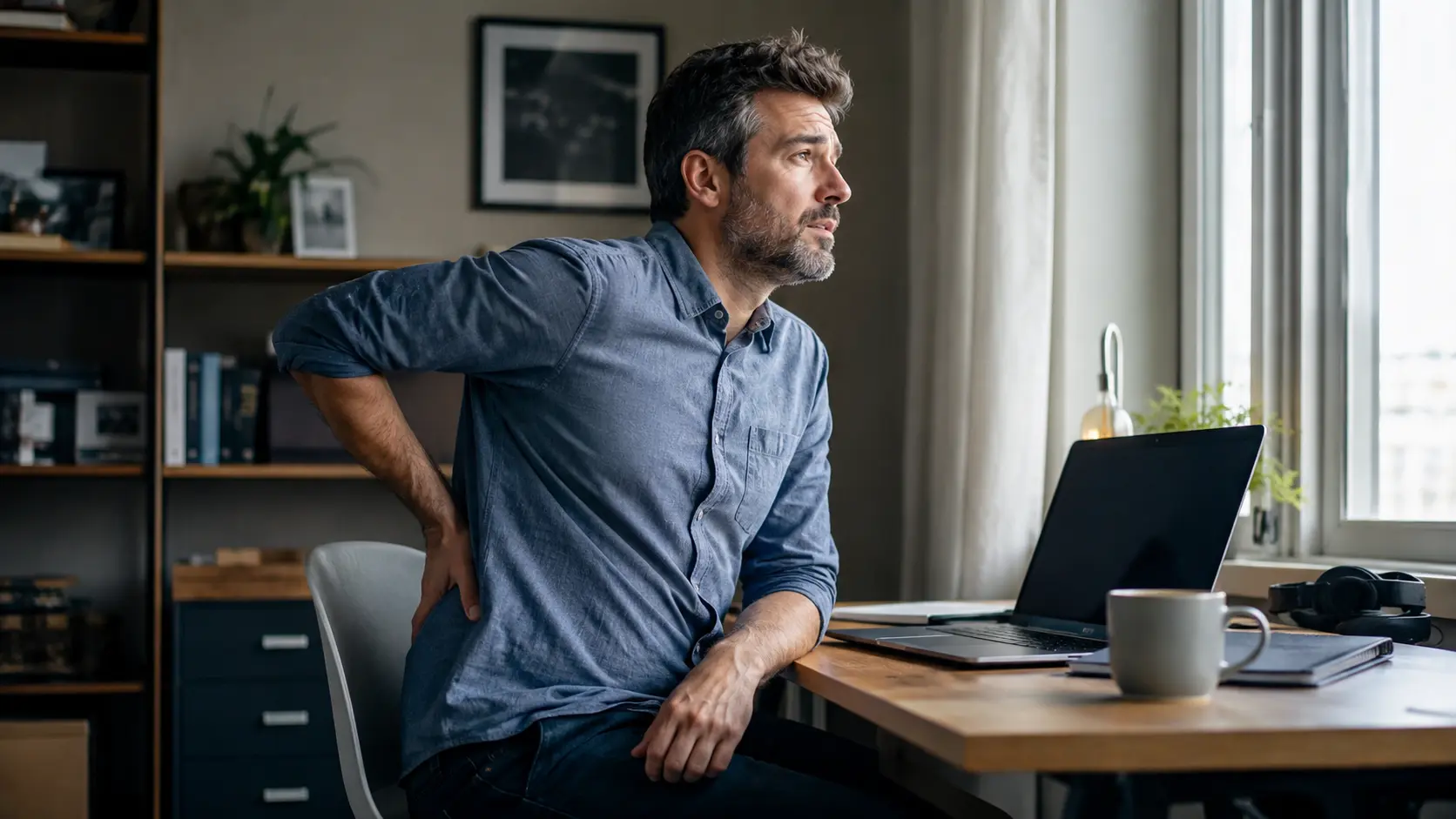
Your back aches, your neck is stiff, and you can barely remember the last time you felt energized by midday – sitting is the new smoking, and it’s silently dismantling your health one desk hour at a time.
Combatting postural strain
Hours hunched over a desk reshape your spine in ways you don’t notice until the pain becomes impossible to ignore. Postural strain creeps up gradually: your shoulders inch toward your ears, your chin juts forward, and your lower back loses its natural curve. Start by setting hourly reminders on your phone to pause and notice how you’re sitting right now. Are your shoulders relaxed or tensed up by your ears? Is your screen at eye level or forcing you to look down? Simple shoulder rolls take 30 seconds but release tremendous tension. Neck rotations, done slowly and deliberately, restore mobility that sitting steals. Back stretches like the cat-cow pose or gentle spinal twists counteract the forward flexion your body endures all day. The key is consistency, not intensity. A woman who stretches for two minutes every hour sees better results than someone who stretches intensely once a week. Your posture is a habit, and habits change through repetition.
- Set a timer to remind yourself to stand up and move every hour
- Practice proper ergonomics while sitting, ensuring your back is supported and feet are flat on the floor
- Engage in exercises like yoga or Pilates to strengthen core muscles and improve posture
Strengthening lower body muscles
When you sit for eight hours a day, your glutes essentially go dormant. This matters more than you think. Weak glutes don’t just affect how you look; they compromise your entire kinetic chain, leading to lower back pain, knee issues, and hip tightness. Picture a woman who spends her day at a desk, then tries to go for a run on the weekend. Her legs feel heavy, her hips feel locked, and her knees start to ache within a mile. That’s what happens when lower body muscles weaken from disuse. Squats are the foundation: they activate your quads, glutes, and hamstrings simultaneously. Start with bodyweight squats, focusing on controlled movement rather than speed. Lunges, whether forward or reverse, work one leg at a time and expose imbalances you might not realize you have. Leg lifts, done lying on your side or standing, target the hip abductors that stabilize your entire lower body. Add these movements to your routine three times a week, and within four weeks you’ll notice your legs feel stronger, your hips feel more mobile, and everyday activities like climbing stairs feel effortless again.
📘 Fix your day in under 2 minuteschoose where to begin:
Boosting circulation and energy levels
Sitting compresses your blood vessels and slows circulation, which is why you feel that afternoon energy crash around 2 or 3 PM. Your brain isn’t getting enough oxygen, your muscles aren’t being flushed of metabolic waste, and your metabolism slows to match your sedentary state. Movement breaks are the antidote. They don’t need to be intense or time-consuming. A woman who parks her car at the far end of the parking lot adds 200 extra steps to her day without any real effort. Taking the stairs instead of the elevator, walking to a colleague’s desk instead of sending an email, doing a lap around your office during a phone call, these micro-movements accumulate. Even five minutes of walking every hour prevents the blood pooling that happens during prolonged sitting. You’ll notice your energy stabilizes, your focus sharpens, and that 3 PM fog lifts. Some women find that a short walk after lunch completely transforms their afternoon productivity. The mechanism is simple: movement increases heart rate, oxygen delivery improves, and your body feels more awake.
Correcting text neck and eye strain
Text neck is real. Staring down at your phone or at a screen positioned below eye level creates a forward head posture that strains your neck muscles and fatigues your eyes. Over months and years, this compounds into chronic tension headaches and vision problems. The 20-20-20 rule is your easiest defense: every 20 minutes, pause and look at something 20 feet away for at least 20 seconds. This simple action relaxes your eye muscles and breaks the forward gaze pattern. During these breaks, perform gentle neck stretches. Slowly turn your head to look over each shoulder, hold for 10 seconds, and repeat. Tilt your ear toward your shoulder on each side. These movements restore the mobility that screen time steals. Eye exercises matter too. Palming, where you cup your hands over your eyes and rest them in darkness for a minute, gives your eyes genuine relief. Blinking deliberately, especially when focused on screens, prevents dry eye syndrome. Adjust your monitor so the top of the screen is at or slightly below eye level. Position your phone at chest height rather than looking down at it. These small ergonomic shifts prevent the accumulation of strain that leads to chronic pain.
Incorporating standing and walking breaks
The most sedentary women in studies are those who sit continuously for seven or more hours without breaks. The women who break up their sitting time with even brief standing or walking intervals show dramatically better health markers. A standing desk isn’t necessary, though some women find it helpful. What matters is the pattern: sit for 50 minutes, stand for 10. Or sit for 90 minutes, then take a 15-minute walk. Your body adapts to whatever pattern you establish, so choose something you can sustain. Set phone reminders if you need them. Some women use their calendar to block out movement time the same way they block out meetings. Others use a fitness tracker that buzzes when they’ve been still too long. Walking breaks are particularly powerful because they combine movement with a mental reset. A woman who takes a 10-minute walk in the middle of her workday returns to her desk with clearer thinking and renewed focus. Walking also engages your core, activates your legs, and boosts circulation more effectively than standing alone. If you work from home, walk around your house or outside. If you’re in an office, use the stairs, walk to the bathroom on a different floor, or take a lap around the building. The destination matters less than the movement itself.
Combat the damaging effects of prolonged sitting by focusing on posture, lower body strength, circulation, screen-related strain, and incorporating regular movement breaks. These simple moves can help women counter the impact of extended sitting on their health and well-being.
How often should I take breaks from sitting during the day?
It’s recommended to take a 5-minute break every hour when sitting for extended periods. Use this time to stand up, stretch, and move around to combat the negative effects of prolonged sitting.
Can sitting for long periods lead to long-term health problems?
Yes, prolonged sitting has been linked to various health issues, including increased risk of obesity, heart disease, diabetes, and musculoskeletal disorders. It’s essential to incorporate regular movement and exercise to counteract these risks.
Others also read:
Disclaimer: This article is for informational purposes only and is not a substitute for professional medical advice. Always consult a healthcare professional for personal guidance.
This guide has been prepared and reviewed by the GlobalHealthBeacon editorial team and reflects current medical research as of 2026. It provides structured, evidence-based information to support informed health decisions.
