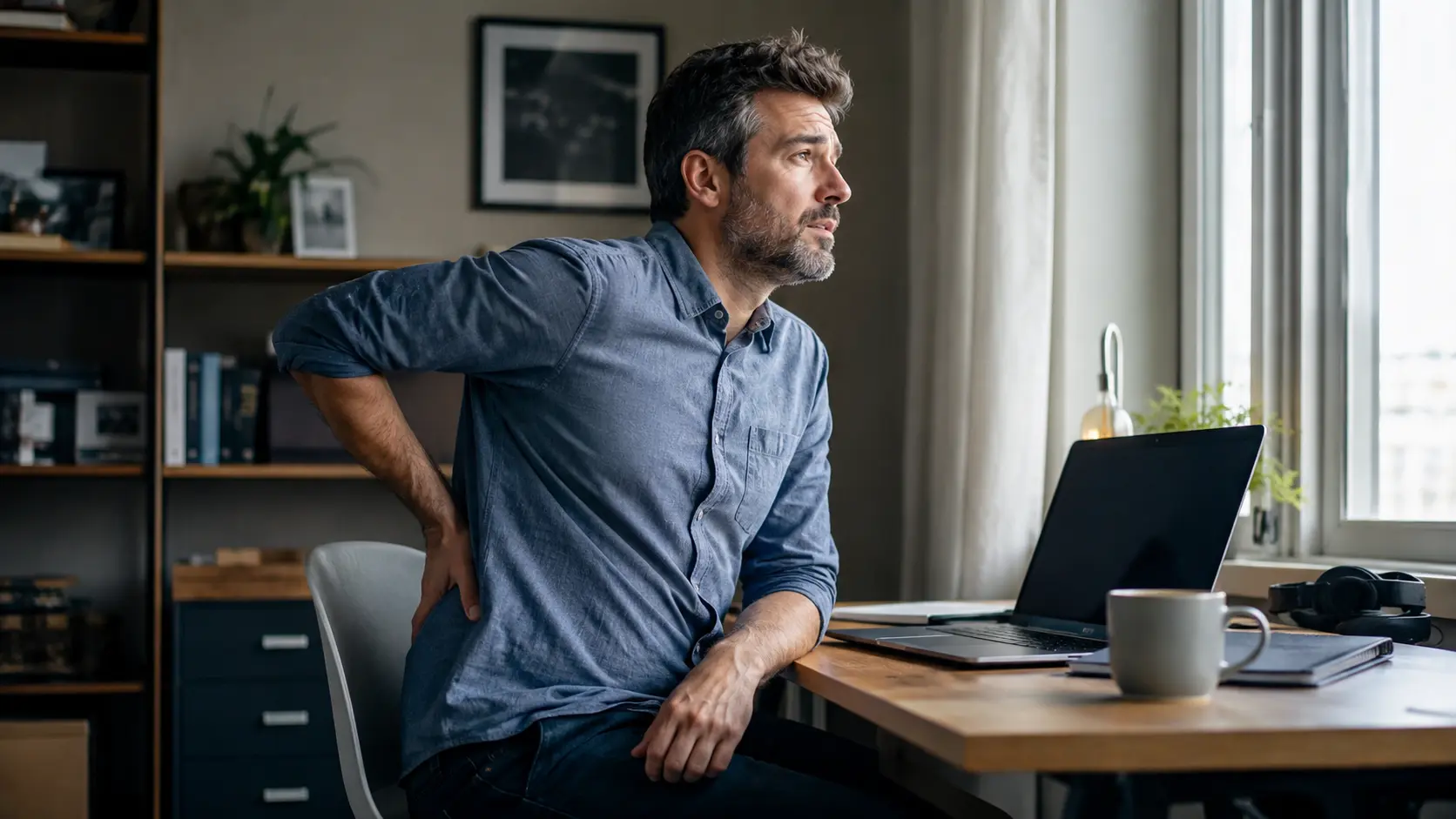
Your back aches, your legs feel heavy, and you can’t shake the feeling that something’s off after hours in that chair—sitting is the new smoking, and it’s silently stealing your mobility and energy.
Understanding the sitting epidemic
Sedentary behavior affects seniors differently than younger adults because your body’s recovery mechanisms naturally slow with age. When you sit for extended periods, your circulation becomes sluggish, muscles begin to atrophy, and your metabolic rate drops significantly. Consider Margaret, a 68-year-old who spent most of her day at a desk managing finances. After six months, she noticed her ankles swelled by evening, her knees ached when standing, and climbing stairs left her breathless. Research consistently shows that sitting too much increases the risk of heart disease, type 2 diabetes, and certain cancers. Beyond these serious conditions, prolonged sitting weakens your core muscles, tightens your hip flexors, and rounds your shoulders forward. The longer you remain stationary, the more your body adapts to that position, making movement feel increasingly difficult and uncomfortable.
- Stagnant blood flow can lead to blood clots and swollen ankles.
- Muscle stiffness and joint pain are common outcomes of prolonged sitting.
- Sitting for hours can weaken muscles and contribute to poor posture.
Breaking the sitting cycle
The solution isn’t dramatic or complicated. Start by setting hourly reminders on your phone or watch to stand and move for just two to three minutes. Walk to the kitchen, do gentle leg lifts while holding a counter, or march in place while watching television. James, a 72-year-old retiree, discovered that setting a timer every 60 minutes transformed his energy levels within two weeks. He’d stand, stretch his arms overhead, bend forward gently to touch his toes, and walk around his home. These micro-movements activate your muscles, boost blood flow, and prevent the stiffness that makes movement feel painful. You don’t need a gym membership or special equipment. Even standing while talking on the phone, doing light housework, or gardening counts. The key is consistency and frequency. Breaking up sitting time into smaller chunks throughout the day is far more effective than one long exercise session.
📘 Fix your day in under 2 minuteschoose where to begin:
Optimizing your workspace
Your physical environment either supports or sabotages your health. Start by adjusting your chair so your feet rest flat on the floor and your knees bend at a 90-degree angle. Your elbows should also form a 90-degree angle when your hands rest on a desk or armrest. Position your computer screen at eye level, roughly an arm’s length away, so you’re not hunching forward or craning your neck upward. A footrest can reduce pressure on your lower back and improve circulation in your legs. If you spend time reading or doing detailed work, ensure adequate lighting to prevent you from leaning in closer. Consider a small cushion behind your lower back for lumbar support. These adjustments prevent the muscle imbalances and postural strain that accumulate over months and years. Even small improvements in positioning reduce neck pain, shoulder tension, and lower back discomfort significantly.
Active sitting alternatives
If traditional sitting leaves you uncomfortable, explore alternatives that keep your muscles engaged. Ergonomic chairs with adjustable lumbar support distribute weight more evenly and reduce strain on your spine. Stability balls, when used correctly, engage your core muscles throughout the day and improve balance. Standing desks allow you to alternate between sitting and standing, preventing the muscle fatigue that comes from one position. Henry, a 70-year-old, switched to a standing desk for two hours each morning and noticed improved focus and less afternoon stiffness. Start slowly with any new option. If using a stability ball, begin with 15 to 20 minutes daily and gradually increase. Standing desks work best when you shift weight between legs and keep knees slightly bent. These alternatives promote better circulation, strengthen stabilizer muscles, and make your body feel more dynamic throughout the day.
Staying active beyond sitting
Movement beyond your workspace is equally important. Aim for at least 150 minutes of moderate-intensity activity each week, which breaks down to just 30 minutes on five days. Walking is accessible and effective. A 65-year-old can walk at a comfortable pace for 30 minutes and meet these guidelines. Swimming reduces joint stress while building strength and endurance. Gardening combines physical activity with purpose and fresh air. Tai chi improves balance and flexibility, crucial for fall prevention. Dancing engages your whole body and lifts your mood. Start where you are. If you haven’t exercised regularly, begin with 10-minute walks and gradually extend the duration. Consistency matters far more than intensity. Adding strength training twice weekly, even simple bodyweight exercises like wall push-ups or chair squats, preserves muscle mass and bone density as you age.
Prolonged sitting poses real health risks for seniors, including muscle stiffness, joint pain, and poor circulation. By taking movement breaks every hour, optimizing your seating environment, exploring active sitting alternatives, and incorporating regular physical activity into your routine, you can reverse the negative effects of sedentary behavior and reclaim your mobility and energy.
Can standing desks help reduce the negative impact of sitting?
Standing desks provide a beneficial alternative to sitting for long periods by promoting better posture, engaging muscles, and increasing overall movement. However, it’s essential to alternate between sitting and standing to avoid strain or fatigue.
How often should seniors take breaks from sitting?
Seniors should aim to take short breaks from sitting every hour to stretch, move around, and promote blood circulation. Incorporating regular movement into your day is crucial for overall health and well-being.
Others also read:
Disclaimer: This article is for informational purposes only and is not a substitute for professional medical advice. Always consult a healthcare professional for personal guidance.
This guide has been prepared and reviewed by the GlobalHealthBeacon editorial team and reflects current medical research as of 2026. It provides structured, evidence-based information to support informed health decisions.
