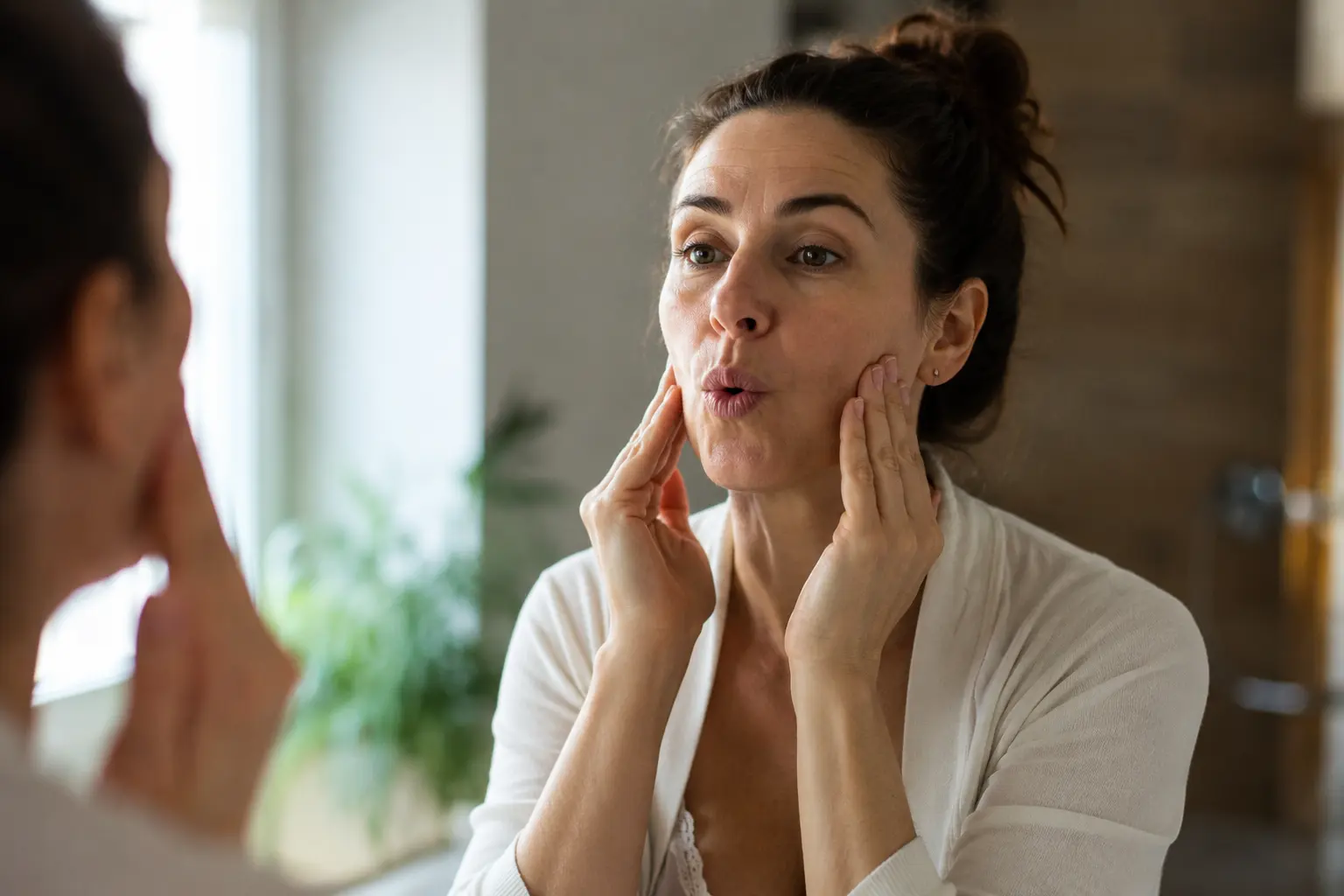
Your mirror is telling a story you didn’t ask for: fine lines deepening into wrinkles, age spots multiplying like unwanted guests, and skin that feels paper-thin and parched no matter how much moisturizer you slather on. Skin health aging in your 60s is real, it’s frustrating, and it’s absolutely manageable once you understand what’s actually happening beneath the surface.
Understanding the aging process
Your skin in your 60s is undergoing changes that have been quietly building for decades. Think of it like a house that has weathered many seasons. The foundation remains solid, but the walls need reinforcement. Collagen and elastin, the proteins that keep your skin firm and bouncy, naturally decline by about 1 percent per year after age 30. By the time you reach your 60s, you may have lost 30 percent or more of these crucial structural proteins. This loss manifests as wrinkles, sagging, and that creepy texture you notice when light hits your skin at certain angles. Beyond genetics, your skin’s aging story includes decades of sun exposure, environmental stress, and natural cellular turnover slowing down. A 62-year-old woman who spent summers at the beach without sunscreen will show more pronounced sun damage than someone who consistently protected their skin. Understanding these layers of change helps you stop blaming yourself and start making informed decisions about what your skin actually needs right now.
- Decreased collagen and elastin production are key factors in skin aging.
- Exposure to UV radiation accelerates skin aging by breaking down collagen fibers.
- Intrinsic factors such as genetics also play a role in how skin ages over time.
Essential skincare routine
A solid skincare routine in your 60s is not about chasing the latest trends or expensive serums with impossible promises. It is about consistency and choosing products that address what your skin actually needs: hydration, protection, and gentle support. Start with a creamy cleanser that does not strip your skin, followed by a hydrating toner or essence to prep your skin for serums. Apply a targeted serum containing hyaluronic acid or peptides to boost moisture and firmness, then layer a rich moisturizer suited to your skin type. The non-negotiable step is broad-spectrum sunscreen with at least SPF 30, applied every single day, even when you are indoors. Consider adding a retinol product two to three times per week at night to stimulate collagen production, but introduce it slowly to avoid irritation. A 68-year-old man who added a retinol serum to his routine noticed visible improvement in fine lines and skin texture within three months, but only after he committed to the full routine without skipping steps. Your routine should take about ten minutes and feel like a ritual of self-care, not a chore.
📘 Fix your day in under 2 minuteschoose where to begin:
Healthy lifestyle habits
What you do outside the bathroom matters just as much as what you do inside it. Hydration starts from within, so aim for eight glasses of water daily, adjusting for your activity level and climate. Your diet should emphasize foods rich in antioxidants like berries, leafy greens, fatty fish high in omega-3s, and nuts, which combat free radical damage that accelerates aging. Smoking is one of the fastest ways to age your skin prematurely because it constricts blood vessels and depletes collagen, so if you smoke, quitting will show visible benefits within weeks. Sleep quality matters more than you might think; during deep sleep, your body repairs skin cells and boosts collagen production. Aim for seven to nine hours nightly. Sun exposure remains the single biggest controllable factor in skin aging, so limit direct sun between 10 a.m. and 4 p.m., wear protective clothing, and reapply sunscreen every two hours if you are outdoors. A 65-year-old woman who switched to a Mediterranean-style diet, increased her water intake, and committed to consistent sun protection noticed her skin looked more radiant and felt more resilient within two months. These habits compound over time, creating visible changes that no cream alone can achieve.
Professional skin treatments
If your at-home routine has plateaued or you want faster, more dramatic results, professional treatments offer targeted solutions tailored to your specific concerns. A dermatologist can assess your skin and recommend options like chemical peels, which use acids to remove damaged outer layers and stimulate collagen remodeling, or laser therapy, which uses focused light to tighten skin and fade age spots. Microneedling creates controlled micro-injuries that trigger your body’s natural healing response and collagen production. Injectable treatments like dermal fillers can restore volume lost to aging, while botulinum toxin can soften dynamic wrinkles caused by facial movement. These procedures range from minimally invasive to more intensive, and results vary based on your skin condition and goals. A 70-year-old man who had a series of laser treatments for sun damage and age spots combined with a professional-grade skincare routine achieved results he felt confident about without looking overdone. Most treatments require a consultation first, so schedule one with a board-certified dermatologist to discuss realistic expectations, potential risks, and which option aligns with your goals and comfort level. Professional treatments work best when paired with a solid home routine and healthy lifestyle habits.
Embracing aging with confidence
Your skin in your 60s tells the story of your life: sun-soaked vacations, years of laughter and expression, resilience through challenges. Aging is not a problem to solve but a phase to navigate with intention and self-compassion. Confidence comes from understanding that aging skin is normal, universal, and manageable, not from pretending it is not happening. Focus on what your skin can do rather than what it has lost: it protects you, heals itself, and continues to adapt. Self-care rituals, whether a morning skincare routine or a weekly face mask, become moments of intentional care that reinforce your commitment to yourself. Positive self-image grows when you stop comparing your skin to filtered images or younger versions of yourself and instead appreciate the texture and character your skin has earned. Gratitude for the journey your skin has taken, the experiences it has weathered, and its continued ability to protect and renew you shifts your perspective from deficit to appreciation. A 63-year-old woman who reframed her wrinkles as laugh lines and age spots as proof of a life well-lived reported feeling more at peace with her appearance than she had in years. Aging with confidence is not about erasing time; it is about moving through it with intention, care, and genuine acceptance.
Understanding the aging process, maintaining a skincare routine, adopting healthy lifestyle habits, exploring professional treatments, and embracing aging with confidence are key aspects of navigating skin health aging in your 60s.
What are the common signs of aging skin in your 60s?
Common signs of aging skin in your 60s include wrinkles, fine lines, age spots, sagging skin, and a loss of elasticity. These changes are a natural part of the aging process and can be managed with proper skincare.
How can I protect my skin from further aging in my 60s?
To protect your skin from further aging in your 60s, focus on using sunscreen daily, staying hydrated, eating a healthy diet, avoiding smoking, and limiting sun exposure. These simple steps can help maintain your skin’s health and vitality.
Others also read:
Disclaimer: This article is for informational purposes only and is not a substitute for professional medical advice. Always consult a healthcare professional for personal guidance.
This guide has been prepared and reviewed by the GlobalHealthBeacon editorial team and reflects current medical research as of 2026. It provides structured, evidence-based information to support informed health decisions.
