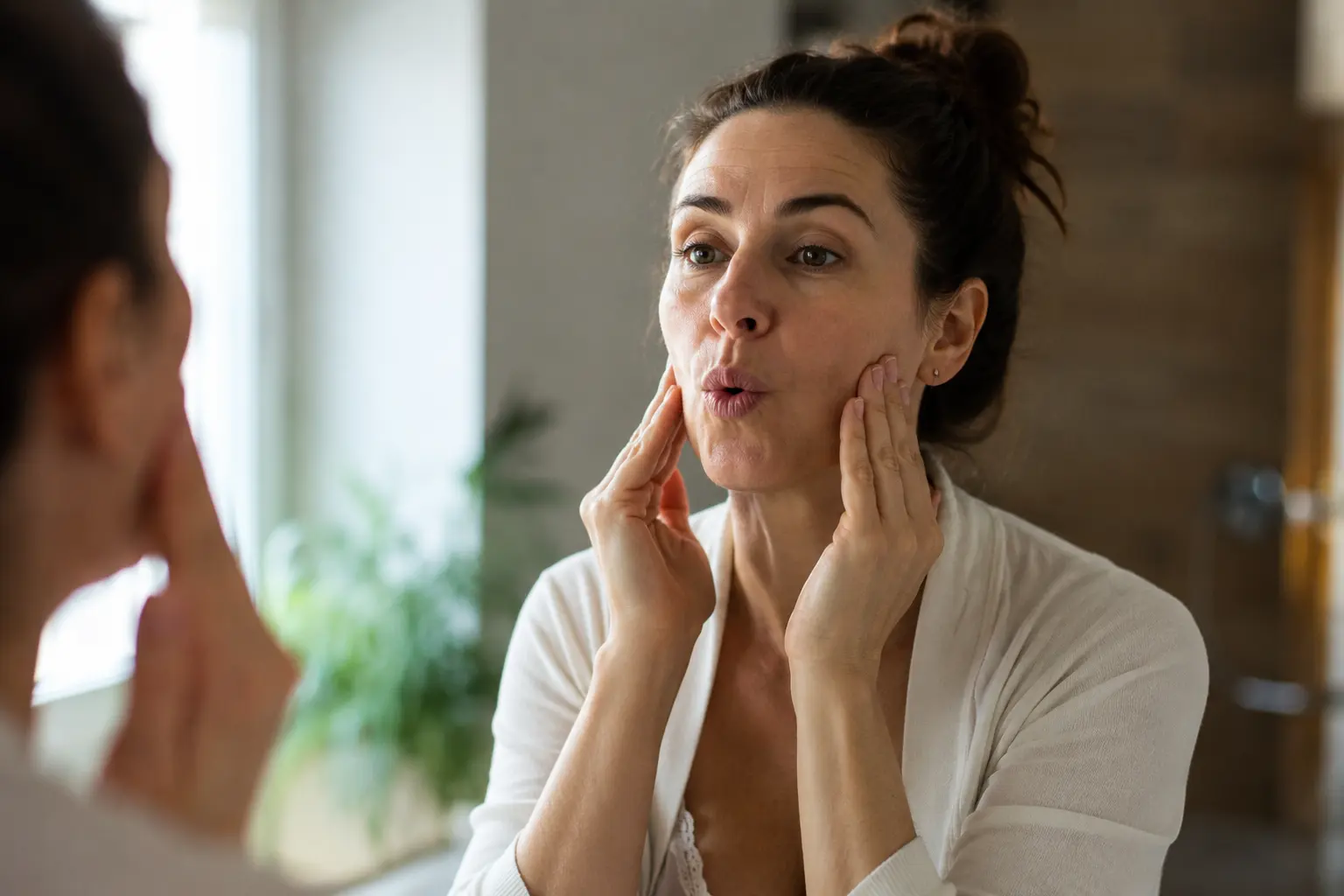
Your skin feels dull, those fine lines seem deeper every morning, and nothing you’ve tried seems to actually work anymore, but here’s what the science actually says about skin health aging and what really makes a difference.
Understanding skin aging
Skin aging is a complex biological process that unfolds differently for every woman, shaped by factors both within and beyond your control. Your genetics play a foundational role, determining how quickly your skin naturally loses elasticity and firmness over time. But genetics alone don’t tell the whole story. UV exposure from sun exposure accumulates over decades, breaking down collagen fibers and creating damage that compounds year after year. Lifestyle habits matter too, from how much water you drink to whether you smoke or manage stress effectively. Hormonal changes, particularly during perimenopause and menopause, trigger shifts in oil production and skin thickness that can feel sudden and frustrating. As collagen production gradually decreases starting in your late twenties, you’ll notice fine lines appearing first, often around the eyes and mouth where skin is thinnest. The loss of elastin fibers means your skin bounces back less easily, and reduced hyaluronic acid production leads to that parched, dull feeling that no amount of moisturizer seems to fix immediately. Understanding these mechanisms helps you see that aging skin isn’t a personal failure, it’s biology.
Key ingredients for skin health
Scientific research has identified specific ingredients that genuinely work to address the visible signs of aging, and understanding how each one functions helps you make smarter choices about what goes on your face. Retinoids, derived from vitamin A, work by accelerating cell turnover and stimulating collagen production at the cellular level, though they require patience and careful introduction since they can cause sensitivity initially. Hyaluronic acid functions as a humectant, drawing moisture from the environment into your skin’s outer layers, which is why it feels so effective especially in humid climates. Vitamin C acts as a potent antioxidant, neutralizing free radicals generated by sun exposure and pollution while also brightening skin tone and supporting collagen synthesis over time. Peptides are short chains of amino acids that signal your skin to produce more collagen and elastin, essentially communicating with your skin cells to strengthen their structure. Niacinamide, also called vitamin B3, strengthens your skin barrier, reduces inflammation, and helps regulate sebum production, making it particularly useful for women experiencing hormonal fluctuations. Alpha hydroxy acids gently exfoliate the surface, revealing fresher skin beneath, while beta hydroxy acids penetrate deeper into pores. These ingredients work best when layered strategically and given time to show results, typically requiring consistent use for eight to twelve weeks before you’ll see meaningful changes.
Effective skincare routine
Building a skincare routine that actually works requires understanding the purpose of each step and how they work together to support your skin’s health. Cleansing is your foundation, removing the day’s accumulation of makeup, sunscreen, pollution, and dead skin cells without stripping away your skin’s natural protective barrier. A gentle cleanser appropriate for your skin type ensures you’re not creating inflammation that ages skin faster. Hydration comes next, and this is where many women make the mistake of thinking one moisturizer fits all situations, when in reality your skin’s needs shift with seasons, hormones, and even daily humidity levels. Applying moisturizer to damp skin helps lock in water, and choosing products with hydrating ingredients like hyaluronic acid or glycerin makes a measurable difference in how plump and healthy your skin appears. Protection through daily sunscreen is non-negotiable, as UV damage is cumulative and irreversible, and even incidental sun exposure adds up over months and years. Broad-spectrum sunscreen with at least SPF 30 should be your final step in the morning routine, creating a shield against the primary external aging factor. Evening routines can include targeted treatments like retinoids or serums that support cell renewal while you sleep, when your skin’s natural repair processes are most active.
- Select a gentle cleanser formulated for your specific skin type, whether that’s dry, oily, combination, or sensitive, and use lukewarm water to avoid disrupting your skin barrier.
- Apply a hydrating serum or essence while your skin is still slightly damp, then follow with a moisturizer containing hyaluronic acid or ceramides to seal in hydration.
- Use a broad-spectrum sunscreen with at least SPF 30 every single morning, even on cloudy days, reapplying every two hours if you’re spending extended time outdoors.
🔬 Science-backed benefits in 2 minuteschoose where to begin:
Healthy lifestyle habits
What you do outside your skincare routine often matters more than what you apply to your skin, and this is where many women underestimate their own power to influence aging. Balanced nutrition provides the building blocks your skin needs to maintain collagen and elastin, with omega-3 fatty acids from fish and flaxseed supporting skin barrier function, and antioxidant-rich foods like berries and leafy greens protecting against oxidative stress. Regular exercise increases blood flow to your skin, delivering oxygen and nutrients more efficiently while also reducing stress hormones that can trigger inflammation and breakouts. Hydration from drinking adequate water throughout the day supports skin plumpness and helps your body flush out toxins, though the popular claim that water alone fixes skin is oversimplified. Adequate sleep is when your body releases growth hormone and your skin’s natural repair mechanisms work most actively, so chronic sleep deprivation literally accelerates visible aging. Limiting sun exposure beyond sunscreen, such as seeking shade during peak UV hours and wearing protective clothing, prevents the cumulative damage that no skincare product can fully reverse. Avoiding smoking is critical since smoking depletes vitamin C, reduces blood flow, and creates free radicals that age skin dramatically faster than sun exposure alone. Stress management through meditation, yoga, or simply spending time in nature helps regulate cortisol, which when chronically elevated can break down collagen and trigger inflammatory skin conditions.
Professional treatments
When at-home skincare reaches its limits, professional treatments offer targeted solutions that can address specific concerns more effectively than products alone. Chemical peels use concentrated acids to remove damaged outer skin layers, stimulating collagen production and revealing fresher, more even-toned skin beneath, with results improving over a series of treatments. Microdermabrasion physically exfoliates the skin using tiny crystals or a diamond tip, improving texture and reducing the appearance of fine lines and sun damage, though it requires multiple sessions for optimal results. Laser therapy works by creating controlled micro-injuries that trigger your skin’s natural healing response, stimulating collagen remodeling and addressing everything from sun spots to rosacea, with different laser types targeting different skin concerns. Microneedling uses tiny needles to create channels in the skin that trigger collagen production while also improving product penetration, making it particularly effective for deeper wrinkles and skin texture issues. Dermatologist-recommended treatments are customized to your specific skin type and concerns, which is why professional consultation matters more than following trends you see online. The results from professional treatments are often more dramatic than at-home care, but they also require proper aftercare and realistic expectations about recovery time and the number of sessions needed.
Holistic approach to skin health
The most effective path to maintaining youthful skin isn’t found in any single product or treatment, but rather in combining multiple approaches that address skin aging from every angle. Think of it like building a house: skincare products are the interior design, lifestyle habits are the foundation, and professional treatments are the renovations that address structural issues. A woman who uses excellent skincare products but sleeps five hours nightly and spends hours in the sun without protection will see slower results than someone with a basic routine who prioritizes sleep, sun protection, and stress management. Consistency matters more than perfection, meaning that using a simple routine every single day will outperform sporadic use of expensive products. Your skin’s needs evolve as you age, so what worked beautifully at forty might need adjustment at fifty, requiring you to stay flexible and responsive to changes. Tracking what works for your unique skin through journaling or photos helps you identify patterns and make informed decisions about which products and treatments deserve your investment. Remember that skin aging is normal and natural, and the goal isn’t to erase all signs of aging but rather to support your skin’s health so it looks vibrant and feels comfortable at every stage of your life.
Skin aging results from the interplay of genetics, UV exposure, hormonal changes, and lifestyle factors that decrease collagen production over time. Effective skincare combines scientifically-proven ingredients like retinoids and hyaluronic acid with consistent routines, healthy lifestyle habits including sleep and sun protection, and professional treatments when needed to address specific concerns. The most sustainable approach integrates all these elements rather than relying on any single solution.
Can skincare products reverse skin aging?
Skincare products can significantly improve skin texture, reduce the appearance of fine lines, and enhance hydration, making skin look more youthful and vibrant. However, complete reversal of skin aging isn’t biologically possible since aging involves deep structural changes in collagen and elastin that topical products cannot fully restore. What products do accomplish is slowing visible aging and improving skin quality within the constraints of what’s realistic.
Are anti-aging creams effective?
Anti-aging creams containing key ingredients like retinoids, hyaluronic acid, and antioxidants have scientific evidence supporting their ability to improve skin appearance and texture over consistent use. Results typically become noticeable after eight to twelve weeks of regular application, and effectiveness depends on choosing products suited to your specific skin type and concerns rather than assuming all anti-aging creams work equally.
Others also read:
Disclaimer: This article is for informational purposes only and is not a substitute for professional medical advice. Always consult a healthcare professional for personal guidance.
This article has been prepared and reviewed by the GlobalHealthBeacon editorial team and is based on current medical research and published scientific literature available in 2026. It provides structured, evidence-based information to support informed health decisions.
