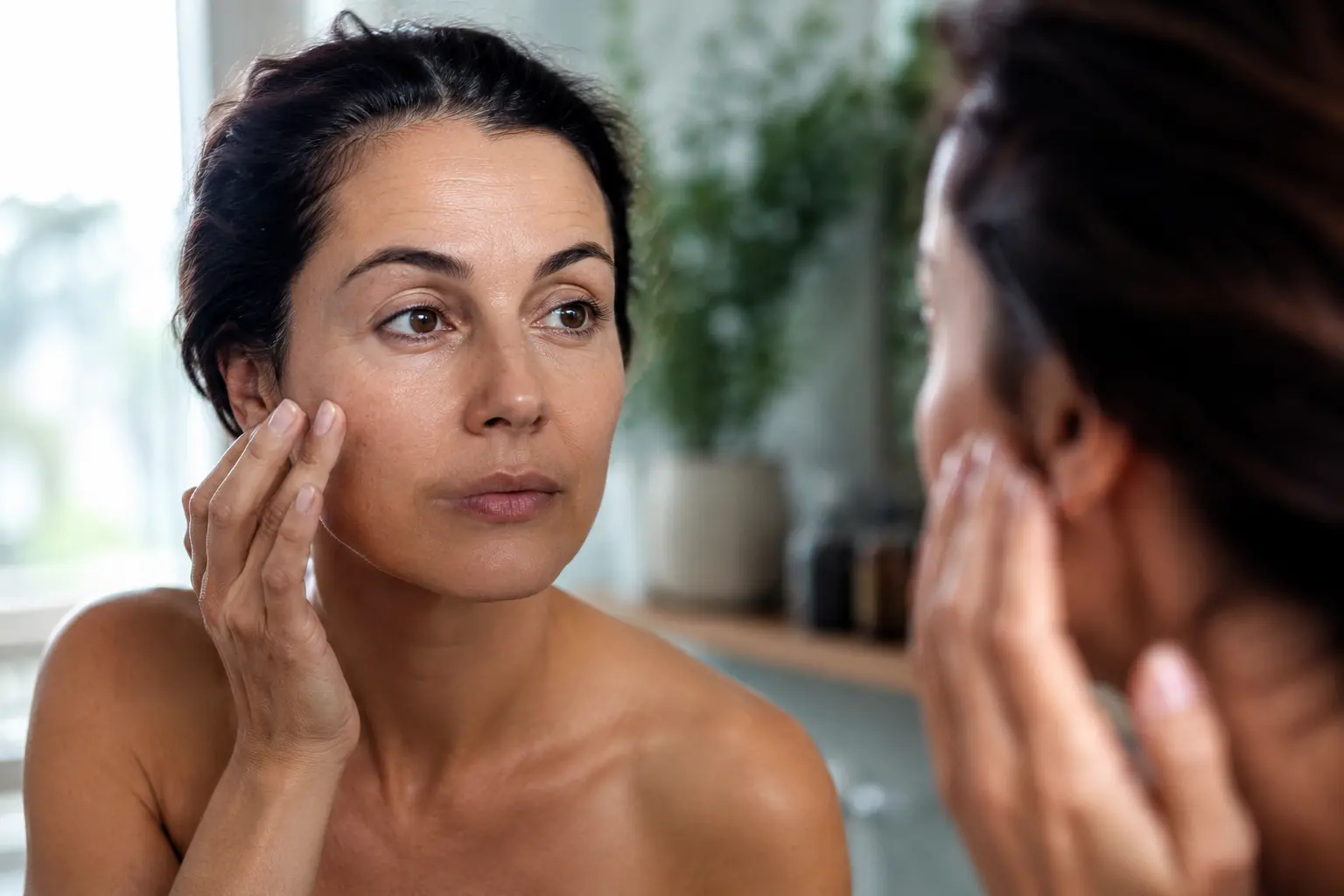
Your skin feels thin, spotted, and tired, and you’re watching it change faster than you’d like – but skin longevity explained isn’t some expensive secret, it’s about understanding what’s actually happening to your skin and taking the right steps now to keep it healthy and resilient for decades to come.
Understanding skin aging
Your skin doesn’t age the same way at 60 as it did at 40, and that’s not a flaw – it’s biology. Starting around age 30, your body produces about 1% less collagen each year, and by your 60s, that loss becomes visible in fine lines, sagging, and a loss of that plump, dewy quality you remember. Cell turnover slows too, meaning dead skin cells stick around longer, making your complexion look dull and uneven. But here’s the thing: understanding these changes puts you in control. When you know that UV damage accumulates over decades, you stop thinking of sunscreen as optional. When you recognize that dehydration makes wrinkles more pronounced, you start drinking water intentionally. When you see that free radicals from pollution and stress break down your skin’s structure, you begin choosing foods with antioxidants. A 65-year-old woman who started protecting her skin in her 50s will have noticeably better skin than someone who ignored it – that’s not luck, that’s informed action.
- Use sunscreen daily with SPF 30 or higher, even on cloudy days, since UV damage accumulates over time.
- Stay hydrated by drinking water consistently throughout the day, as dehydration makes fine lines more visible.
- Adopt a diet rich in antioxidants like berries, leafy greens, and fatty fish to combat free radical damage.
Essential skincare practices
A good skincare routine for seniors isn’t complicated, but it needs to be consistent and targeted. Start with a gentle cleanser that doesn’t strip your skin – look for cream-based or oil-based cleansers rather than harsh soaps, since mature skin has less natural oil to begin with. After cleansing, apply a hydrating toner or essence to prep your skin for the next step. This is where retinol comes in: it’s one of the few ingredients with solid science behind it for reducing fine lines and improving skin texture, though you’ll want to start slowly (once or twice a week) and build tolerance. Vitamin C serums brighten dull skin and support collagen, while hyaluronic acid acts like a moisture magnet, plumping your skin from within. Finish with a rich moisturizer suited to your skin type – don’t skip this step thinking it will make you oily, because mature skin actually needs more moisture, not less. A 70-year-old man who switched from a harsh bar soap to a cream cleanser and added retinol twice weekly noticed softer, more even skin within eight weeks. The key is patience and consistency, not expensive products.
📘 Fix your day in under 2 minuteschoose where to begin:
Lifestyle habits for healthy skin
Your skin reflects what’s happening inside your body and in your daily life. Regular movement, whether that’s a 30-minute walk, swimming, or gentle yoga, increases blood flow to your skin and delivers oxygen and nutrients more efficiently. Quality sleep matters more than you might think – during deep sleep, your body repairs and regenerates skin cells, so a 60-year-old who sleeps six hours nightly will have noticeably different skin than one who sleeps eight. Stress management is equally critical because cortisol, your stress hormone, breaks down collagen and triggers inflammation, which shows up as redness, sensitivity, and accelerated aging. Smoking and alcohol are particularly harsh on skin: smoking restricts blood flow and depletes vitamin C, while excessive alcohol dehydrates skin from the inside out. Consider a real scenario: two 68-year-old women with similar genetics – one walks daily, manages stress through meditation, sleeps well, and doesn’t smoke; the other is sedentary, stressed, sleeps poorly, and drinks heavily. The difference in their skin after five years is striking. Lifestyle isn’t just background noise to skincare, it’s the foundation everything else builds on.
Professional skin treatments
Sometimes a solid home routine needs professional support, and that’s where dermatologists come in. Chemical peels use gentle acids to remove dead skin and stimulate collagen, revealing fresher skin underneath – they’re effective for age spots, uneven texture, and dullness. Microdermabrasion physically exfoliates the top layer of skin, improving texture and reducing fine lines, and it’s less intense than it sounds. Laser therapy targets deeper concerns like sun damage, broken capillaries, and stubborn wrinkles by stimulating collagen production beneath the surface. These treatments aren’t vanity – they’re maintenance. A 72-year-old woman with significant sun damage from decades of beach time might see dramatic improvement from a series of laser treatments that her home routine alone couldn’t achieve. The important thing is consulting with a board-certified dermatologist who can assess your specific skin and recommend what actually makes sense for you, not just what’s trendy. Professional treatments work best when paired with a solid home routine, not as a replacement for it.
Embracing aging gracefully
Here’s what often gets lost in anti-aging talk: aging itself isn’t the enemy, neglect is. Your skin at 75 will never look like your skin at 35, and fighting that reality with unrealistic expectations leads to frustration. But skin that’s well-cared-for, hydrated, protected, and supported by healthy habits looks vibrant at any age. Embracing aging gracefully means accepting the changes while actively maintaining what you have. It means recognizing that a few lines tell a story of a life lived, while also knowing that sun-damaged, dehydrated, neglected skin doesn’t have to be your story. Self-care isn’t selfish or vain – it’s a form of respect for your body. When you take 10 minutes each morning to cleanse, apply serum, moisturize, and use sunscreen, you’re sending yourself a message: you’re worth that time and attention. When you choose the walk over the couch, the water over the wine, the sleep over the late night, you’re investing in the person you’ll be in five years. Skin longevity isn’t about looking 40 at 70 – it’s about looking like the best version of yourself, at whatever age you are.
Understanding the process of skin aging, adopting essential skincare practices, incorporating healthy lifestyle habits, considering professional skin treatments, and embracing aging gracefully are key factors in achieving skin longevity for seniors.
Is it necessary to use anti-aging products for skin longevity?
While anti-aging products can be beneficial, the key is to focus on skincare ingredients like retinol, vitamin C, and hyaluronic acid that promote collagen production and skin hydration.
Can diet affect skin longevity?
Yes, a diet rich in fruits, vegetables, lean proteins, and healthy fats can provide essential nutrients and antioxidants that support skin health and slow down the aging process.
Others also read:
Disclaimer: This article is for informational purposes only and is not a substitute for professional medical advice. Always consult a healthcare professional for personal guidance.
This guide has been prepared and reviewed by the GlobalHealthBeacon editorial team and reflects current medical research as of 2026. It provides structured, evidence-based information to support informed health decisions.
