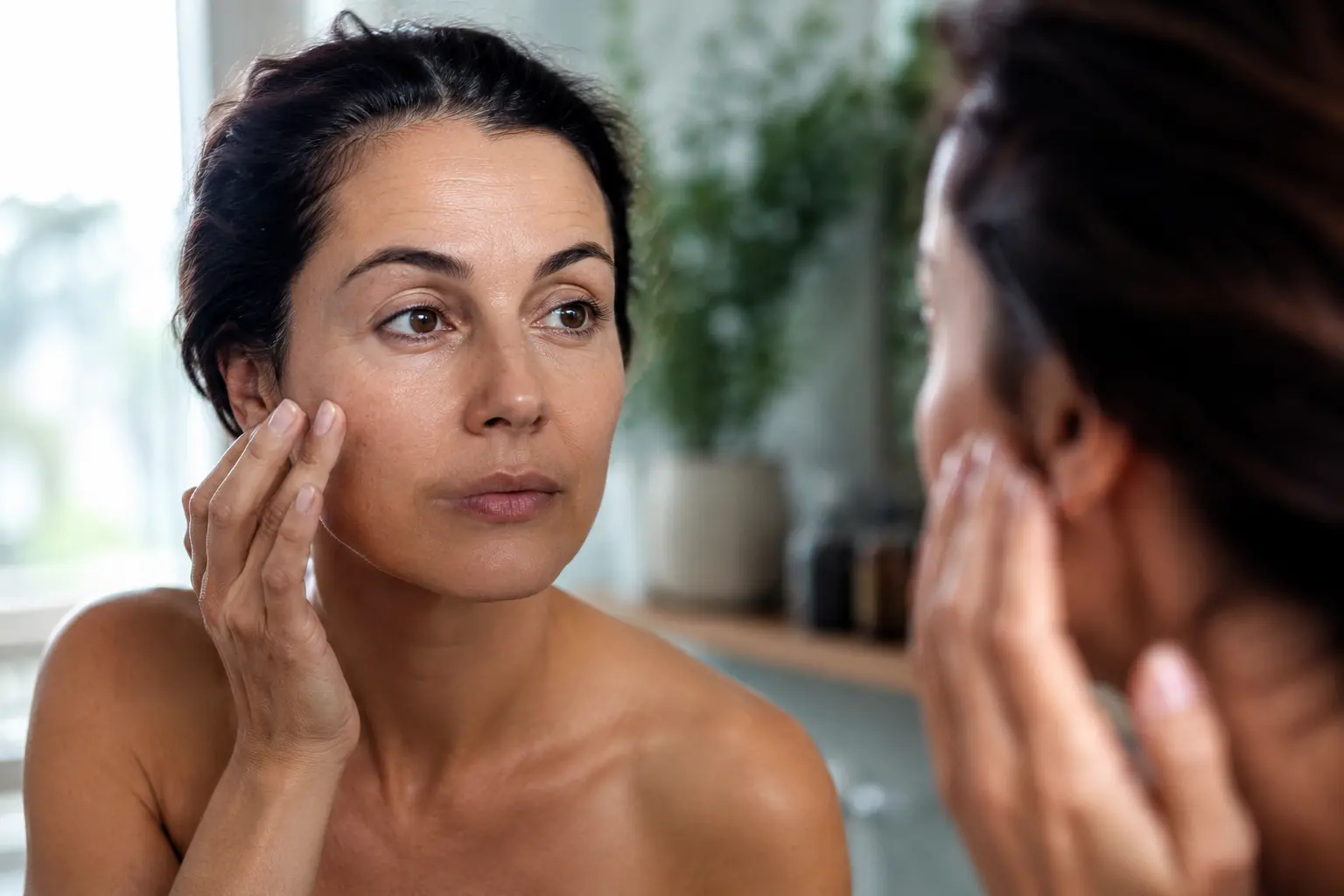
You’re watching your skin change in ways that feel unfair, and no amount of expensive creams seems to slow it down, but here’s what skin longevity explained actually reveals: your skin’s future isn’t written in stone.
The role of collagen in skin longevity
Collagen is the scaffolding beneath your skin, a fibrous protein that keeps everything plump, firm, and resilient. Think of it like the framework of a building: when the structure is intact, everything looks smooth and supported. Around your late twenties, collagen production naturally begins to decline by roughly one percent per year. This isn’t dramatic at first, but over decades it compounds. By fifty, you may have lost thirty percent of your skin’s collagen. This is why a woman in her thirties might notice her jawline softening or fine lines appearing around her eyes where none existed before. The good news is that collagen breakdown isn’t inevitable or irreversible. Certain nutrients like vitamin C, amino acids, and copper actively support collagen synthesis. A woman who prioritizes these through diet or targeted skincare can slow this decline measurably. Some research suggests that specific peptides and retinoids can even stimulate dormant collagen production, helping restore some of that lost structural support.
Understanding the impact of UV radiation
UV radiation is essentially invisible damage happening in real time. When ultraviolet rays penetrate the skin, they generate free radicals, unstable molecules that attack collagen and elastin fibers, breaking them down from the inside out. This process is called photoaging, and it’s responsible for roughly eighty percent of visible skin aging. A woman who spent her twenties sunbathing without protection might notice at forty-five that her sun-exposed chest and neck look significantly older than her protected face. The damage isn’t just cosmetic either. UV exposure mutates skin cells, increasing melanoma risk by up to three times in people with significant sun exposure history. Daily sunscreen use with SPF thirty or higher blocks ninety-seven percent of UVB rays, while UVA protection requires looking for broad-spectrum labels. The cumulative effect is remarkable: studies show that women who consistently use sunscreen from age twenty-five onward have visibly younger skin at sixty compared to those who don’t, with fewer wrinkles, age spots, and skin texture changes.
Lifestyle habits that influence skin longevity
Your skin is a living organ that reflects your internal health like a mirror. Dehydration literally shrinks skin cells, making fine lines more pronounced and texture rougher. A woman who drinks eight glasses of water daily will notice her skin appears plumper and more radiant within weeks, though the effect is most visible in those chronically dehydrated. Nutrition works similarly: antioxidants from berries, leafy greens, and nuts neutralize free radicals before they damage skin cells. Omega-three fatty acids from fish support the skin barrier, reducing inflammation and sensitivity. Chronic stress elevates cortisol, which breaks down collagen and triggers inflammatory skin conditions like acne and eczema. A woman managing stress through yoga, meditation, or even regular walks will often see clearer, calmer skin within a month. Sleep is equally critical: during deep sleep, growth hormone peaks and skin cells repair damage accumulated during the day. Poor sleep disrupts this process, leading to dull, congested skin and accelerated aging. These habits work synergistically, not in isolation.
- Stay hydrated by drinking at least eight glasses of water daily, spreading intake throughout the day rather than consuming it all at once.
- Incorporate antioxidant-rich foods like blueberries, spinach, salmon, and almonds into your meals to support skin cell protection and collagen production.
- Practice relaxation techniques such as yoga, meditation, or twenty-minute daily walks to lower cortisol levels and reduce stress-induced skin inflammation.
- Prioritize seven to nine hours of quality sleep nightly, as this is when your skin undergoes its most significant repair and regeneration processes.
🔬 Science-backed benefits in 2 minuteschoose where to begin:
The importance of skincare routine
A skincare routine isn’t vanity; it’s maintenance. Your skin faces environmental assault daily: pollution, UV rays, free radicals, and bacteria. A consistent routine creates a protective barrier and actively repairs damage. Cleansing removes these accumulating stressors without stripping natural oils. Exfoliating two to three times weekly removes dead skin cells that dull complexion and clog pores, revealing fresher skin beneath. Moisturizing replenishes the skin barrier, which weakens with age and sun exposure. Retinoids are particularly powerful: they increase cell turnover, stimulate collagen production, and fade age spots and fine lines. Hyaluronic acid holds up to one thousand times its weight in water, plumping skin from within. Antioxidants like vitamin C and niacinamide neutralize daily damage before it accumulates. A woman starting a targeted routine at thirty-five will see measurable improvements in texture, tone, and firmness within three months. The key is consistency and patience; skincare results compound over time, not overnight.
Professional treatments for skin longevity
At-home care has limits. Professional treatments work deeper, addressing concerns that topical products cannot fully reach. Chemical peels use acids to dissolve the outer skin layer, accelerating cell turnover and revealing smoother, brighter skin beneath. Microdermabrasion physically buffs away dead skin, improving texture and reducing fine lines. Laser therapies stimulate collagen production by creating controlled micro-injuries that trigger the skin’s natural healing response. A woman undergoing laser treatment might see dramatic improvements in skin texture, age spots, and even subtle tightening. Facials customized to your skin type provide intensive hydration, exfoliation, and targeted treatment impossible at home. Dermatologists can also prescribe stronger retinoids, growth factors, and other compounds unavailable over the counter. The combination of professional treatments and diligent home care creates synergistic results. A woman investing in quarterly facials or annual laser treatments alongside daily sunscreen and retinoid use will see significantly better skin aging outcomes than someone relying on either approach alone.
The role of genetics in skin aging
Your genes determine your starting point: how much collagen you naturally produce, how thick your skin is, how sensitive it is to sun damage, and how quickly you develop wrinkles. If your mother had youthful skin at sixty, you likely inherited similar advantages. If she struggled with sensitivity or early aging, you may face similar challenges. However, genetics is not destiny. Epigenetics, the study of how environmental factors activate or silence genes, shows that lifestyle choices can override genetic predisposition. A woman with a genetic tendency toward early wrinkles can still maintain youthful skin through rigorous sun protection and skincare. Conversely, someone genetically blessed with resilient skin can accelerate aging through neglect and sun exposure. Understanding your genetic predispositions helps you prioritize interventions. If your family history includes skin cancer, sun protection becomes non-negotiable. If early wrinkles run in your family, starting retinoids in your twenties makes sense. Your genes load the gun, but your choices pull the trigger.
Skin longevity is determined by collagen health, UV protection, lifestyle habits, consistent skincare routines, professional treatments when needed, and your genetic blueprint. These factors don’t work in isolation; they interact and amplify each other. Protecting collagen through nutrition and skincare, shielding skin from UV damage daily, managing stress, sleeping well, staying hydrated, and using evidence-based products creates a comprehensive approach. Professional treatments accelerate results for those who want them. Understanding your genetic predispositions helps you make informed choices about where to invest your effort. The women who age most gracefully aren’t those with perfect genetics or unlimited budgets; they’re those who treat skin longevity as a long-term commitment, making consistent choices that compound over decades.
How does UV radiation affect skin longevity?
UV radiation generates free radicals that break down collagen and elastin, causing photoaging responsible for roughly eighty percent of visible skin aging. It also mutates skin cells, increasing melanoma risk. Daily broad-spectrum sunscreen with SPF thirty or higher blocks ninety-seven percent of UVB rays and protects against UVA damage. Studies show that women using consistent sun protection from age twenty-five onward have visibly younger skin at sixty with fewer wrinkles and age spots.
Can genetics determine skin aging?
Genetics determine your starting point: collagen production, skin thickness, sun sensitivity, and wrinkle tendency. However, epigenetics shows that lifestyle choices can override genetic predisposition. A woman with a genetic tendency toward early wrinkles can maintain youthful skin through sun protection and skincare, while someone genetically blessed can accelerate aging through neglect. Your genes set the foundation, but your daily choices determine the outcome.
Others also read:
Disclaimer: This article is for informational purposes only and is not a substitute for professional medical advice. Always consult a healthcare professional for personal guidance.
This article has been prepared and reviewed by the GlobalHealthBeacon editorial team and is based on current medical research and published scientific literature available in 2026. It provides structured, evidence-based information to support informed health decisions.
