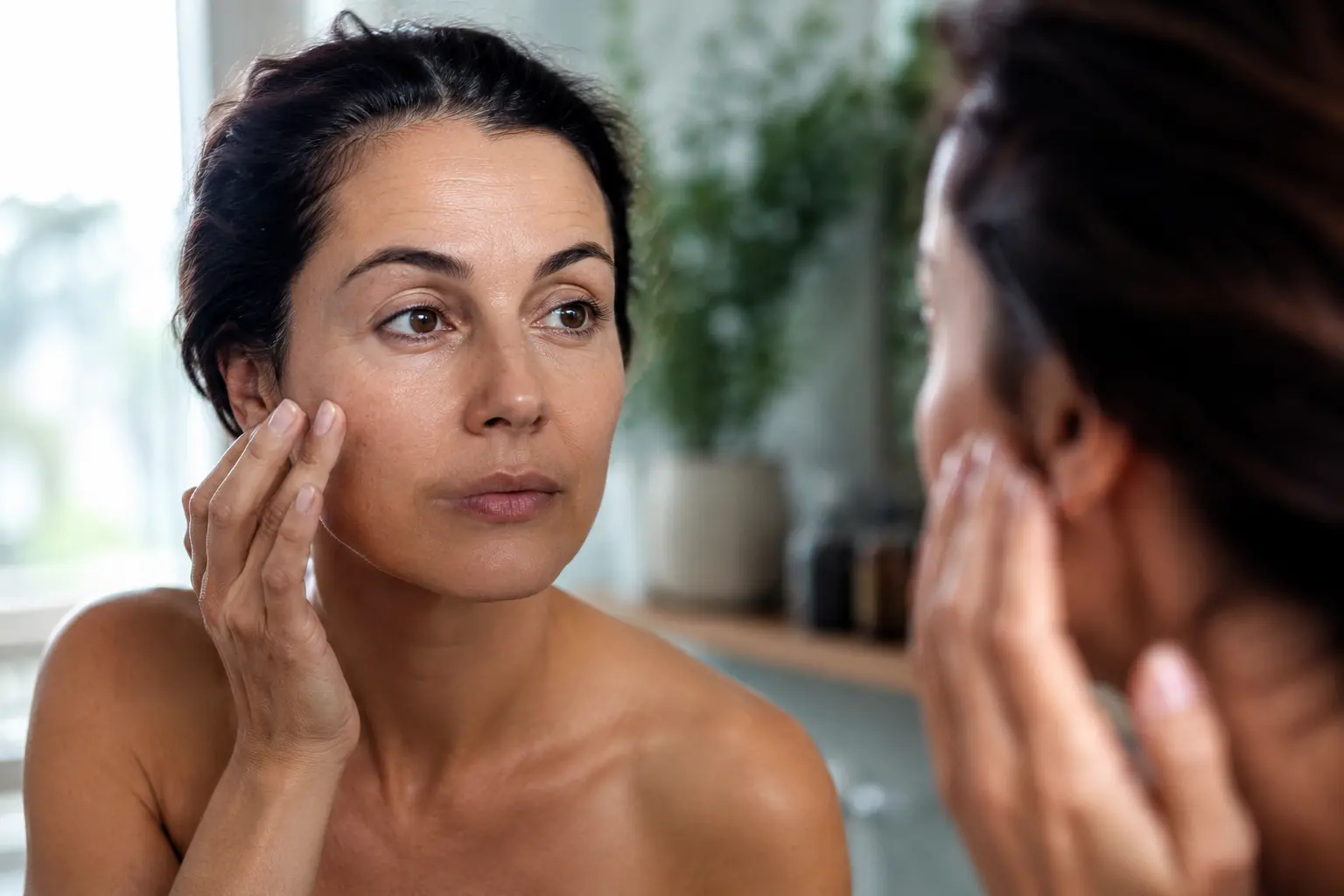
You’re staring at fine lines that weren’t there last year, wondering if you’ve already missed the window to do something about it, and honestly it’s making you feel older than you actually are, but here’s what skin longevity explained actually means: your skin’s future isn’t written in stone yet.
The biology of skin aging
Your skin is constantly working behind the scenes, and understanding what’s actually happening is the first step to making informed decisions. Skin aging operates on two distinct tracks. Intrinsic aging is your genetic blueprint at work, the one you inherited from your parents. This process gradually slows down collagen production, which is the protein responsible for keeping your skin firm and bouncy. Think of collagen like the scaffolding holding up a building, and as you age, that scaffolding naturally weakens. Cell turnover also decreases, meaning dead skin cells stick around longer instead of being replaced with fresh ones. Extrinsic aging, on the other hand, is what happens when your skin encounters the outside world. Sun exposure is the heavyweight champion here, breaking down collagen through UV radiation and creating free radicals that damage skin cells. Pollution, smoking, poor sleep, and stress all accelerate this process. The reality is that most visible aging you see in the mirror is actually extrinsic, which means it’s partially within your control.
Factors impacting skin longevity
Your skin longevity isn’t determined by one single factor, it’s more like a recipe where every ingredient matters. UV radiation is the most aggressive external threat, causing cumulative damage that shows up as wrinkles, age spots, and leathery texture over time. Environmental pollution creates oxidative stress, essentially accelerating the aging process at a cellular level. Your diet plays a surprisingly significant role too. Someone eating processed foods and sugar daily will likely see faster skin aging than someone consistently eating antioxidant-rich foods. Skincare habits matter, but not in the way most marketing suggests. It’s not about expensive products, it’s about consistency and using ingredients backed by research. Sleep deprivation is particularly harsh on skin because that’s when your body repairs itself and regenerates cells. Stress triggers inflammation throughout your body, including your skin, which can worsen conditions like acne and accelerate aging. Hydration status affects skin elasticity and how plump your skin appears. Even your exercise habits influence skin health through improved circulation and reduced inflammation.
Maintaining skin health
Building a sustainable skin health routine is about understanding the fundamentals and then actually sticking with them. Hydration works from the inside out, supporting your skin’s ability to maintain elasticity and that dewy appearance you’re after. When you’re properly hydrated, your skin cells function better and your skin barrier strengthens. Sunscreen is non-negotiable if you want to slow down visible aging, and this applies even on cloudy days because UV rays penetrate clouds. The key is using it daily and reapplying if you’re outside for extended periods. Your diet directly influences skin quality because your skin is fed by the nutrients you consume. Berries contain anthocyanins that fight free radicals, leafy greens provide vitamins and minerals that support skin repair, and fatty fish offers omega-3s that maintain your skin barrier. Beyond these basics, consistency matters more than perfection. Someone using basic products consistently will have better skin than someone using expensive products sporadically. Your skin needs time to respond to changes, typically 4 to 6 weeks before you notice real differences.
- Stay hydrated to support skin elasticity and hydration.
- Use sunscreen daily to shield the skin from harmful UV rays.
- Include antioxidant-rich foods like berries and leafy greens in your diet.
🔬 Science-backed benefits in 2 minuteschoose where to begin:
Preventive measures for skin aging
Prevention is genuinely more effective than trying to reverse damage after the fact, and the good news is that preventive measures are simple and accessible. Moisturizing regularly maintains your skin barrier, which is your skin’s first line of defense against environmental stressors and water loss. Think of your skin barrier like a brick wall, and moisturizer is the mortar holding those bricks together. Tobacco use accelerates aging dramatically by reducing blood flow to your skin and increasing free radical damage, so avoiding it is one of the most impactful choices you can make. Sleep is when your body produces growth hormone and repairs cellular damage, so consistently getting 7 to 9 hours puts you ahead of people who shortchange their sleep. Stress management through exercise, meditation, or whatever works for you reduces cortisol levels, which otherwise trigger inflammation throughout your body including your skin. A dermatologist can assess your specific skin type and concerns, recommending targeted treatments or ingredients that will actually benefit you rather than guessing based on social media trends. These preventive habits compound over time, meaning the earlier you start, the more dramatic the long-term results.
Myth vs. reality: Understanding skincare claims
The skincare industry thrives on promises that sound too good to be true because, well, they usually are. Claims about overnight transformations or miraculous results should immediately raise your skepticism because skin changes happen gradually at a cellular level. Real, lasting improvements in skin appearance take weeks and months, not days. The ingredients that actually have scientific backing are retinoids, which increase cell turnover and collagen production, vitamin C, which brightens and protects against oxidative stress, and hyaluronic acid, which holds water in your skin for plumping effect. These aren’t flashy or trendy, but they’re consistently proven in research. Many products use marketing language like natural or clinically proven without specifying what that actually means or providing evidence. A product might contain one beneficial ingredient at such a low concentration that it’s essentially useless. The price tag rarely correlates with effectiveness because expensive brands often pay more for packaging and marketing than for actual active ingredients. Reading ingredient lists and understanding what each ingredient does is far more useful than trusting marketing claims. Your skin is unique, so what works for an influencer might not work for you, and that’s completely normal.
Lifestyle choices impacting skin longevity
Your skin is a reflection of your overall health, so improving your general lifestyle naturally improves your skin. Regular exercise increases blood flow, delivering more oxygen and nutrients to your skin cells while removing metabolic waste. You’ll notice skin looks more vibrant after consistent exercise, partly because of this improved circulation. Stress management is critical because chronic stress elevates cortisol, which triggers inflammation and can worsen skin conditions or accelerate aging. Finding what actually reduces your stress, whether that’s running, yoga, painting, or gaming, matters more than following someone else’s routine. Sleep quality directly impacts skin repair and regeneration, so prioritizing consistent sleep schedules helps your skin recover from daily environmental damage. A balanced lifestyle means you’re not obsessing over skincare as a substitute for actual health habits. Someone who exercises, sleeps well, manages stress, eats reasonably well, and uses basic skincare will have better skin than someone who uses expensive products but neglects these fundamentals. The mental shift here is important: you’re not trying to achieve perfect skin, you’re supporting your skin’s natural ability to stay healthy and resilient as you age.
Skin longevity is determined by a combination of intrinsic and extrinsic factors. Maintaining skin health through hydration, sunscreen use, and a balanced diet can contribute to youthful skin appearance. Understanding skincare claims and adopting a healthy lifestyle are essential for promoting skin longevity.
Can genetics determine skin aging?
While genetics play a role in skin aging, external factors like sun exposure and lifestyle choices have a significant impact on the rate of skin aging.
Are expensive skincare products more effective?
Effectiveness in skincare products depends on the ingredients and their scientific backing rather than the price. Look for products with proven active ingredients for optimal skin health.
Others also read:
Disclaimer: This article is for informational purposes only and is not a substitute for professional medical advice. Always consult a healthcare professional for personal guidance.
This article has been prepared and reviewed by the GlobalHealthBeacon editorial team and is based on current medical research and published scientific literature available in 2026. It provides structured, evidence-based information to support informed health decisions.
