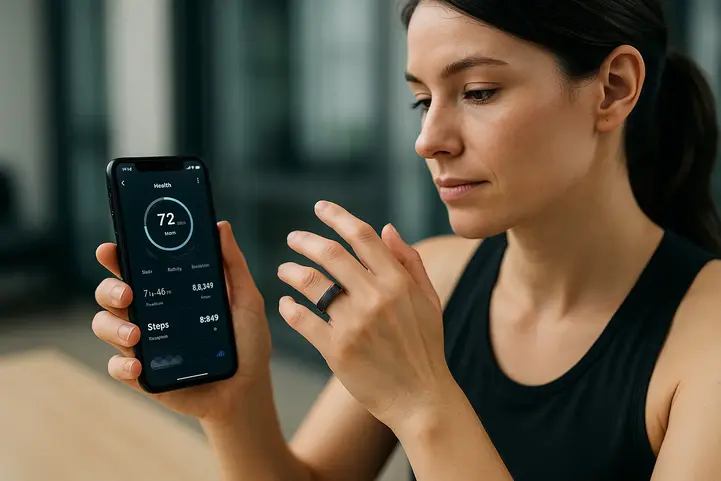
You’re staring at your smart ring wondering if those heart rate numbers actually mean anything, or if you’re just wearing an expensive piece of jewelry that’s feeding you garbage data about your health, and that uncertainty is eating at you because you want to trust smart rings ppg accuracy but have no idea if you actually can.
Understanding smart rings PPG technology
Smart rings equipped with PPG (photoplethysmography) sensors work by emitting light into your skin and measuring how blood absorbs and reflects that light. This happens continuously throughout the day, giving you a window into what your cardiovascular system is actually doing. The technology itself is solid, but here’s where young adults often get tripped up: not all PPG sensors are created equal. Some rings use green light, others use red or infrared, and each approach has trade-offs in accuracy depending on your skin tone, tattoos, or even how much you move around. Think of it like having a fitness tracker that watches your heart every second instead of just during workouts. You get real-time data on resting heart rate, heart rate variability, and oxygen saturation. The key is understanding that this data is only as good as the device quality and how consistently you wear it.
- Real-time monitoring of vital signs throughout your day and night
- Seamless integration into daily activities without the bulk of a traditional smartwatch
- User-friendly and discreet design that fits naturally into your lifestyle
How to ensure accurate readings
Getting accurate PPG readings from your smart ring comes down to three core practices. First, fit matters more than you think. Your ring should sit snugly on your finger, typically on your index or middle finger where blood flow is most consistent, but not so tight that it cuts off circulation or leaves marks. If it’s too loose, the sensor won’t make proper contact with your skin. If it’s too tight, you’ll get false readings and discomfort. Second, consistency in wear is crucial. Wearing your ring sporadically means the device can’t establish baseline patterns or detect meaningful changes in your health. Young adults who wear their rings only during workouts or certain days miss the full picture of their cardiovascular health. Third, keep the sensor clean. Dirt, sweat, or dried skin cells can interfere with light transmission, so rinse your ring regularly and dry both the sensor and your finger before putting it back on. A common mistake is assuming one size fits all. Your ring size might change seasonally or even throughout the month due to water retention, so check the fit regularly.
📘 Fix your day in under 2 minuteschoose where to begin:
Interpreting PPG data correctly
Your smart ring is feeding you raw data, but raw data without context is just noise. Heart rate variability (HRV) is one of the most useful metrics, showing the time intervals between heartbeats. Higher HRV typically suggests better recovery and lower stress, while lower HRV might indicate you’re pushing too hard or not sleeping well. Imagine you’re a 25-year-old who notices your HRV drops significantly after three nights of poor sleep and high stress at work. That’s not a sign something is wrong with you, it’s your body sending a signal that it needs recovery. Similarly, if your resting heart rate creeps up over several days, it could mean you’re coming down with something or overtraining. The mistake many young adults make is treating one data point as a diagnosis. A single elevated reading means nothing. Trends over days or weeks mean everything. If you see consistent patterns that concern you, that’s when you consult a healthcare professional. They can help you understand whether your data reflects normal variation or something that needs attention.
Comparing smart rings for young adults
When you’re shopping for a smart ring, you’re weighing several factors that directly impact whether you’ll actually use it and trust the data. Battery life matters because a ring that dies every two days is one you’ll stop wearing. Look for devices that last at least five to seven days on a single charge. Compatibility with your phone and fitness apps is equally important. If the ring doesn’t sync smoothly with your iPhone or Android device, or if it doesn’t integrate with apps you already use, the friction will kill your motivation. PPG accuracy itself varies between brands. Some rings are validated against medical-grade devices, while others are not. Check the manufacturer’s claims and look for third-party testing results. User reviews from people in your age group matter too. A 22-year-old with active lifestyle needs different features than a 35-year-old focused on sleep tracking. Read reviews from people similar to you, not just five-star marketing speak. Price is a factor, but the cheapest option often has the worst accuracy and shortest battery life, making it a false economy.
Incorporating PPG data into your lifestyle
Having data is one thing. Using it to actually change your behavior is another. Start by identifying one metric that matters to you. Maybe it’s resting heart rate if you’re training for something, or HRV if you’re managing stress, or sleep quality if you’re struggling with recovery. Track that one metric for two weeks to establish your baseline. Then set a realistic goal. If your average resting heart rate is 72 bpm, aiming for 60 bpm in two weeks is unrealistic. Aiming for 70 bpm through consistent cardio is achievable. Use your ring data to inform decisions about your day. If your HRV is low, maybe you skip the intense workout and do yoga instead. If your sleep data shows you’re averaging five hours, you know why you’re feeling foggy. The power isn’t in the numbers themselves, it’s in the feedback loop. You see the data, you adjust your behavior, you see the results. That’s how young adults actually stick with health tracking instead of abandoning it after a month.
Smart rings with PPG sensors provide valuable health insights for young adults when you understand the technology, ensure proper fit and consistent wear, and interpret trends rather than isolated data points. By choosing a device that fits your lifestyle and using the data to inform real behavioral changes, you can make informed decisions to enhance your well-being.
Are smart rings with PPG sensors accurate for monitoring heart health in young adults?
Smart rings with PPG sensors can offer reliable data on heart rate and other vital signs when worn correctly and consistently. Accuracy depends on proper fit, sensor quality, and your individual physiology. Ensure your ring sits snugly on your index or middle finger, keep the sensor clean, and interpret data as trends rather than single readings. If you have specific health concerns, consult a healthcare professional to validate what your ring is showing you.
How can I choose the best smart ring for my health tracking needs?
Consider factors such as PPG accuracy validation, battery life of at least five to seven days, compatibility with your phone and fitness apps, and user reviews from people similar to you. Choose a device that seamlessly integrates into your lifestyle so you’ll actually wear it consistently. Read third-party testing results when available, and prioritize rings from manufacturers who validate their accuracy claims against medical-grade devices.
Disclaimer: This article is for informational purposes only and is not a substitute for professional medical advice. Always consult a healthcare professional for personal guidance.
This guide has been prepared and reviewed by the GlobalHealthBeacon editorial team and reflects current medical research as of 2026. It provides structured, evidence-based information to support informed health decisions.
