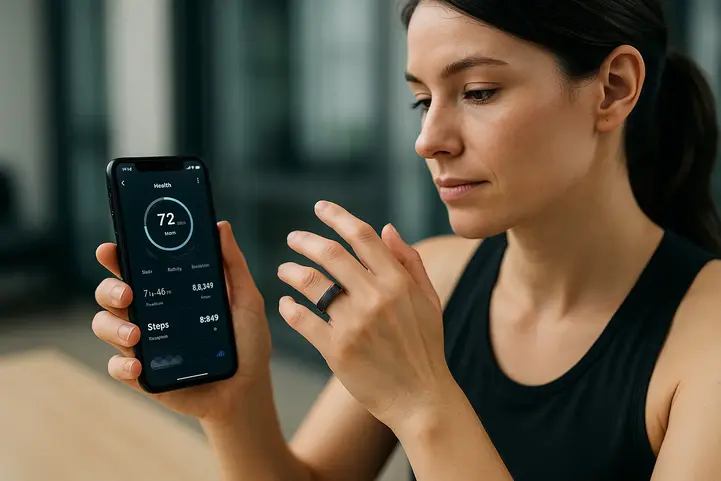
You’re checking your heart rate on your smart ring and it jumps 20 beats in seconds, leaving you wondering if you should panic or ignore it, which is exactly why understanding smart rings PPG accuracy matters before you let a piece of tech influence your health decisions.
Understanding smart rings PPG technology
Smart rings use photoplethysmography, or PPG, which sounds complicated but works on a simple principle: your blood absorbs light differently depending on how much oxygen it carries. The sensor in your ring emits light into your skin and measures what bounces back. Think of it like a tiny flashlight reading your blood’s story in real time. These devices track heart rate, blood oxygen, and sleep by analyzing light absorption patterns in your capillaries. The technology is clever, but here’s what matters for you: PPG accuracy depends heavily on how snugly your ring fits, your skin tone, the ambient light around you, and even how still your hand is. Young adults often move around more during workouts or daily activities, which can introduce motion artifacts that throw off readings. Understanding these variables helps you interpret your data more intelligently rather than treating every number as gospel truth.
- PPG technology relies on the principle that blood absorbs light differently depending on its oxygenation level.
- Smart rings continuously monitor your vital signs, providing real-time data for health tracking.
- The accuracy of PPG sensors in smart rings is influenced by factors like skin tone, ambient light, and sensor placement.
Interpreting smart ring readings
Your smart ring gives you numbers, but numbers without context are just noise. Resting heart rate is one of the most useful metrics because it shows your baseline when you’re calm and still. If your resting rate is typically 60 bpm and suddenly spikes to 75, that might signal stress, illness, or poor sleep rather than a fitness breakthrough. Oxygen saturation readings from smart rings offer estimates, not clinical precision, so use them to spot trends rather than diagnose conditions. Sleep metrics from rings track movement and heart rate variability to guess when you’re awake versus asleep, but they miss the deeper sleep architecture that lab tests capture. The real power comes from comparing your readings over weeks and months. Notice patterns: Does your heart rate dip after exercise? Does sleep improve when you avoid caffeine? These personal baselines become your reference point. Young adults especially benefit from this approach because you can establish healthy baselines now and catch meaningful deviations later.
📘 Fix your day in under 2 minuteschoose where to begin:
Optimizing smart ring performance
Getting accurate readings starts with how you wear your ring. Position it on your finger so it sits snugly but not painfully tight, usually on your index or middle finger where blood flow is most consistent. The sensor needs direct contact with skin, so avoid wearing it over calluses or dry patches. Keep the sensor clean and dry because dirt, sweat buildup, or moisture creates interference that degrades readings. After workouts, rinse your ring gently and dry it completely before wearing again. Firmware updates matter more than you might think because manufacturers regularly improve algorithms based on real-world data. Check your ring’s app monthly for updates and install them promptly. Some rings offer manual calibration features where you compare your ring reading to a medical device and let the app adjust its algorithm. If your ring supports this, do it quarterly. Environmental factors also play a role: bright sunlight can confuse PPG sensors, so avoid taking critical readings in direct sunlight. These small optimizations compound over time and significantly improve the reliability of your health data.
Evaluating smart ring apps
Your ring is only as useful as the app that displays its data. Start by exploring what features matter to you: Do you want detailed sleep breakdowns, workout integration, or trend analysis? Some apps excel at visualizing data while others focus on community features and challenges. Test the app’s interface during the free trial period and ask yourself if you actually understand what you’re looking at or if it feels cluttered. Data privacy is non-negotiable, especially for health information. Check the app’s privacy policy to see if your data is encrypted, whether it’s sold to third parties, and how long it’s retained. Young adults often overlook this, but your health data is valuable and worth protecting. Many smart ring apps have active communities where users share experiences, ask questions, and motivate each other. Engaging with these communities can help you learn how others interpret their data and troubleshoot common issues. However, remember that community advice is peer support, not medical guidance. Use the app as a personal coach, not as a replacement for professional input.
Seeking professional guidance
Smart ring data is informative, but it has limits. If you notice concerning patterns like consistently elevated resting heart rate, irregular readings, or sleep that never improves despite lifestyle changes, talk to a healthcare provider. Bring your ring data with you to appointments because it gives doctors context about your baseline health. A cardiologist can explain what your oxygen saturation readings actually mean for your heart health. A sleep specialist can compare your ring’s sleep estimates to clinical sleep studies if you suspect a sleep disorder. Fitness coaches can help you use heart rate variability data to optimize training intensity and recovery. The key is positioning smart rings as a tool that complements professional advice, not replaces it. Young adults are often the healthiest demographic, which can create a false sense of invulnerability, but establishing good health habits and professional relationships now pays dividends later. Use your smart ring to stay informed and motivated, but lean on professionals when data raises questions or when you need personalized interpretation.
Smart rings employ PPG technology to track vital signs like heart rate and oxygen levels. Understanding the technology, interpreting readings accurately, and optimizing performance are key to maximizing the benefits of smart rings for health monitoring.
Can smart rings accurately measure blood oxygen levels?
Smart rings can provide estimates of blood oxygen saturation levels, but medical-grade devices like pulse oximeters offer more precise readings for clinical purposes.
How reliable are smart rings in tracking sleep patterns?
Smart rings can offer insights into sleep duration and quality based on movement patterns and heart rate variability. However, polysomnography in sleep clinics remains the gold standard for comprehensive sleep analysis.
Others also read:
Disclaimer: This article is for informational purposes only and is not a substitute for professional medical advice. Always consult a healthcare professional for personal guidance.
This guide has been prepared and reviewed by the GlobalHealthBeacon editorial team and reflects current medical research as of 2026. It provides structured, evidence-based information to support informed health decisions.
