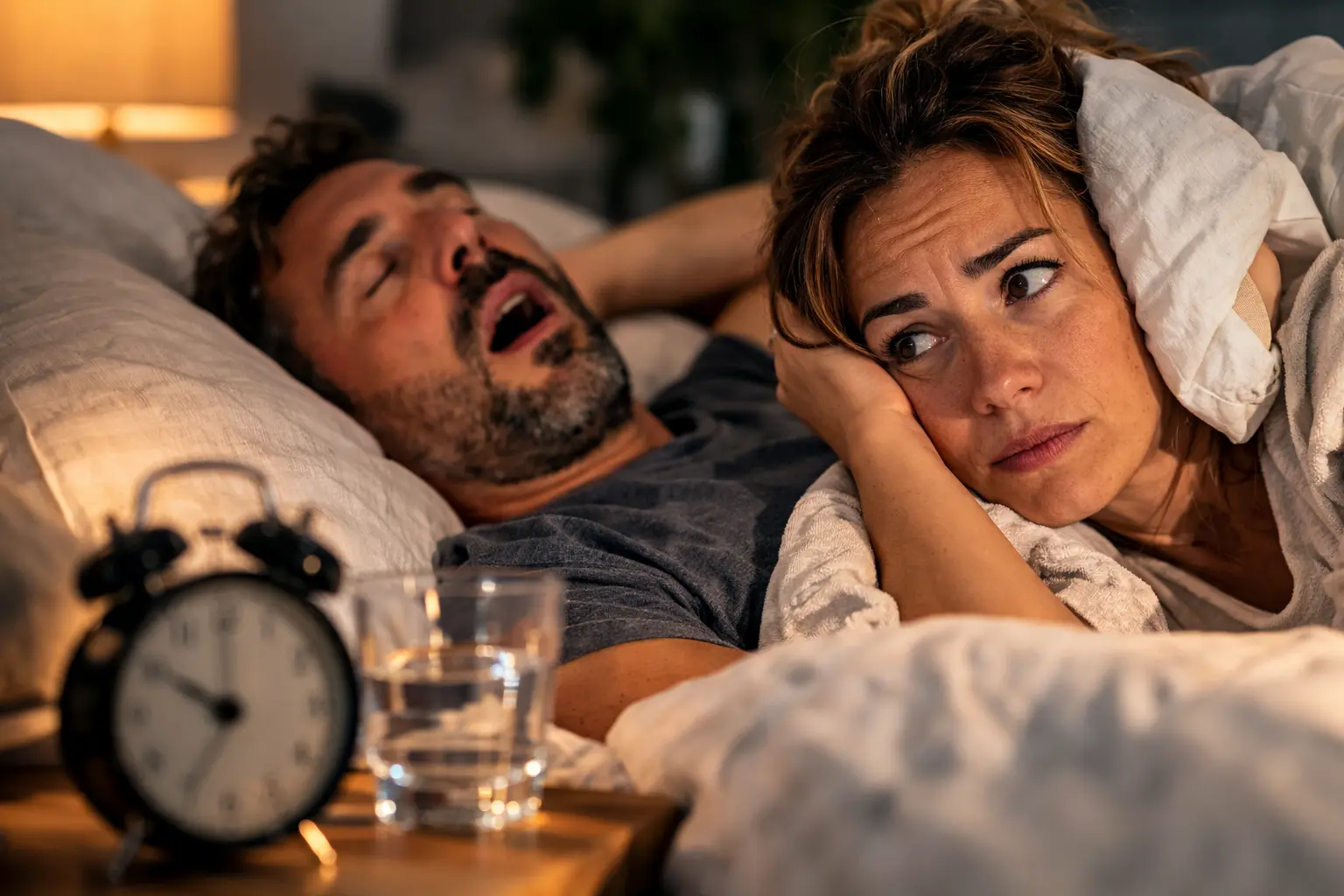
You’ve slept soundly your whole life, then suddenly at 60 or 65 you’re jolting awake to the sound of your own snoring, leaving your partner exhausted and you confused about what changed – snoring causes explained at last.
Anatomy at play
Think of your throat like a tunnel that stays perfectly open when you’re young and vibrant. But as the years roll by, something shifts. The muscles that keep that tunnel open start to lose their tone, kind of like how your arms might not be as firm as they once were. For many seniors, this happens gradually without warning. Your throat tissues become softer and more relaxed, and during sleep when your body is completely at rest, gravity does its work. The airway narrows, and air has to squeeze through a tighter space, creating vibrations in the tissues. That vibration is the snoring sound you hear. Some seniors tell stories of waking up shocked, wondering if they’ve always snored and just didn’t notice, while others pinpoint the exact year it started. Weight changes in your 60s and 70s can speed this process along, adding extra tissue around the neck that further compresses the airway. It’s not a sign of weakness or failure – it’s simply how our bodies change.
- Throat muscle laxity increases with age, affecting airway patency.
- Natural tissue degeneration can contribute to airway narrowing during sleep.
- Weight gain in later years can exacerbate snoring by further constricting air passages.
Sleep habits survey
Picture this: you’ve spent decades sleeping the same way, maybe on your back with a thin pillow that worked fine for 40 years. Then one day you notice the snoring starts. Sometimes it’s not about your body changing as much as it is about how you’re positioning that body at night. Sleeping flat on your back is one of the biggest culprits for seniors because gravity pulls your tongue and soft palate backward into the airway. Switching to your side, even just propping yourself up with an extra pillow, can make a real difference. Many seniors also find that their evening habits shift with age. That glass of wine or nightcap that never bothered you before? Alcohol relaxes muscles throughout your body, including those crucial throat muscles, making snoring more likely. Even the height and firmness of your pillow matters more than you’d think. A pillow that’s too high or too low can kink your neck and restrict airflow. One woman in her late 60s discovered her snoring vanished almost entirely just by switching to a side-sleeping position and cutting back on her nightly drink.
💬 Ready to feel better in 2 minutes?choose where to begin:
Environmental factors
Your bedroom might be silently sabotaging your sleep without you realizing it. Dust accumulates differently as we age, and seniors often spend more time indoors, meaning more exposure to household allergens. Pet dander, dust mites living in your mattress, mold in corners or around windows – these invisible irritants cause inflammation in your nasal passages and throat. When your nose is congested, you naturally breathe through your mouth at night, which makes snoring much worse. One retired teacher realized her snoring problem got significantly worse after she brought her cat into the bedroom full-time. Another senior discovered that running an air purifier and washing bedding weekly in hot water reduced his snoring noticeably. The bedroom environment is often overlooked, but it plays a surprisingly large role. Even humidity levels matter – a bedroom that’s too dry irritates airways, while one that’s too humid can encourage mold growth. Taking time to assess what’s actually in your sleeping space can reveal simple fixes that have nothing to do with your body and everything to do with what surrounds it.
Seeking solutions
Once you understand why snoring started, you can actually do something about it. The good news is that late-onset snoring often responds well to practical changes. Start with the simplest adjustments: sleep position, bedroom cleanliness, and cutting back on alcohol before bed. Many seniors find that losing even 5 to 10 pounds takes pressure off the airway. Regular movement during the day, whether that’s walking, swimming, or gentle yoga, strengthens muscles throughout your body including your throat. Nasal strips are inexpensive and can help if congestion is part of the problem. Some seniors benefit from a humidifier that keeps airways moist. If lifestyle changes don’t help enough, there are devices like mandibular advancement appliances that gently position your lower jaw forward, keeping the airway open. And if snoring is accompanied by gasping for breath or extreme daytime tiredness, that’s when a conversation with your doctor becomes important. One man in his 70s tried everything from position pillows to nasal sprays before discovering that a simple dental device solved his problem completely. The key is not accepting snoring as an inevitable part of aging, but rather treating it as a solvable puzzle with multiple pieces.
Late-onset snoring in seniors often stems from anatomical changes in throat muscles and tissues, altered sleep habits, environmental triggers, and underlying health conditions. Understanding these factors and exploring tailored solutions can help mitigate snoring, ensuring a restful night’s sleep.
Can snoring in seniors indicate a more serious health issue?
Yes, in some cases, snoring can be a sign of sleep apnea or other sleep disorders that may require medical attention. If snoring is disrupting your sleep or you experience symptoms like excessive daytime fatigue, it’s advisable to consult a healthcare provider.
Are there lifestyle changes that can help reduce snoring for seniors?
Absolutely. Seniors can benefit from maintaining a healthy weight, avoiding alcohol before bedtime, sleeping on their side, and ensuring a clean sleeping environment free of allergens. These simple adjustments can often alleviate snoring episodes.
Others also read:
Disclaimer: This article is for informational purposes only and is not a substitute for professional medical advice. Always consult a healthcare professional for personal guidance.
This article presents an experience-based perspective and has been reviewed by the GlobalHealthBeacon editorial team in 2026. It provides structured, evidence-based information to support informed health decisions.
