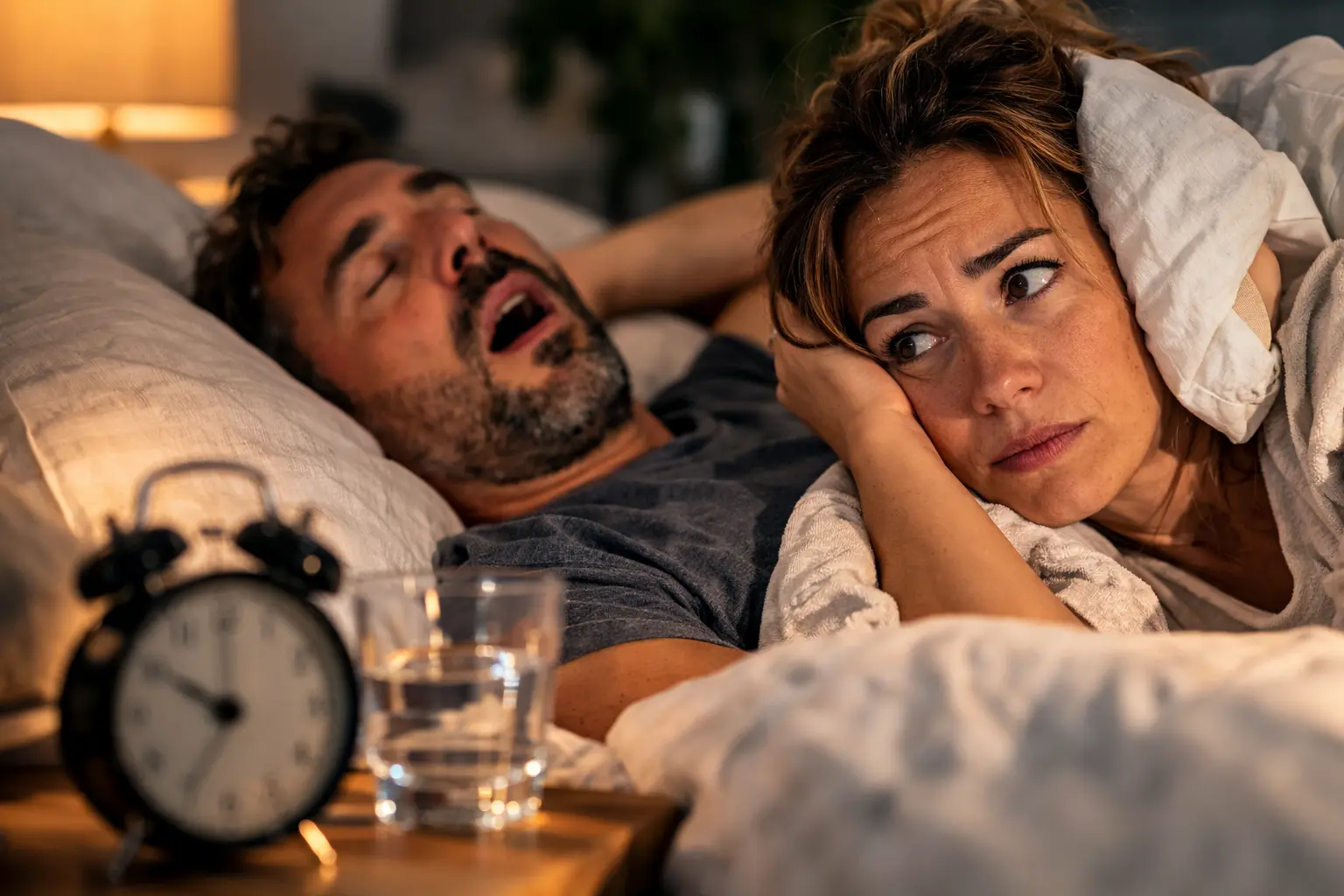
You wake up gasping, your partner’s been sleeping in another room for months, and you’re exhausted despite eight hours in bed – snoring causes explained and why it might be more serious than you think.
Understanding the basics of snoring
Snoring happens when air moving through your throat during sleep causes the soft tissues there to vibrate, creating that distinctive sound. Think of it like a flag flapping in the wind, except the flag is your uvula and soft palate. Most people snore occasionally, especially when they’re congested or sleeping on their back, but for some it becomes a nightly occurrence. The intensity varies wildly too – some people produce a gentle rumble while others sound like a chainsaw. What matters is recognizing the pattern. If you’re snoring most nights, your body is signaling that something in your airway mechanics isn’t quite right. It could be as simple as nasal congestion or excess throat tissue, but persistent snoring deserves attention because it often correlates with disrupted breathing patterns during sleep.
Snoring vs sleep apnea: Deciphering the link
Here’s where things get tricky: snoring and sleep apnea are related but not identical. Snoring is the sound, while sleep apnea is the actual interruption of breathing. Imagine snoring as the warning light on your dashboard and sleep apnea as the engine problem itself. Most people with sleep apnea do snore, but not everyone who snores has sleep apnea. The key difference lies in what’s happening to your breathing. With simple snoring, air still flows through your airway, just turbulently. With sleep apnea, your airway partially or completely collapses, stopping airflow for seconds or even minutes. Your brain then jolts you awake to restart breathing, fragmenting your sleep into dozens or hundreds of micro-awakenings per night. You might not remember these interruptions, but your body certainly does. This distinction matters because sleep apnea carries serious health consequences that simple snoring doesn’t.
Identifying the signs of sleep apnea
The warning signs of sleep apnea go beyond just noise. You might notice loud, gasping breaths or choking sounds during sleep, which are your body’s desperate attempts to restart breathing. Daytime symptoms often hit harder: crushing fatigue that coffee can’t fix, irritability that surprises you, brain fog that makes work difficult, or morning headaches that feel like a hangover. Some people describe it as feeling like they’re running on fumes all day. You might fall asleep during meetings, while driving, or even mid-conversation. Your partner might report that you stop breathing for alarming stretches, then gasp back to life. You could experience mood swings, difficulty concentrating, or weight gain despite no dietary changes. These symptoms accumulate because your sleep quality is severely compromised. Your body never reaches the deep, restorative sleep stages it needs, leaving you chronically sleep-deprived even though you spent eight hours in bed.
- Schedule an appointment with your primary care doctor or sleep specialist and describe your snoring patterns, daytime fatigue, and any witnessed breathing interruptions your partner has noticed
- Undergo a sleep study, either at a sleep clinic or using a home sleep apnea test, which monitors your breathing, oxygen levels, and sleep stages to confirm whether sleep apnea is present
- Review your test results with your healthcare provider to understand your apnea-hypopnea index score and severity level, then discuss treatment options tailored to your specific condition
🔬 Science-backed benefits in 2 minuteschoose where to begin:
Health risks linked to sleep apnea
Untreated sleep apnea isn’t just an inconvenience, it’s a genuine health threat. The repeated oxygen drops strain your cardiovascular system, significantly increasing your risk of high blood pressure, heart attack, and stroke. Your heart works overtime trying to compensate for the oxygen deprivation, and over time this takes a toll. Beyond cardiac issues, sleep apnea disrupts your metabolic function, making you more vulnerable to type 2 diabetes and weight gain, which then worsens the apnea in a vicious cycle. Your brain suffers too. Chronic sleep fragmentation impairs cognitive function, affecting memory, decision-making, and reaction time. Some research suggests links to increased dementia risk with long-term untreated apnea. Mood disorders like depression and anxiety become more common. Your immune system weakens, making you more susceptible to infections. Even your relationships suffer when you’re irritable, exhausted, and your partner is losing sleep too. The sobering reality is that sleep apnea significantly shortens lifespan if left untreated, making early intervention genuinely life-changing.
Treatment options for sleep apnea
Treatment depends on your apnea severity and personal circumstances. CPAP therapy, the gold standard, uses gentle air pressure to keep your airway open throughout the night. It sounds intimidating but many users report feeling dramatically better within days. Oral appliances work differently, repositioning your lower jaw to prevent airway collapse, and some people prefer them to CPAP machines. Surgery is an option for certain anatomical issues, though it’s typically considered after other treatments. Lifestyle modifications matter significantly too. Weight loss, even modest amounts, can dramatically improve or resolve sleep apnea. Sleeping on your side instead of your back helps gravity work with you rather than against you. Avoiding alcohol and sedatives before bed prevents throat muscle relaxation. Treating nasal congestion and managing allergies removes obstacles. Some people benefit from positional therapy devices that gently nudge you away from back-sleeping. The right approach often combines multiple strategies. Your sleep specialist will help determine what works best for your situation, and finding the right treatment typically transforms both your sleep quality and daytime functioning.
Conclusion on snoring and sleep apnea
Snoring isn’t always a red flag, but persistent loud snoring absolutely warrants investigation. The connection between snoring and sleep apnea is real and significant, even though not every snorer has apnea. What matters is understanding your body’s signals and taking them seriously. If you’re snoring most nights, experiencing daytime fatigue, or your partner reports breathing interruptions, these are legitimate reasons to seek evaluation. Sleep apnea is highly treatable when diagnosed early, and effective treatment can add years to your life while dramatically improving your daily quality of life. You don’t have to accept chronic exhaustion or put your health at risk. The pathway forward starts with honest acknowledgment that something needs attention, followed by professional evaluation and appropriate treatment. Your sleep, your health, and your relationships are worth the effort to get this right.
Persistent loud snoring could indicate sleep apnea, a serious sleep disorder that disrupts breathing and fragments sleep. Identifying the signs and seeking professional evaluation is essential for effective management and improved health outcomes.
Is snoring always a sign of sleep apnea?
No, snoring can occur without sleep apnea. Many people snore occasionally due to congestion, sleeping position, or anatomical factors without experiencing breathing interruptions. However, if you snore regularly, experience daytime fatigue, or your partner reports witnessed breathing pauses, these patterns warrant professional evaluation to rule out sleep apnea.
Can sleep apnea be cured?
Sleep apnea is typically a chronic condition rather than something that gets permanently cured, but it can be effectively managed or even resolved with appropriate treatment. CPAP therapy, oral appliances, surgery, or lifestyle changes like weight loss can eliminate symptoms and restore normal breathing during sleep. Success depends on the underlying cause and your commitment to treatment.
Others also read:
Disclaimer: This article is for informational purposes only and is not a substitute for professional medical advice. Always consult a healthcare professional for personal guidance.
This article has been prepared and reviewed by the GlobalHealthBeacon editorial team and is based on current medical research and published scientific literature available in 2026. It provides structured, evidence-based information to support informed health decisions.
