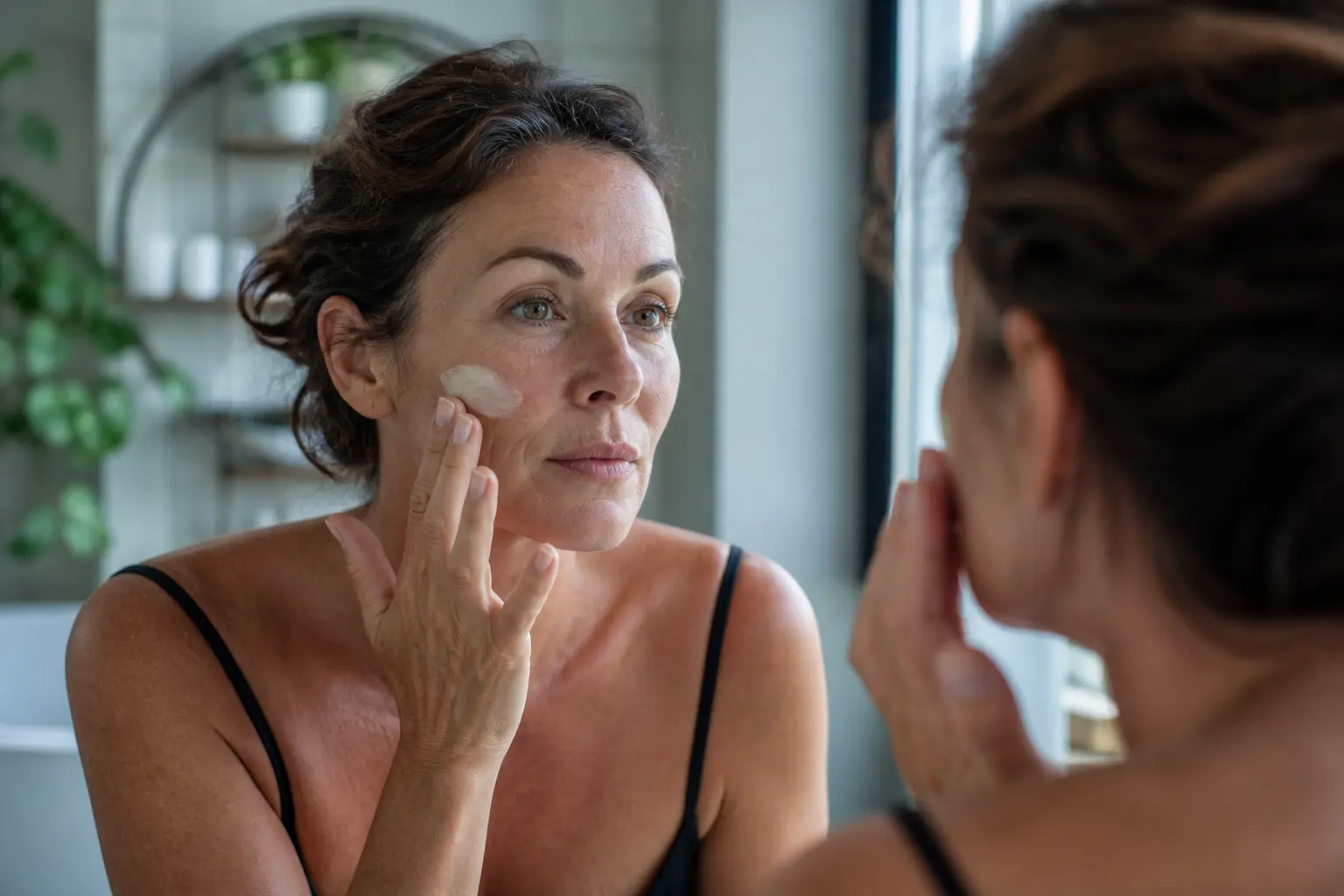
You look in the mirror and see sun damage staring back at you, but here’s what most people miss: understanding spf anti aging benefits could literally change how your skin ages from this moment forward.
Understanding SPF and skin aging
SPF, or Sun Protection Factor, represents one of the most direct defenses your skin has against the visible effects of aging. When you spend decades in the sun without protection, UV radiation penetrates the outer layers of your skin and damages the cellular structures beneath. Think of it like this: imagine your skin as a brick wall, and UV rays as tiny hammers chipping away at the mortar that holds everything together. Over time, those chips accumulate into visible damage. SPF works by creating a barrier that either absorbs or reflects these UV rays before they can reach your skin cells. The result is measurable: fewer wrinkles, less sagging, and fewer age spots. For seniors who have already experienced sun exposure, understanding this mechanism helps explain why sun protection becomes even more critical as we age. Your skin has less ability to repair itself naturally, making prevention and protection increasingly important.
Mechanism of action: How SPF protects your skin
The science behind SPF involves two main types of protection: chemical and physical. Chemical sunscreens absorb UV radiation and convert it into heat, which your skin then releases. Physical sunscreens, containing ingredients like zinc oxide or titanium dioxide, sit on your skin’s surface and reflect UV rays away like a tiny mirror. Both approaches prevent UV radiation from reaching and damaging collagen and elastin, the proteins responsible for your skin’s firmness and elasticity. When collagen breaks down, your skin loses its ability to bounce back, leading to wrinkles and sagging. Elastin damage causes similar problems, making your skin appear loose and aged. A practical example: consider two people who spent their summers gardening for 40 years. One wore SPF 30 daily, while the other did not. The person with consistent SPF protection typically shows significantly fewer deep wrinkles and age spots. This difference becomes even more pronounced in your 60s and 70s, when cumulative sun damage becomes impossible to ignore.
The major benefits of SPF for anti-aging
SPF offers three primary anti-aging benefits that directly address what seniors notice most. First, it prevents premature aging caused by UV exposure, which accounts for approximately 80 percent of visible skin aging. Second, it reduces the appearance of fine lines and wrinkles by protecting collagen from breakdown. Third, it protects against age spots and discoloration, those brown patches that become increasingly common with age. Beyond these primary benefits, consistent SPF use also helps maintain an even skin tone and prevents the rough, leathery texture that develops from chronic sun exposure. Many seniors report that starting SPF protection, even later in life, slows the progression of existing damage and prevents new damage from forming. For example, a 65-year-old who begins using SPF 30 daily will likely see less dramatic worsening of their skin over the next five years compared to someone who continues without protection. The key insight here is that it’s never too late to benefit from sun protection.
- Apply SPF daily, even on cloudy days, since UV rays penetrate clouds and reflect off surfaces like water, concrete, and snow.
- Use a broad-spectrum SPF of at least 30 for optimal protection against both UVA and UVB rays.
- Reapply every 2 hours when exposed to the sun, or immediately after swimming or sweating.
🔬 Science-backed benefits in 2 minuteschoose where to begin:
Choosing the right SPF product
Selecting an SPF product requires understanding your specific skin needs. Broad-spectrum protection is non-negotiable, as it shields against both UVA rays (which cause aging) and UVB rays (which cause burning). Water-resistant formulations matter if you swim or spend extended time outdoors. For seniors with sensitive skin, mineral sunscreens containing zinc oxide or titanium dioxide often cause less irritation than chemical alternatives. If you have dry skin, look for SPF products with hydrating ingredients like glycerin or hyaluronic acid. Those with oily skin might prefer lightweight, non-comedogenic formulas. A practical scenario: imagine you have rosacea or easily irritated skin. A fragrance-free, mineral-based SPF 30 might be your ideal choice, whereas someone with normal skin might prefer a chemical sunscreen that feels lighter and absorbs faster. Testing a small amount on your inner arm before full application helps identify potential reactions. Many dermatologists recommend keeping a dedicated SPF product for your face separate from body sunscreen, as facial skin is more sensitive and deserves a more carefully formulated product.
Additional anti-aging measures
SPF works best as part of a comprehensive skincare strategy rather than as a standalone solution. Combining SPF with antioxidants like vitamin C, vitamin E, or green tea extract provides enhanced protection against free radicals, unstable molecules that accelerate aging. These antioxidants work synergistically with SPF to neutralize damage at the cellular level. Beyond topical products, maintaining a healthy lifestyle amplifies SPF’s benefits. Proper hydration keeps your skin plump and resilient, making fine lines less noticeable. A balanced diet rich in omega-3 fatty acids, antioxidants, and vitamins supports your skin’s natural repair processes. Regular sleep allows your body to focus on cellular regeneration. For example, a 70-year-old who uses SPF 30 daily, applies a vitamin C serum in the morning, drinks adequate water, and gets seven hours of sleep will likely see better skin outcomes than someone using SPF alone without these supporting habits. Think of SPF as the foundation of a house, but the walls, roof, and interior all matter equally for structural integrity.
Consulting a dermatologist for personalized advice
While general SPF guidance applies to most people, your individual skin requires personalized assessment. A dermatologist can evaluate your specific skin type, existing damage, sensitivities, and health conditions to recommend the most appropriate SPF product and concentration. They can also identify whether you have precancerous lesions or other concerns that require monitoring. During a consultation, bring photos of your skin from previous years if available, as this helps your dermatologist assess how your skin has changed. Discuss any products you currently use, as some ingredients interact with sunscreen. Ask about your specific risk factors based on your family history and past sun exposure. A practical example: if you have a history of skin cancer in your family, your dermatologist might recommend SPF 50 instead of SPF 30, or suggest additional protective measures like protective clothing. If you take medications that increase sun sensitivity, your dermatologist can advise on extra precautions. This personalized approach ensures you’re not just using SPF, but using the right SPF for your unique situation.
SPF shields your skin from UV damage that causes premature aging, wrinkles, age spots, and sagging. By understanding how SPF works and choosing the right product for your skin type, you create a foundation for healthier aging. Combining SPF with antioxidants, hydration, and healthy lifestyle habits amplifies protection, while consulting a dermatologist ensures your approach is tailored to your individual needs.
Can SPF prevent all signs of aging?
SPF prevents UV-induced aging, which accounts for roughly 80 percent of visible skin aging, but it does not address natural aging processes like loss of elasticity from decreased collagen production with age. Using SPF in conjunction with other skincare practices, healthy lifestyle habits, and professional treatments provides more comprehensive anti-aging results.
Is a higher SPF always better for anti-aging?
SPF 30 blocks approximately 97 percent of UVB rays, while SPF 50 blocks about 98 percent, so the difference becomes marginal at higher numbers. Consistency and reapplication matter far more than using the highest SPF available. Most dermatologists recommend SPF 30 or higher for daily use, with reapplication every two hours during sun exposure.
Others also read:
Disclaimer: This article is for informational purposes only and is not a substitute for professional medical advice. Always consult a healthcare professional for personal guidance.
This article has been prepared and reviewed by the GlobalHealthBeacon editorial team and is based on current medical research and published scientific literature available in 2026. It provides structured, evidence-based information to support informed health decisions.
