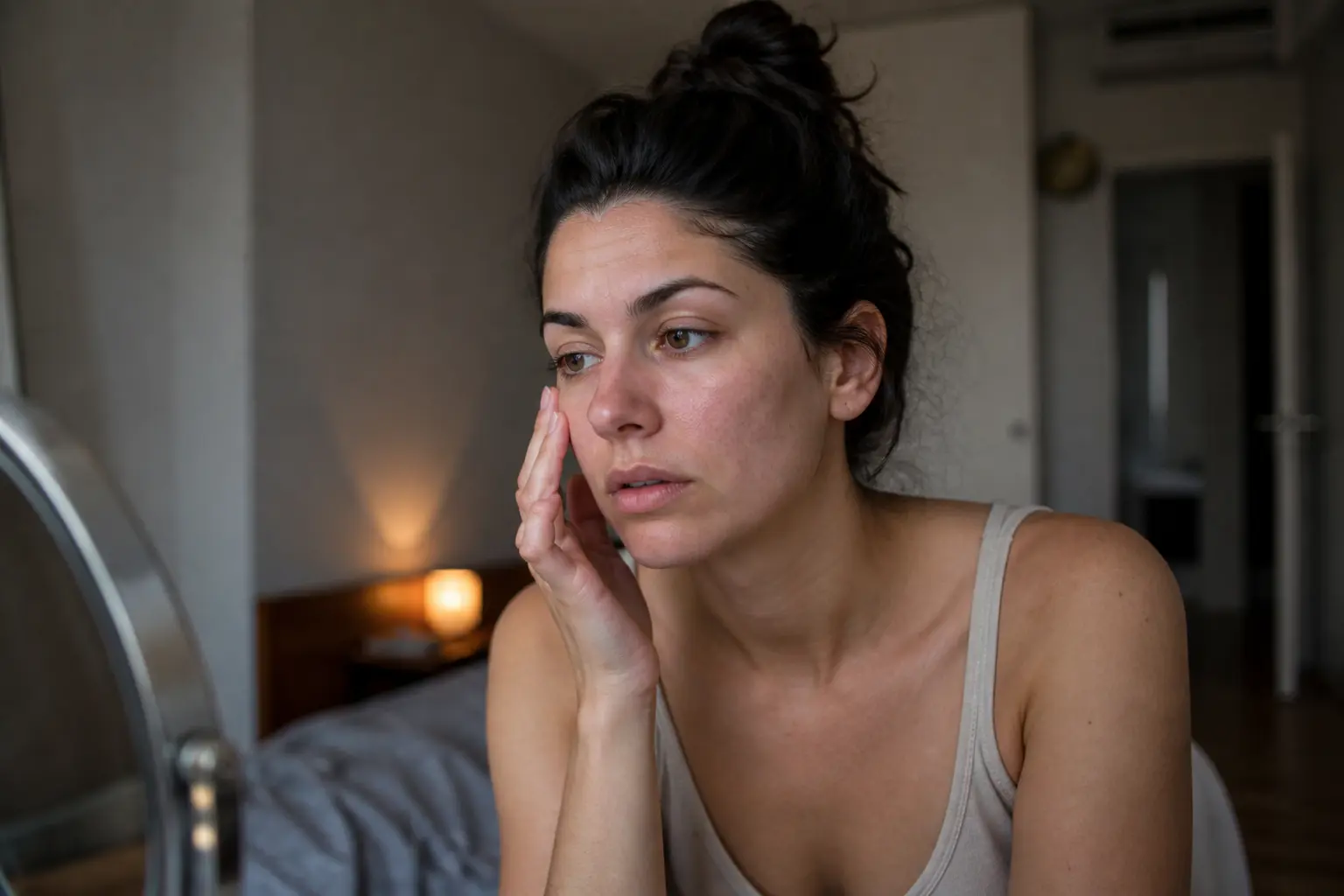
You wake up, look in the mirror, and there it is again – another cluster of angry red bumps right when you needed your skin to cooperate, and deep down you know it’s because you’ve been running on fumes and stress for weeks, which is exactly how stress cortisol skin effects work their damage on young adults like you.
Understanding stress and cortisol
Here’s what happens inside your body when stress hits: your brain signals the release of cortisol, a hormone designed to help you handle threats. But in modern life, stress is constant, so cortisol stays elevated. This persistent elevation triggers your skin’s sebaceous glands to produce excess oil. Imagine your pores as tiny channels that get clogged when oil production spikes. That excess oil mixes with dead skin cells and bacteria, creating the perfect environment for acne to flourish. A 22-year-old college student might notice breakouts spike during midterm season, or a young professional might see their skin worsen during a major project deadline. The connection is real and measurable. Beyond oil production, elevated cortisol also weakens your skin’s barrier function and increases inflammation throughout your body, which shows up on your face as redness, sensitivity, and those frustrating stress-induced pimples that seem to appear overnight.
- Learn how stress affects cortisol levels in your body.
- Understand the role of cortisol in skin inflammation and acne development.
- Discover the importance of stress management for overall skin health.
Practical steps to reduce stress
Reducing stress isn’t about achieving zen perfection – it’s about building small, sustainable habits into your week. Start with one practice that feels realistic for your schedule. Mindfulness meditation doesn’t require an hour of silence; even five minutes each morning can lower cortisol. Try sitting quietly with your phone on silent, focusing on your breath, noticing when your mind wanders, and gently returning attention to breathing. Yoga offers similar benefits with the added bonus of physical movement – even a 15-minute YouTube session before bed can shift your nervous system. Exercise is perhaps the most direct cortisol reducer: a 30-minute walk, run, or strength training session burns off stress hormones and releases endorphins that improve mood. For those who struggle with traditional meditation, journaling works equally well. Spend ten minutes writing about what’s stressing you, what you’re grateful for, or what you want to accomplish. The act of externalizing thoughts reduces their grip on your mind. Some young adults find success with breathing techniques like the 4-7-8 method: inhale for four counts, hold for seven, exhale for eight. Practice this when you feel stress building. The key is consistency over intensity. A daily 10-minute practice beats sporadic hour-long attempts.
📘 Fix your day in under 2 minuteschoose where to begin:
Healthy skin care habits
Your skincare routine becomes especially important when stress is high because stressed skin is more reactive and fragile. Start with a gentle cleanser – not the harsh, stripping kind that leaves your skin feeling tight. Cleanse twice daily, morning and night, using lukewarm water and your fingertips rather than a washcloth. After cleansing, apply a lightweight moisturizer while your skin is still slightly damp; this locks in hydration and supports your skin barrier. Add a broad-spectrum SPF 30 or higher every morning, even on cloudy days, because UV damage compounds stress-related inflammation. At night, consider a targeted treatment: if you have active acne, a low-concentration salicylic acid or niacinamide serum can help; if your skin is inflamed, a calming ingredient like centella asiatica or aloe vera reduces redness. Avoid the temptation to over-treat or use multiple active ingredients at once – this overwhelms stressed skin and triggers more irritation. Skip heavy makeup on days when acne is active; let your skin breathe. If you do wear makeup, choose non-comedogenic products and remove them completely before bed. Most importantly, resist the urge to pick or squeeze breakouts, which spreads bacteria and deepens inflammation. Keep your hands away from your face throughout the day.
Balanced diet and hydration
What you eat directly influences your skin’s ability to heal and resist acne. Focus on whole foods rich in antioxidants like berries, leafy greens, and colorful vegetables – these combat inflammation at the cellular level. Omega-3 fatty acids from sources like salmon, walnuts, and flaxseeds support your skin barrier and reduce inflammatory responses. Zinc, found in pumpkin seeds, chickpeas, and lean meats, helps regulate oil production and supports immune function. Vitamin C from citrus fruits and bell peppers aids collagen production and skin repair. Meanwhile, limit or eliminate foods that spike blood sugar and inflammation: sugary drinks, refined carbohydrates, and highly processed snacks. These cause insulin spikes that trigger oil production and worsen acne. If you notice your skin flares after dairy or specific foods, keep a simple food journal to identify your personal triggers. Hydration is equally critical – aim for at least eight glasses of water daily, more if you exercise. Water flushes toxins, maintains skin elasticity, and supports every cellular function. Many young adults mistake thirst for hunger or reach for caffeinated drinks instead of water; make it a habit to carry a water bottle and sip throughout the day. Limit caffeine and alcohol, which dehydrate your skin and can increase stress hormones.
Seek professional help when needed
If you’ve implemented stress management, skincare routines, and dietary changes for four to eight weeks and your acne hasn’t improved, it’s time to see a dermatologist. This isn’t failure – it’s smart self-care. A dermatologist can determine whether your acne is purely stress-related or if other factors like hormonal imbalances, bacterial overgrowth, or genetic predisposition are involved. They might recommend prescription treatments like topical retinoids, oral antibiotics, or hormonal birth control, depending on your situation. For severe stress acne, they may suggest professional treatments like chemical peels or light therapy that accelerate healing. Additionally, consider whether anxiety itself needs professional support. If stress is overwhelming your daily life, affecting sleep, relationships, or work, talking to a therapist or counselor can address the root cause rather than just the skin symptoms. Stress management is not a one-time fix but an ongoing practice. Some weeks you’ll nail your routine; other weeks life will derail you. That’s normal. The goal is returning to your practices consistently, not achieving perfection. Be patient with yourself and your skin – real change takes time.
Stress and cortisol don’t have to control your skin. By understanding how stress triggers hormonal changes that lead to acne, you can address the problem from multiple angles. Implement stress-reducing practices like meditation or exercise, establish a consistent skincare routine with gentle products, eat a nutrient-dense diet, stay hydrated, and know when to seek professional guidance. This holistic approach tackles stress acne at its source while supporting your overall well-being. Remember that managing stress is an ongoing commitment, not a quick fix, and small daily actions compound into clearer skin and a calmer mind.
Can stress directly cause acne?
While stress itself doesn’t directly produce acne, it can increase cortisol levels in the body, leading to excess oil production and skin inflammation that contribute to acne development.
Is it possible to eliminate stress-related acne naturally?
Managing stress-related acne naturally involves adopting healthy lifestyle habits, skincare routines, diet changes, and stress-reducing practices. These steps can help alleviate acne symptoms over time.
Others also read:
Disclaimer: This article is for informational purposes only and is not a substitute for professional medical advice. Always consult a healthcare professional for personal guidance.
This guide has been prepared and reviewed by the GlobalHealthBeacon editorial team and reflects current medical research as of 2026. It provides structured, evidence-based information to support informed health decisions.
