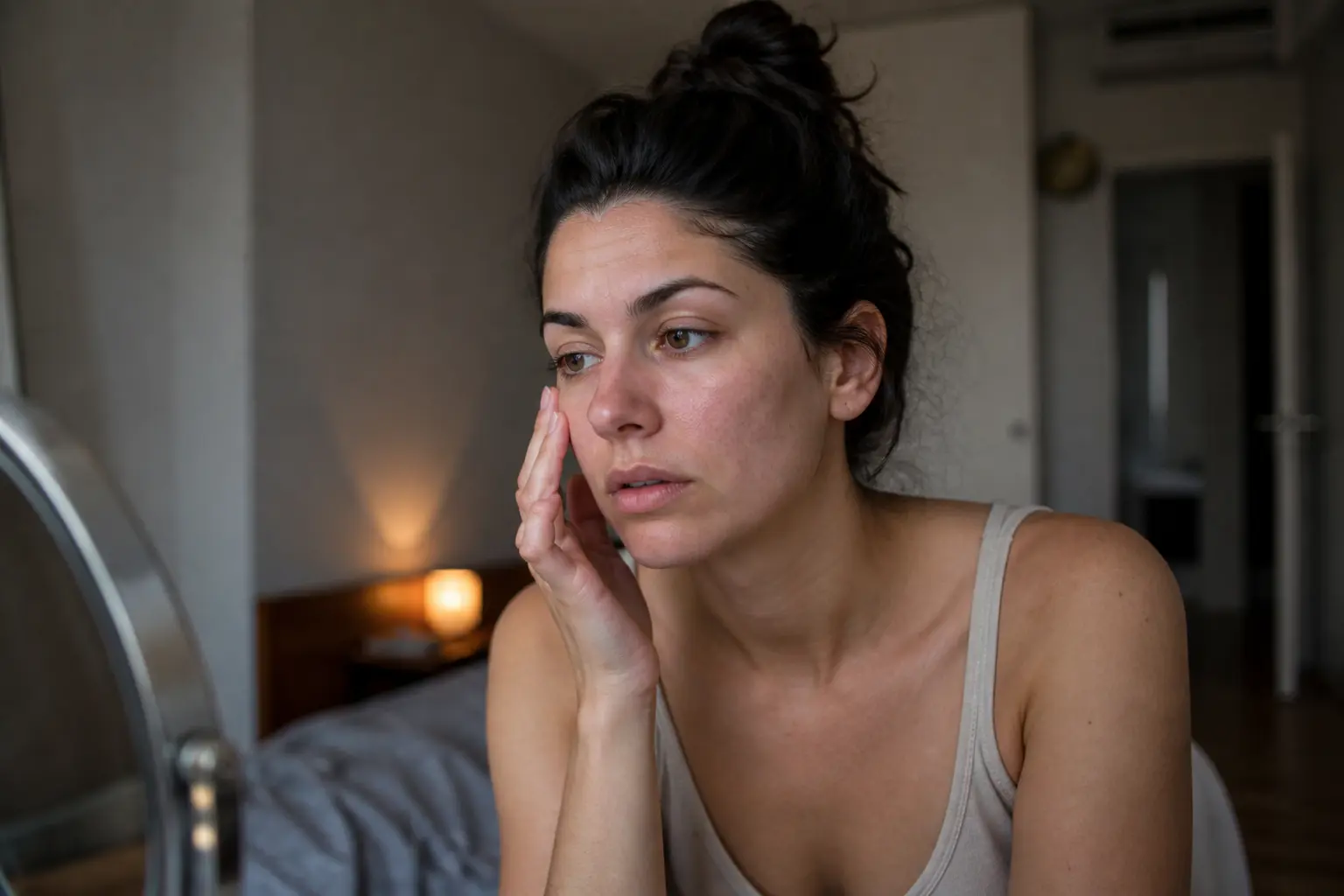
You wake up, look in the mirror, and your skin is angrier than you are, covered in fresh breakouts and dull patches that scream stress cortisol skin effects are real and they’re happening to you right now.
The stress-cortisol-skin connection
When stress hits, your body floods with cortisol, and honestly, your skin is one of the first places to show it. Picture this: you’re in the middle of a stressful week at work, deadlines piling up, and suddenly you notice your face is oilier than usual. That’s cortisol at work, triggering your sebaceous glands into overdrive. What makes this frustrating is that cortisol doesn’t just cause breakouts. It creates this cascade of skin chaos. Your skin barrier weakens, making it more reactive to everything from your regular moisturizer to environmental pollutants. Women often find that their skin becomes unpredictable during high-stress periods, switching between oily and dry patches, sometimes even on the same day. The inflammation cortisol triggers can awaken dormant skin conditions you thought you had under control, turning a manageable situation into a full-blown skin crisis that feels impossible to navigate.
- Cortisol triggers inflammation, which can make existing skin issues worse.
- High cortisol levels can impair the skin’s ability to retain moisture, resulting in dryness and dullness.
- Chronic stress and elevated cortisol levels may accelerate the aging process, causing wrinkles and fine lines to appear prematurely.
Ways to lower cortisol naturally
Lowering cortisol isn’t about finding one magic solution, it’s about building a lifestyle that naturally calms your nervous system. Start with movement that feels good, not punishing. A 20-minute walk in nature, gentle yoga, or dancing to your favorite playlist can shift your cortisol levels more effectively than forcing yourself through a brutal gym session that leaves you more stressed. Sleep is non-negotiable too. When you’re sleep-deprived, cortisol stays elevated, keeping your skin in a constant state of inflammation. Aim for consistent sleep schedules, even on weekends. Then there’s food. Reducing caffeine, eating more whole foods, and staying hydrated genuinely helps. Many women notice their skin clears when they cut back on sugar and processed foods that spike cortisol. Add in mindfulness practices like meditation or journaling, even five minutes daily makes a difference. The key is consistency over perfection. These changes compound over weeks, gradually shifting your hormonal balance and reflecting in clearer, calmer skin.
💬 Ready to feel better in 2 minutes?choose where to begin:
Seeking professional help
Sometimes lifestyle changes alone aren’t enough, and that’s okay. If you’ve been managing stress for months but your skin still feels out of control, it’s time to talk to someone. A dermatologist can identify whether you’re dealing with stress-triggered acne, eczema flare-ups, or something else entirely. They might recommend treatments like topical retinoids, gentle chemical exfoliants, or prescription options tailored to your specific skin type. A therapist or counselor can also be invaluable, especially if stress is chronic and deeply rooted. They can teach you targeted stress-management techniques that actually stick. Some women benefit from working with a functional medicine practitioner who looks at the whole picture: your hormones, gut health, and stress levels together. Don’t view seeking help as failure. It’s actually the smartest move you can make when you’re tired of fighting your skin alone.
The importance of self-care
Self-care gets dismissed as indulgent, but it’s genuinely therapeutic for your skin and mind. When you prioritize relaxation, you’re literally lowering your cortisol levels, which directly impacts skin healing. Think beyond face masks, though those are lovely. Real self-care looks like saying no to commitments that drain you, taking a long bath without your phone, or spending time with people who energize you rather than exhaust you. Nature is particularly powerful. Whether it’s a walk through the park, sitting by water, or simply spending time outside, nature naturally reduces cortisol. Many women find that their skin improves noticeably when they commit to regular outdoor time. Meditation and breathwork are also transformative. Even three minutes of deep breathing activates your parasympathetic nervous system, signaling your body that it’s safe to relax. When your body feels safe, it stops pumping out cortisol, and your skin responds by becoming calmer, clearer, and more resilient.
Understanding the impact of stress and cortisol on skin is essential for maintaining healthy skin. By implementing lifestyle changes, seeking professional guidance when needed, and prioritizing self-care, you can work towards reducing cortisol levels and improving your skin’s overall appearance and condition.
Can stress really affect my skin?
Yes, stress can have a significant impact on skin health. Elevated cortisol levels from stress can worsen existing skin conditions and lead to issues like acne, dryness, and premature aging.
What are some signs that stress is affecting my skin?
Common signs that stress is impacting your skin include increased breakouts, sensitivity, redness, dryness, and a dull complexion. If you notice these changes, it may be time to address your stress levels.
Others also read:
Disclaimer: This article is for informational purposes only and is not a substitute for professional medical advice. Always consult a healthcare professional for personal guidance.
This article presents an experience-based perspective and has been reviewed by the GlobalHealthBeacon editorial team in 2026. It provides structured, evidence-based information to support informed health decisions.
