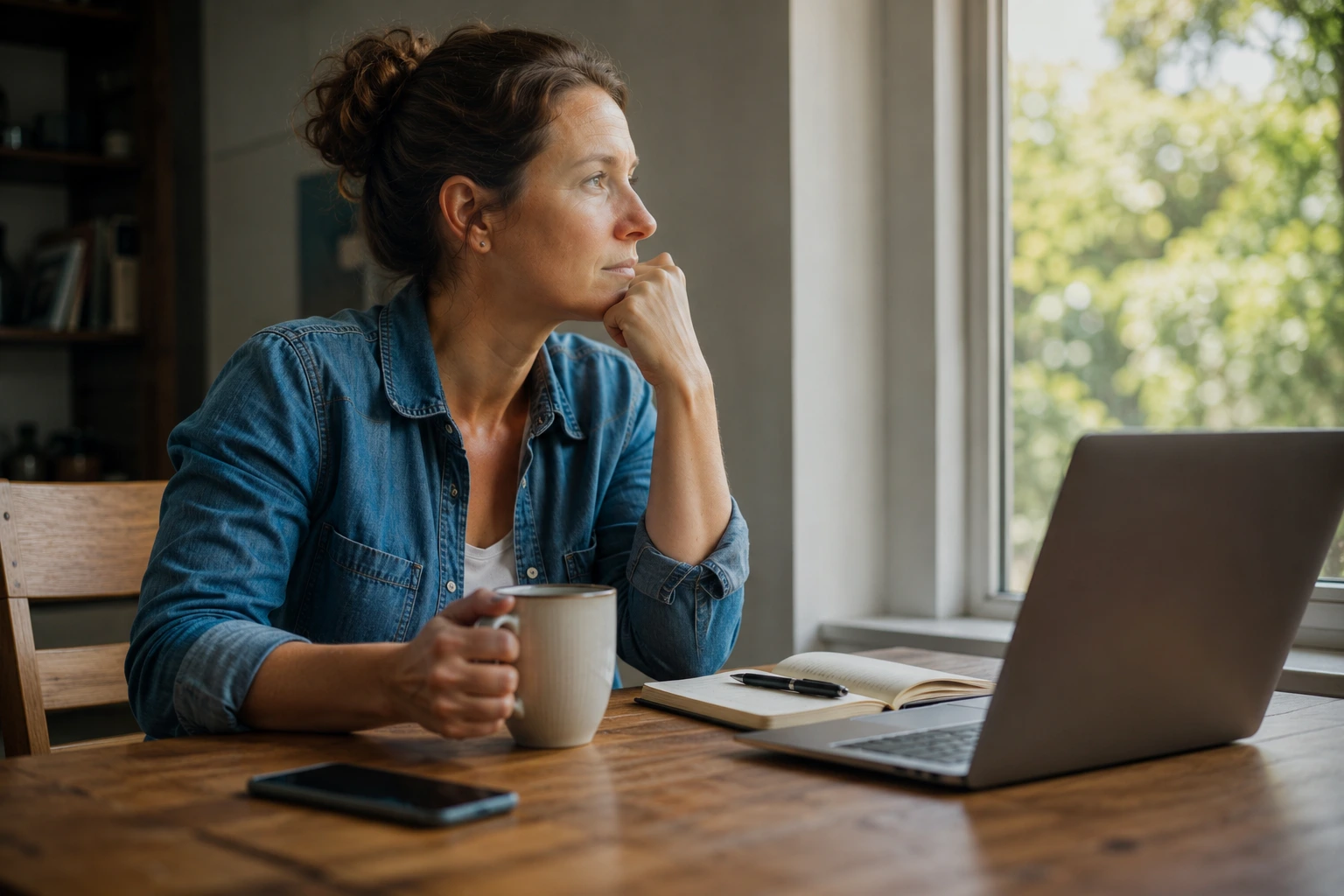
Your chest tightens, your mind races, and you feel like you’re drowning in everything at once, but stress relief techniques work and they can pull you back to solid ground faster than you think.
Breathing techniques
When stress hits, your breathing becomes shallow and rapid, which signals your nervous system to stay in fight-or-flight mode. Deep breathing reverses this pattern by activating your parasympathetic nervous system, the part responsible for calming your body. Imagine you are sitting at your desk after a difficult meeting, your shoulders are tense, and your mind is replaying every word you said. By practicing the 4-7-8 breathing technique, you inhale for four counts through your nose, hold for seven counts, then exhale for eight counts through your mouth. The longer exhale is key because it tells your body it is safe to relax. Many women find that practicing this for just five minutes can shift their entire nervous system state. Start with three to five cycles and notice how your shoulders drop and your jaw unclenches. You can use this technique anywhere: before a presentation, during a phone call, or when you wake up feeling anxious. The beauty of breathing work is that it requires nothing but your awareness and takes seconds to implement.
- Inhale deeply through your nose for a count of 4
- Hold your breath for a count of 7
- Exhale slowly through your mouth for a count of 8
Mindfulness meditation
Mindfulness meditation is not about emptying your mind or achieving perfect peace, it is about observing your thoughts without judgment and returning gently to the present moment. Many women struggle with racing thoughts and worry about the future, which keeps them trapped in a stress cycle. When you sit quietly for even ten minutes and focus on your breath or a simple word like calm or peace, you create space between yourself and your anxious thoughts. Picture yourself sitting in a quiet corner of your home, eyes closed, noticing the sensation of air moving through your nostrils. A worried thought about tomorrow appears, but instead of fighting it, you acknowledge it and let it pass like a cloud moving across the sky. Over time, this practice builds resilience because you realize that thoughts are temporary and do not define your reality. Research shows that consistent meditation reduces cortisol levels, the stress hormone that keeps your body in a heightened state. Start with just five minutes daily, perhaps using a guided app if silence feels overwhelming. The key is consistency, not perfection. Even on days when your mind feels chaotic, showing up to meditate teaches your nervous system that you are committed to your own calm.
📘 Fix your day in under 2 minuteschoose where to begin:
Exercise regularly
Physical movement is one of the most powerful stress relievers available, yet many women put exercise last on their priority list. When you move your body, whether through a brisk walk, yoga class, or dancing in your kitchen, you release endorphins, the chemicals that naturally elevate your mood and reduce stress hormones. Consider a woman who spends her day managing others’ needs, sitting in meetings, and feeling mentally drained. A thirty-minute jog or yoga session becomes her reset button, a time when her mind quiets and her body processes the tension held in her muscles. The type of exercise matters less than consistency and enjoyment. If you hate running, do not force it; instead, try swimming, cycling, or a dance class that makes you feel alive. Exercise also improves sleep quality, which is crucial because poor sleep amplifies stress and anxiety. Aim for at least 150 minutes of moderate activity per week, but even ten minutes of movement can shift your nervous system. The added benefit is that exercise gives you a sense of accomplishment and control, which counters the helplessness that often accompanies chronic stress.
Journaling
Journaling is a private space where you can dump all the thoughts and emotions that swirl in your head without filter or judgment. Many women carry emotional weight silently, processing stress alone and never fully releasing it. When you write down your worries, frustrations, or even your gratitude, you externalize what has been trapped inside, making it easier to process and understand. Imagine sitting down with a notebook after a stressful day and writing freely for ten minutes: your anger at a colleague, your anxiety about finances, your sadness about a relationship. The act of writing activates different parts of your brain than thinking alone, allowing you to see patterns and gain clarity you did not have before. Some women use journaling to track what triggers their stress, revealing that certain situations, people, or times of day consistently drain them. Others use it to practice gratitude, writing three things they are thankful for each morning, which shifts their mindset before the day even begins. There is no right way to journal; it can be messy, unstructured, and full of crossed-out words. The goal is not perfect prose but honest expression. Research shows that expressive writing reduces anxiety and improves emotional regulation. Keep your journal private and make it a non-negotiable part of your self-care routine.
Healthy lifestyle choices
Stress does not exist in isolation; it is amplified by poor sleep, skipped meals, excessive caffeine, and dehydration. When you neglect the basics of physical self-care, your body becomes more reactive to stress and less able to recover from it. Think of your body as a system that needs proper fuel, rest, and hydration to function optimally. A woman who drinks three cups of coffee on an empty stomach, skips lunch, and stays up late scrolling her phone is essentially asking her nervous system to stay in overdrive. By contrast, one who eats balanced meals with protein and fiber, drinks water throughout the day, gets seven to nine hours of sleep, and limits caffeine after noon creates a foundation that naturally buffers stress. Sleep is particularly critical because it is when your brain processes emotions and consolidates memories, allowing stress to be metabolized rather than stored. Establishing a simple routine, like a consistent bedtime, a morning walk, and a digital curfew an hour before bed, provides your nervous system with predictability and safety. Avoid using alcohol or excessive sugar as stress relief tools because they provide temporary numbing followed by a crash that worsens anxiety. Instead, view healthy lifestyle choices as investments in your stress resilience, not as restrictions. When your body is well-nourished and rested, stress has far less power over you.
Breathing techniques, mindfulness meditation, regular exercise, journaling, and healthy lifestyle choices are effective stress relief techniques for women seeking peace of mind and relaxation in their lives.
How long should I practice breathing exercises for stress relief?
You can practice breathing exercises for as little as 5 minutes a day to experience immediate stress relief benefits. Consistent practice throughout the day can help you manage stress more effectively.
Can mindfulness meditation help with chronic stress?
Yes, mindfulness meditation has been shown to reduce symptoms of chronic stress by promoting relaxation, mental clarity, and emotional balance. Regular practice can improve your overall well-being.
Others also read:
Disclaimer: This article is for informational purposes only and is not a substitute for professional medical advice. Always consult a healthcare professional for personal guidance.
This guide has been prepared and reviewed by the GlobalHealthBeacon editorial team and reflects current medical research as of 2026. It provides structured, evidence-based information to support informed health decisions.
