Your phone is glued to your hand, your notifications never stop, and you’re exhausted from the constant screen time, but here’s the thing: technologies replacing mobile phones are already here, and they might actually free you from this cycle.
Wearable tech
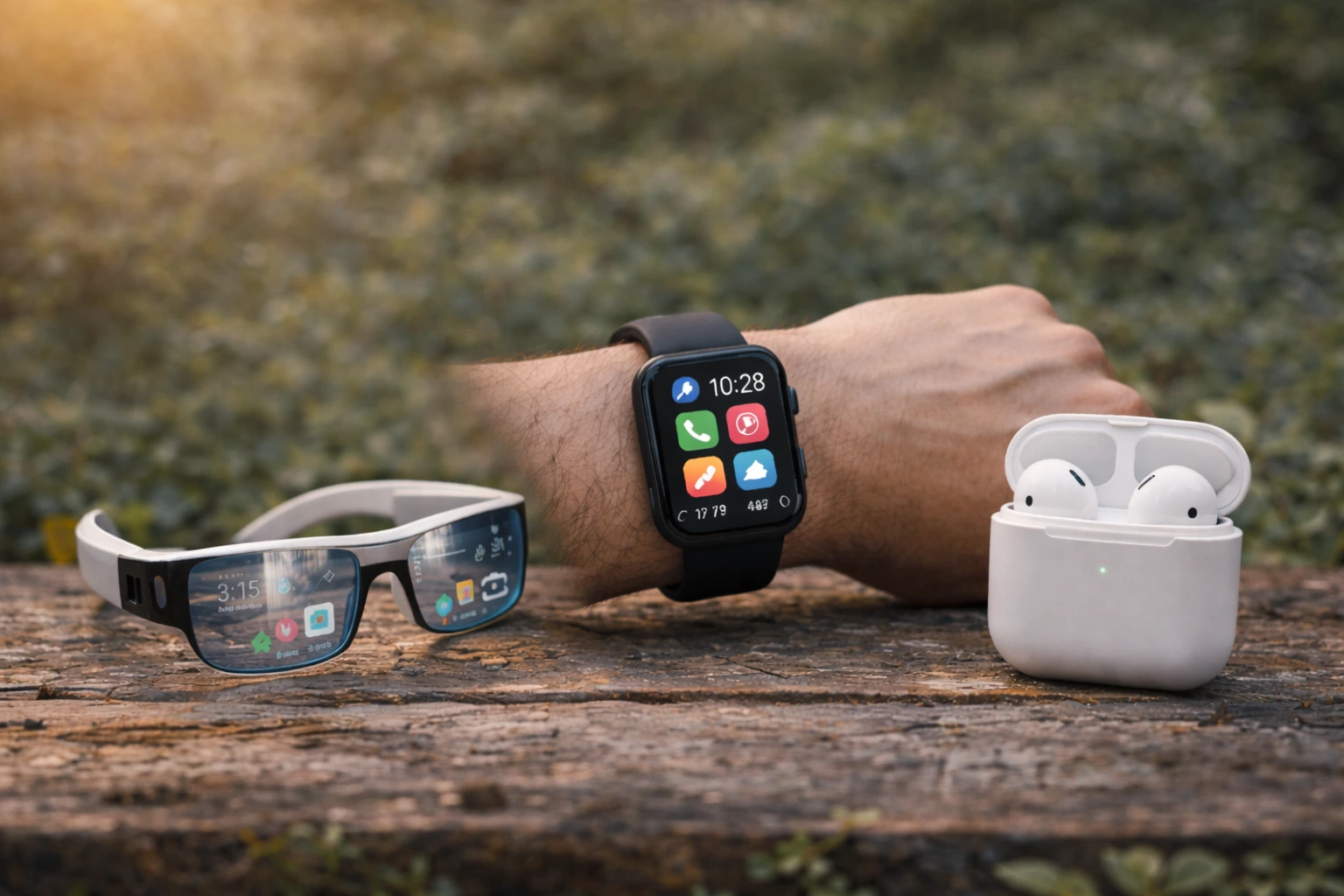
Imagine getting through your day without constantly reaching for your phone. Wearable technology makes this possible by bringing essential information directly to your wrist or eyes. Smartwatches display notifications, calls, and messages without forcing you to pull out your device every few minutes. Augmented reality glasses take this further, overlaying digital information onto the real world around you. Picture yourself walking through a city with directions appearing naturally in your field of vision, or checking your heart rate during a workout without breaking stride. Health tracking features embedded in these devices monitor your sleep patterns, stress levels, and activity throughout the day, giving you insights without the distraction. The real benefit here is accessibility paired with intention. You choose when to engage with technology rather than being constantly interrupted. Many young adults find that wearing a smartwatch actually reduces their phone dependency because urgent information reaches them without the temptation to scroll through social media.
- Real-time notifications on your wrist
- Health and fitness tracking features
- Hands-free communication options
Foldable devices
Foldable technology represents a shift in how we think about device design and portability. These phones and tablets feature flexible screens that bend without breaking, allowing a single device to transform between a compact phone and a tablet-sized screen. Imagine needing a larger display for video editing or gaming, then folding it back down to pocket size for commuting. This versatility appeals to young adults who want powerful productivity tools without carrying multiple devices. Samsung Galaxy Z Fold and similar devices demonstrate how this technology has matured from experimental to practical. The larger unfolded screen eliminates the need to constantly switch between phone and tablet, streamlining your workflow. Common mistakes include assuming foldables are fragile or overpriced for what they offer. Modern foldables are durable with improved hinge technology and protective coatings. They cost more upfront but reduce the need to purchase separate devices. For content creators, students, and professionals, the productivity gains justify the investment. The learning curve is minimal since the interface remains familiar, just with more screen real estate when you need it.
📘 Fix your day in under 2 minuteschoose where to begin:
Voice-activated assistants
Voice assistants have evolved from novelty features to genuinely useful tools that handle complex tasks through conversation. Instead of typing or tapping, you simply speak commands to send messages, set reminders, control smart home devices, or get information instantly. Picture yourself cooking dinner and asking your assistant to add ingredients to your shopping list, or driving and requesting directions without touching your phone. These assistants learn your preferences and routines over time, becoming more personalized and efficient. The hands-free aspect is particularly valuable during multitasking moments when your hands are occupied. Young adults appreciate how voice control reduces screen time and eye strain. However, privacy concerns exist around always-listening devices, so understanding your settings and what data is collected matters. Most assistants allow you to review and delete voice recordings regularly. The key advantage is speed and convenience for routine tasks. Rather than unlocking your phone and navigating apps, a voice command accomplishes the same goal in seconds. As natural language processing improves, these assistants handle increasingly complex requests, making them more capable alternatives to traditional phone interactions.
5G connectivity
5G networks represent a fundamental upgrade in how data moves between devices and the internet. Speeds are dramatically faster, latency drops significantly, and the experience becomes seamless across applications. For young adults, this means streaming high-quality video without buffering, downloading large files in seconds, and playing online games with virtually no lag. Real-world scenarios include video conferencing with crystal-clear quality even in crowded areas, instant file sharing with colleagues, and cloud-based applications running as smoothly as local software. The lower latency matters most for interactive experiences like virtual reality, remote surgery demonstrations, or competitive gaming. 5G also enables more devices to connect simultaneously without performance degradation, supporting the growing ecosystem of smart home devices, wearables, and connected vehicles. A common misconception is that 5G requires entirely new devices, but many modern phones already support it. The rollout is ongoing globally, so coverage varies by location. Understanding whether 5G is available in your area helps determine if upgrading makes sense now or waiting is wiser. The technology fundamentally changes what’s possible on mobile devices, shifting from limitations imposed by network speed to limitations based only on device capability and application design.
AR and VR experiences
Augmented reality and virtual reality create immersive digital experiences that blur the line between physical and digital worlds. AR overlays digital elements onto your real surroundings, like trying on clothes virtually before buying or seeing furniture in your room before purchasing. VR creates entirely digital environments where you can learn, play, work, or socialize in ways impossible in the physical world. Young adults are discovering practical applications beyond gaming. Medical students use VR to practice procedures, architects visualize building designs in 3D space, and therapists use VR exposure therapy for anxiety treatment. Imagine attending a concert or classroom from home with such immersion that it feels like being there. The technology is becoming more accessible through smartphone-based solutions and standalone headsets at various price points. Early adopters sometimes overestimate the technology’s current maturity or underestimate the learning curve for complex applications. Starting with smartphone-based AR apps is a practical entry point before investing in dedicated VR equipment. The real power emerges as content libraries expand and the technology becomes more intuitive. For entertainment, education, and professional training, AR and VR offer engagement levels that traditional screens cannot match.
The future of technology extends far beyond smartphones. Wearable devices bring information to your wrist, foldable technology offers flexible productivity, voice assistants handle tasks through conversation, 5G networks enable seamless connectivity, and AR/VR experiences create immersive digital worlds. Each technology addresses different needs and use cases. Rather than a single smartphone replacement, you’ll likely use a combination of these technologies depending on your activity. Understanding what each offers helps you make informed decisions about which tools fit your lifestyle. The shift isn’t about abandoning technology but using it more intentionally and in ways that enhance rather than dominate your daily life.
Are wearable devices safer than smartphones?
Wearable devices are designed to minimize distraction and promote hands-free interaction, making them safer in specific situations like driving or exercising. However, safety depends on how you use any device. Wearables still emit radiation and require responsible usage, but they reduce the temptation to constantly check your phone, which can improve focus and safety in many scenarios.
Can voice assistants completely replace smartphones?
Voice assistants excel at specific tasks like setting reminders or playing music, but they cannot fully replace smartphones due to functional limitations. Visual tasks like browsing, photo editing, or detailed navigation still require a screen. Voice assistants work best as complementary tools that reduce your smartphone dependency rather than complete replacements.
Disclaimer: This article is for informational purposes only and is not a substitute for professional medical advice. Always consult a healthcare professional for personal guidance.
This guide has been prepared and reviewed by the GlobalHealthBeacon editorial team and reflects current medical research as of 2026. It provides structured, evidence-based information to support informed health decisions.
