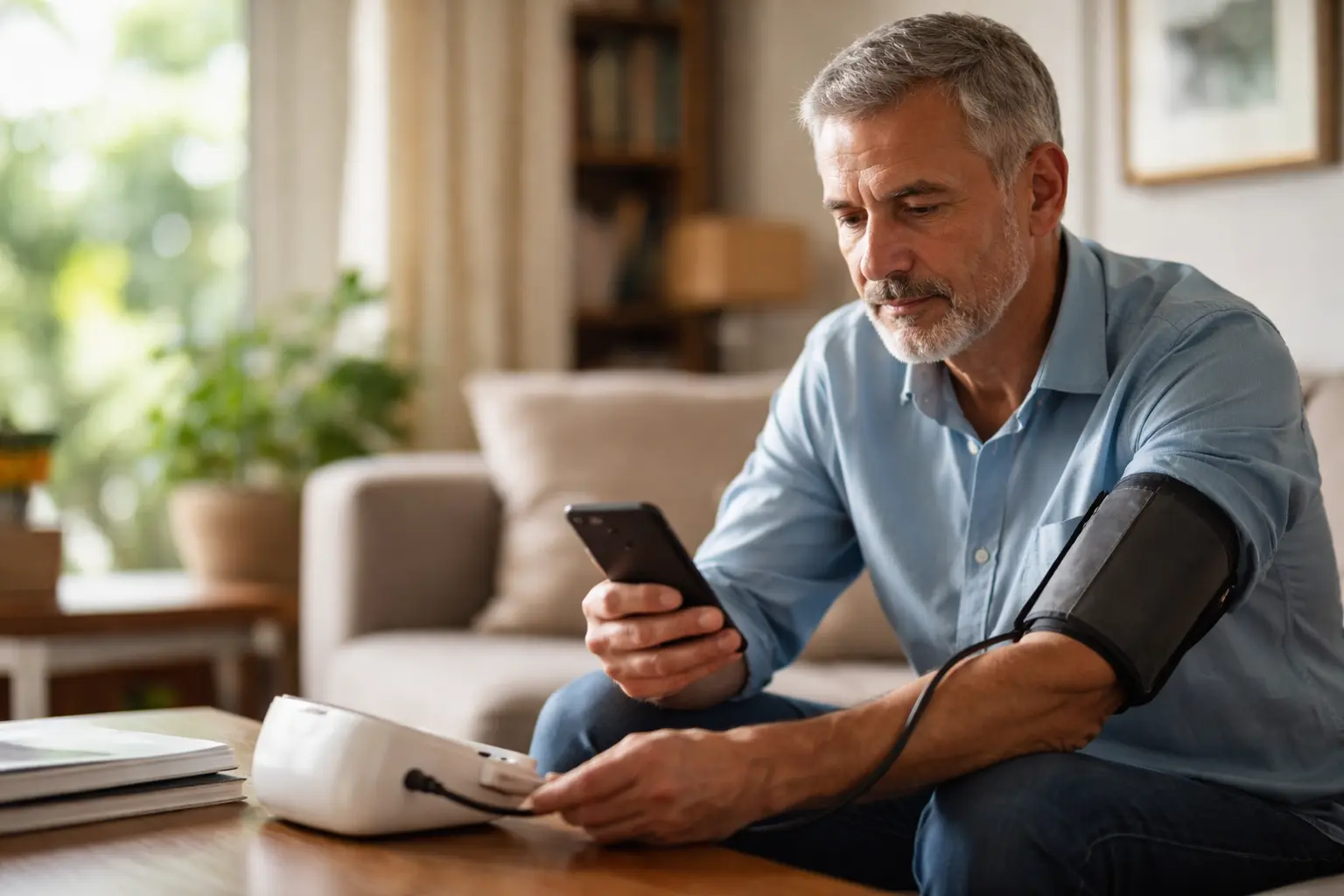
You’re 28, feeling fine, and then your doctor casually mentions your blood pressure is creeping up, leaving you wondering if you should actually care right now or wait until you’re older, but understanding telemonitoring blood pressure effectiveness could be the difference between catching something early and ignoring a silent warning your body’s been sending.
The basics of blood pressure telemonitoring
Blood pressure telemonitoring represents a shift in how young adults can engage with their cardiovascular health from the comfort of home. Rather than relying solely on occasional office visits, telemonitoring involves using a validated digital device to measure your blood pressure regularly, then transmitting that data electronically to your healthcare provider. Think of it like this: imagine checking your car’s oil regularly instead of waiting for the engine light to come on. The process is straightforward. You sit quietly for a few minutes, place the cuff on your arm, press a button, and within seconds you have a reading. That data syncs to a secure platform where your provider can review trends over weeks or months. This continuous stream of information reveals patterns that a single office reading could never capture, such as how your pressure responds to stress, sleep, caffeine, or exercise.
Benefits of telemonitoring for young adults
For young adults, telemonitoring offers tangible advantages that extend beyond simple convenience. Early detection becomes possible because you’re gathering data consistently rather than waiting for annual checkups. Consider Sarah, a 26-year-old marketing professional who discovered through home monitoring that her blood pressure spiked on Sunday evenings before work weeks, revealing stress as a significant factor. This insight prompted her to adjust her routine, not her medication. Better medication adherence naturally follows when you can see your own progress and understand how your choices affect your readings. Communication with healthcare providers transforms too, shifting from guesswork to evidence-based discussions. You arrive at appointments with actual data showing your typical readings, your patterns, and your response to lifestyle changes. This empowers you to take an active role in decision-making rather than passively receiving recommendations. The psychological benefit matters too: knowing you’re monitoring your health creates a sense of agency and control.
How to start telemonitoring blood pressure
Starting your telemonitoring journey requires thoughtful preparation and collaboration with your healthcare team. First, device selection matters more than you might think. Not all blood pressure monitors are created equal, and accuracy varies significantly between brands. Look for devices that have been validated through clinical testing, typically indicated by certification marks from organizations like the American Heart Association. Wrist monitors offer portability, but upper arm cuffs generally provide more reliable readings because they’re closer to your heart. Once you’ve chosen your device, schedule a conversation with your healthcare provider to establish a monitoring schedule tailored to your specific situation. Some people benefit from daily readings, while others check twice weekly. Your provider can also show you the correct technique, which is surprisingly important. Common mistakes include taking readings immediately after caffeine, while stressed, or with your arm unsupported. The ideal setup involves sitting with your back supported, feet flat, arm at heart level, and waiting five minutes after any stimulating activity. Practice with your provider during an office visit so you can compare your home readings to their office measurement.
- Select a validated blood pressure monitoring device with clinical certification and upper arm placement for accuracy.
- Schedule a consultation with your healthcare provider to establish a personalized monitoring frequency and baseline.
- Learn proper measurement technique including correct positioning, timing, and environmental conditions for consistent readings.
🔬 Science-backed benefits in 2 minuteschoose where to begin:
The role of self-management in telemonitoring
Self-management through telemonitoring transforms you from a passive patient into an active participant in your cardiovascular health. When you monitor your own blood pressure regularly, you begin noticing patterns that might otherwise remain invisible. Maybe your readings are consistently higher on days you skip exercise, or lower when you’ve been drinking more water. These observations become the foundation for informed lifestyle choices. Over time, tracking creates accountability and awareness. You start connecting dots between your behaviors and your numbers. Did your pressure drop after you started that meditation app? Did it rise when you switched to a more stressful project at work? This feedback loop is powerful because it’s personal and immediate. Self-management also means learning to interpret your readings within context. A single elevated reading doesn’t mean crisis, but a pattern of elevation warrants attention. You develop the ability to distinguish between normal variation and genuine concern, reducing unnecessary anxiety while maintaining appropriate vigilance. This knowledge empowers you to have more sophisticated conversations with your provider and make decisions aligned with your actual health status rather than assumptions.
Challenges and limitations of telemonitoring
While telemonitoring offers genuine benefits, acknowledging its limitations ensures you use it effectively. Device accuracy varies, and even validated monitors can produce inconsistent readings if used incorrectly. User error is common, particularly around technique and timing. Many people take readings while stressed or immediately after activity, which inflates numbers and creates false alarms. Another challenge involves data interpretation. Seeing numbers without professional context can trigger anxiety, especially if you don’t understand normal variation. A reading of 135/85 one morning might feel alarming, but isolated elevations are often meaningless. The real concern is sustained elevation over time. Engagement also presents a challenge. Initial enthusiasm for monitoring often wanes after weeks, and sporadic readings provide less useful information than consistent data. Some young adults struggle with the responsibility of self-monitoring, finding it creates unwanted health anxiety rather than reassurance. Additionally, telemonitoring works best when integrated into a comprehensive healthcare relationship. It’s not a replacement for professional evaluation, particularly if you have symptoms or concerning patterns. Finally, technical barriers exist for some people, including difficulty syncing devices or navigating apps, which can frustrate the process.
Future implications of blood pressure telemonitoring
The trajectory of blood pressure telemonitoring points toward increasingly sophisticated and accessible tools for young adults. Wearable technology continues advancing, with smartwatches and rings incorporating blood pressure monitoring capabilities that require no additional devices. Artificial intelligence is beginning to play a role, analyzing your personal patterns to predict when intervention might be needed before problems develop. Integration with broader health ecosystems means your blood pressure data could eventually communicate with your fitness tracker, sleep monitor, and stress app, creating a complete picture of factors influencing your cardiovascular health. Personalized medicine approaches are emerging too, moving away from one-size-fits-all recommendations toward interventions tailored to your specific physiology and lifestyle. Telemedicine integration allows real-time consultation with providers who can review your data and adjust guidance without requiring office visits. Accessibility is improving as costs decrease and technology becomes more intuitive. The future likely includes predictive analytics that identify young adults at risk before symptoms appear, enabling truly preventive medicine rather than reactive treatment. These advances suggest telemonitoring will become standard practice for cardiovascular health management across all age groups.
Blood pressure telemonitoring for young adults represents a practical tool for understanding your cardiovascular health through regular home monitoring and data sharing with healthcare providers. By starting this practice with proper device selection, professional guidance, and consistent technique, you gain insights into your personal blood pressure patterns and how lifestyle factors influence your readings. While challenges exist around device accuracy and data interpretation, the benefits of early detection, improved medication adherence, and empowered self-management make telemonitoring a valuable addition to your health toolkit. As technology continues advancing, telemonitoring will likely become even more accessible and integrated into comprehensive health management strategies.
Is blood pressure telemonitoring reliable for young adults?
Yes, blood pressure telemonitoring is reliable when you use a validated device, follow proper measurement technique, and work with your healthcare provider to interpret results. Accuracy depends on consistent methodology and understanding that isolated readings vary normally. Your provider can help you distinguish between normal fluctuation and patterns requiring attention.
How often should young adults telemonitor their blood pressure?
Monitoring frequency depends on your individual health status, risk factors, and provider recommendations. Some people benefit from daily readings, while others check two to three times weekly. Your healthcare provider can establish a schedule tailored to your needs, and you can adjust frequency based on what you learn about your patterns and any changes in your health status.
Others also read:
Disclaimer: This article is for informational purposes only and is not a substitute for professional medical advice. Always consult a healthcare professional for personal guidance.
This article has been prepared and reviewed by the GlobalHealthBeacon editorial team and is based on current medical research and published scientific literature available in 2026. It provides structured, evidence-based information to support informed health decisions.
← Back to the Main page on: telemonitoring blood pressure effectiveness
