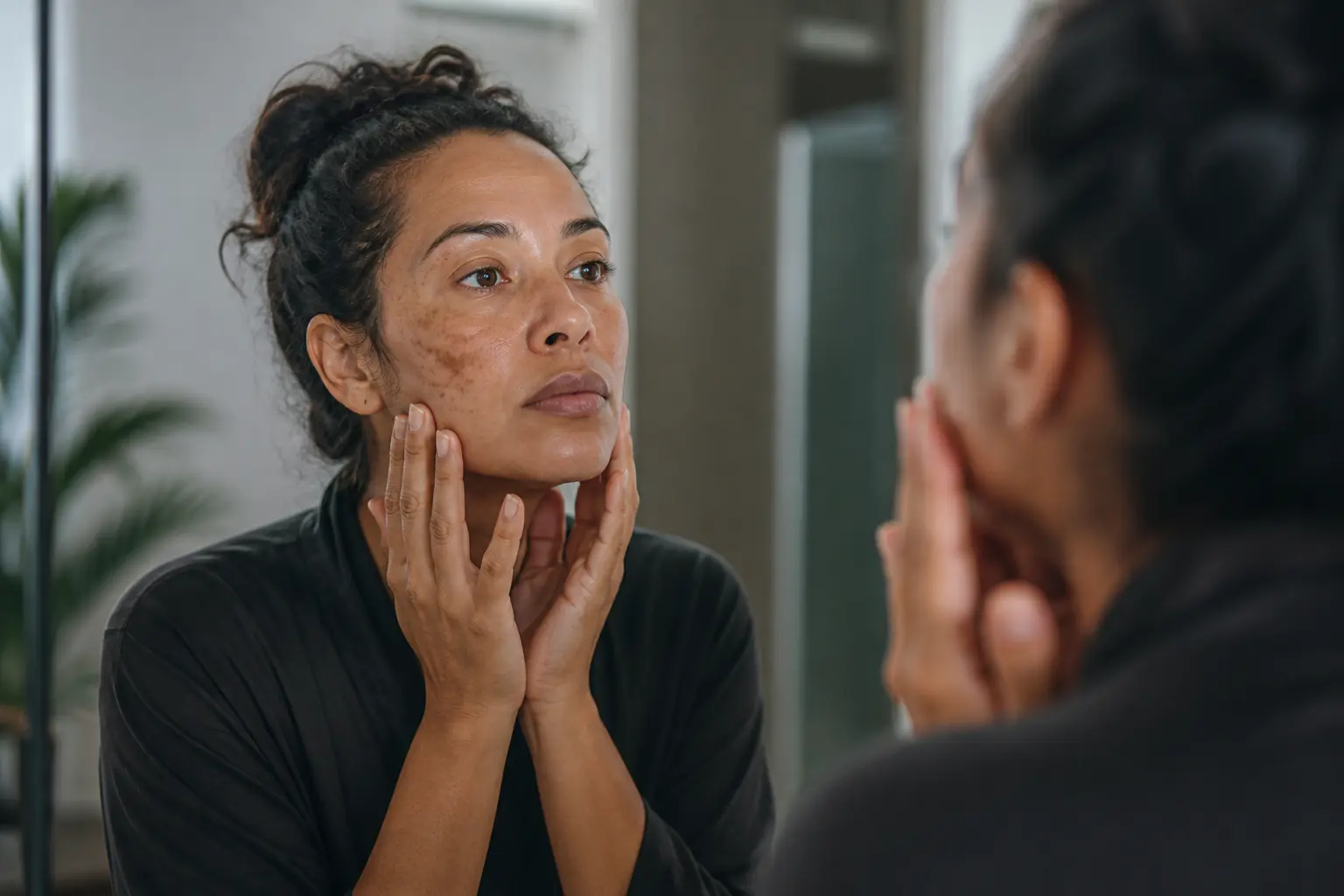
Dark patches spreading across your face despite your best efforts, and you’re convinced a harsh peel is your only option—but what if you could treat hyperpigmentation without peels and actually see real results?
Understanding hyperpigmentation
Hyperpigmentation happens when your skin produces too much melanin, the pigment responsible for your skin color. This excess melanin clusters in certain areas, creating those stubborn dark patches you see in the mirror. The causes are varied and often interconnected. Sun exposure is the most common culprit, especially if you’ve spent years without consistent sunscreen protection. Hormonal changes, particularly during pregnancy or while taking birth control, can trigger melasma, a specific type of hyperpigmentation that affects many young women. Skin injuries like acne scars, eczema flare-ups, or even aggressive picking at blemishes can leave dark marks as your skin heals. Inflammation from any source pushes your body to produce more melanin as a protective response. Understanding your specific trigger is the first step toward choosing the right treatment approach. For example, if your hyperpigmentation appeared after a breakout, it’s likely post-inflammatory hyperpigmentation, which often fades naturally over time with proper care. If it developed gradually over years of sun exposure, you’re dealing with solar lentigines, which require more targeted intervention.
- Use sunscreen daily with at least SPF 30 to protect your skin from further darkening and prevent new spots from forming.
- Incorporate antioxidant-rich serums like vitamin C to brighten the skin and neutralize free radicals that worsen pigmentation.
- Avoid harsh chemicals or abrasive exfoliants that can worsen hyperpigmentation and trigger more melanin production.
Natural remedies to lighten pigmentation
Natural ingredients have been used for centuries to address skin discoloration, and many of them actually work when used consistently. Lemon juice contains citric acid and vitamin C, which can gradually lighten dark spots, though it requires patience and regular application. Aloe vera soothes inflamed skin while its compounds help reduce melanin production over time. Green tea is packed with polyphenols that protect against UV damage and have mild depigmenting properties. The key with natural remedies is consistency and realistic expectations. You won’t see results in a week, but after two to three months of daily application, many people notice visible fading. Consider a hypothetical scenario: Sarah noticed post-acne marks on her cheeks and started applying diluted lemon juice mixed with honey three times weekly. After eight weeks, the marks had faded by about 30 percent. She continued for another two months and saw 60 percent improvement. The combination of the natural remedy plus her new sunscreen habit prevented new spots from forming. Natural remedies work best for mild to moderate hyperpigmentation and are gentlest on sensitive skin.
📘 Fix your day in under 2 minuteschoose where to begin:
Skincare ingredients for hyperpigmentation
When you’re ready to move beyond basic natural remedies, targeted skincare ingredients become your next line of defense. Niacinamide, also called vitamin B3, reduces melanin transfer to skin cells and strengthens your skin barrier, making it less reactive to triggers. Kojic acid, derived from fungi, inhibits tyrosinase, the enzyme that creates melanin, making it one of the most effective over-the-counter depigmenting agents available. Licorice extract contains glabridin, which suppresses melanin production without irritating sensitive skin. Hydroquinone, available in prescription and over-the-counter strengths, is the gold standard for stubborn hyperpigmentation but requires careful use and sun protection. Azelaic acid works particularly well for melasma and rosacea-related pigmentation. A practical approach is to start with one ingredient and use it consistently for at least eight to twelve weeks before evaluating results. Many young adults make the mistake of switching products every two weeks, never giving ingredients time to work. If you’re using niacinamide serum in the morning and kojic acid cream at night, give this routine three months before considering it ineffective. Layer these ingredients properly: apply water-based serums first, then creams, then sunscreen during the day.
Professional treatments for hyperpigmentation
When natural remedies and topical ingredients aren’t delivering the speed or intensity of results you need, professional treatments offer more dramatic options. Laser therapy, particularly fractional lasers and Q-switched lasers, targets melanin directly and can fade spots in just a few sessions. Microdermabrasion uses tiny crystals to physically remove the outer layer of skin where pigmentation sits, revealing fresher skin beneath. Chemical peels, despite the article’s focus on avoiding them, remain highly effective for some types of hyperpigmentation, though gentler alternatives exist. Microneedling stimulates collagen production and can help fade discoloration while improving overall skin texture. LED light therapy, especially red and blue light, reduces inflammation and supports healing. Before committing to any professional treatment, consult a dermatologist who can assess your specific hyperpigmentation type and skin tone. This is crucial because some treatments, like certain lasers, can actually worsen hyperpigmentation in darker skin tones if not performed by an experienced professional. A realistic timeline for professional treatments is typically four to six sessions spaced four to six weeks apart, with results becoming visible after the second or third session. Cost ranges from a few hundred to several thousand dollars depending on the treatment type and extent of hyperpigmentation.
Lifestyle habits to prevent hyperpigmentation
Treating existing hyperpigmentation is only half the battle; preventing new spots from forming is equally important and often overlooked. Your diet directly impacts skin health because antioxidants from fruits and vegetables protect against UV damage and inflammation. Staying hydrated helps your skin maintain its barrier function and heal more efficiently from any damage. Getting seven to nine hours of quality sleep allows your body to repair skin cells and regulate cortisol, the stress hormone that can trigger melanin overproduction. Stress management is underrated but critical because chronic stress elevates cortisol levels, which signal your body to produce more melanin as a protective response. Consider a realistic example: Marcus developed melasma during a stressful period at work, and despite using all the right skincare products, the spots continued darkening. Once he started meditating daily, sleeping more consistently, and reducing caffeine, his skin stabilized within six weeks. His topical treatments finally became effective because his body wasn’t in constant stress mode. Physical activity improves circulation, delivering oxygen and nutrients to your skin while helping regulate hormones. Protecting yourself from sun exposure through clothing, hats, and consistent sunscreen application is non-negotiable because UV rays are the primary trigger for most hyperpigmentation. Think of prevention as an investment that compounds over time.
Treating hyperpigmentation without peels is entirely possible by understanding what causes your specific dark spots, using natural remedies consistently for two to three months, incorporating proven skincare ingredients like niacinamide and kojic acid, considering professional treatments if topical approaches plateau, and adopting lifestyle habits that prevent new spots from forming. Success requires patience, consistency, and a personalized approach based on your skin type and hyperpigmentation cause.
Are natural remedies effective for treating hyperpigmentation?
Natural remedies like lemon juice, aloe vera, and green tea can help lighten dark spots over time, but results vary significantly by individual and hyperpigmentation type. Post-inflammatory hyperpigmentation responds well to natural remedies within two to three months, while sun-induced spots may require stronger ingredients or professional treatments. Consistency is essential, and combining natural remedies with daily sunscreen protection significantly improves outcomes.
Is it necessary to consult a dermatologist for hyperpigmentation?
Consulting a dermatologist is highly recommended, especially if dark spots persist after three months of home treatment, worsen over time, or if you have darker skin tones and are considering professional treatments. A dermatologist can identify your specific hyperpigmentation type, rule out underlying conditions, and recommend treatments tailored to your skin tone and medical history. This prevents wasting time and money on ineffective approaches and reduces the risk of treatment complications.
Disclaimer: This article is for informational purposes only and is not a substitute for professional medical advice. Always consult a healthcare professional for personal guidance.
This guide has been prepared and reviewed by the GlobalHealthBeacon editorial team and reflects current medical research as of 2026. It provides structured, evidence-based information to support informed health decisions.
← Go to the treat hyperpigmentation without peels main guide
