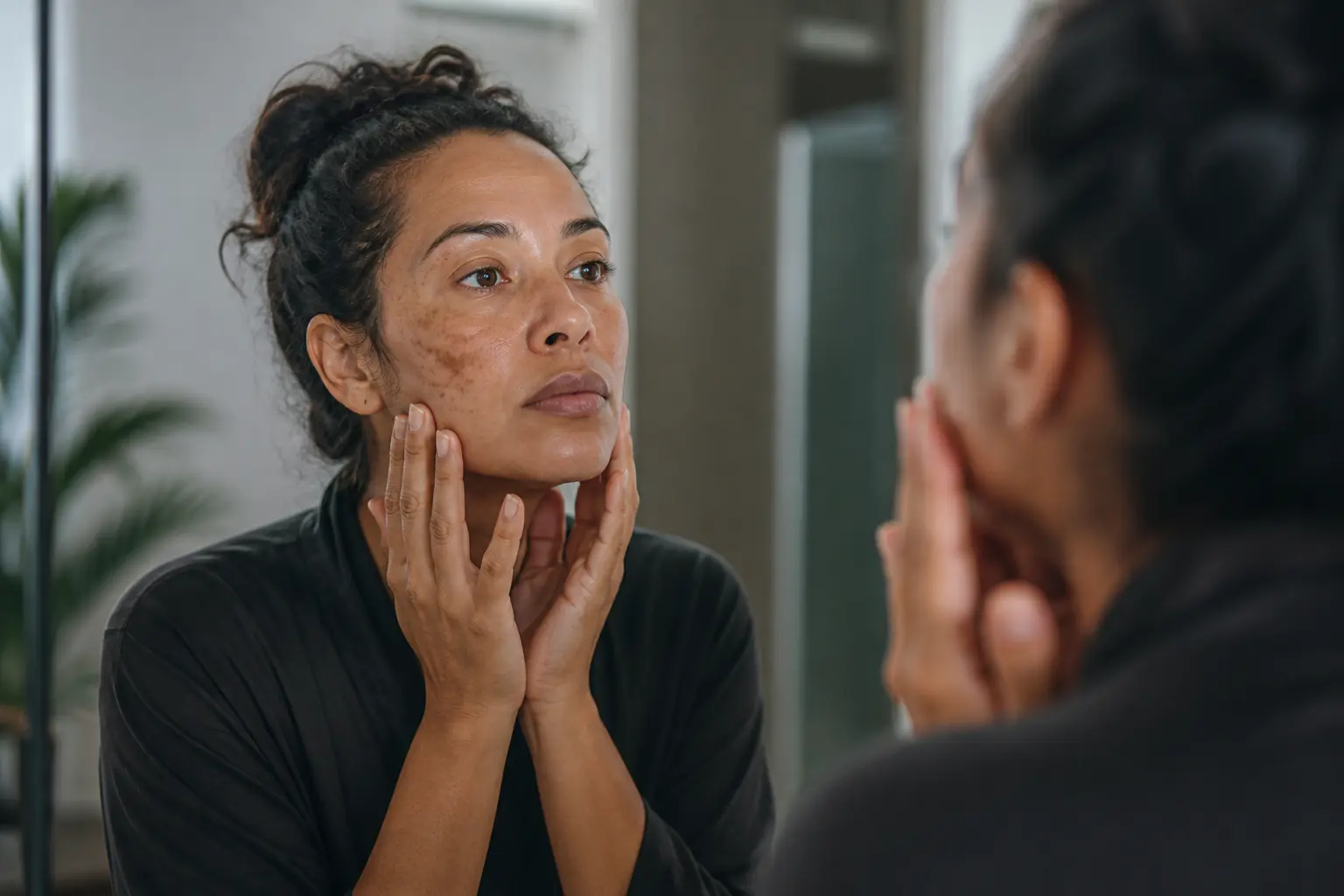
Dark spots ruining your skin confidence? Stop thinking you need brutal peels to treat hyperpigmentation without peels because there are actually effective gentler options that work.
Understanding hyperpigmentation
Hyperpigmentation happens when your skin produces too much melanin, the pigment responsible for skin color. Think of melanin as your skin’s natural sunscreen, but sometimes it goes into overdrive and clusters in specific areas, creating those frustrating dark patches or spots. This overproduction gets triggered by several factors: intense sun exposure without protection, hormonal shifts during pregnancy or from birth control, inflammation from acne or injuries, or even certain medications. Young adults often experience post-inflammatory hyperpigmentation after breakouts heal, leaving behind dark marks that feel permanent. The condition is more common in people with darker skin tones, though anyone can develop it. Understanding what causes your specific hyperpigmentation is the first step toward choosing the right treatment approach.
Myth: Non-peel treatments are ineffective
Here’s what most people get wrong: they assume that if a treatment isn’t aggressive or doesn’t involve chemical burning, it can’t possibly work. The reality is that non-peel treatments like topical creams containing hydroquinone, retinoids, vitamin C, or niacinamide actually do reduce hyperpigmentation through multiple mechanisms. Hydroquinone inhibits tyrosinase, the enzyme that produces melanin, essentially telling your skin to stop making excess pigment. Retinoids speed up cell turnover, pushing out pigmented cells faster and revealing fresher skin underneath. Vitamin C acts as an antioxidant while also brightening, and niacinamide strengthens your skin barrier while reducing inflammation. A young adult using these ingredients consistently over three to six months can see genuine improvement in spot appearance and overall skin tone. The key difference is that these treatments work with your skin’s natural processes rather than against them.
Reality: Non-peel treatments can be safe and gentle
Non-peel treatments offer something chemical peels simply cannot: the ability to address hyperpigmentation without downtime, irritation, or peeling skin that makes you look worse before you look better. These options work for all skin types, including sensitive skin, reactive skin, and skin prone to post-inflammatory hyperpigmentation. You can incorporate them into your daily routine without disrupting your life or social plans. A typical approach involves using a brightening serum in the morning and a retinoid cream at night, gradually building tolerance while your skin adapts. Unlike peels that create controlled damage to force results, non-peel treatments respect your skin’s barrier and work progressively. This gentler approach means fewer side effects, better long-term skin health, and results that actually stick around because you’re not compromising your skin’s integrity. Young adults especially benefit from this approach since they often have decades of skincare ahead and want to avoid unnecessary damage.
- Consult a dermatologist or skin specialist to identify your specific type of hyperpigmentation, whether it’s melasma, post-inflammatory marks, or sun damage, since different types respond better to different ingredients.
- Start with one active ingredient at a time, introducing it slowly to build tolerance and avoid irritation that could actually worsen hyperpigmentation through inflammation.
- Follow a consistent routine using your recommended products exactly as directed, typically for at least eight to twelve weeks before expecting noticeable results.
- Monitor your skin’s response carefully, taking photos under consistent lighting to track progress, and adjust frequency or concentration based on how your skin reacts.
- Combine treatments with strict sun protection since UV exposure can trigger more melanin production and undo your progress.
🔬 Science-backed benefits in 2 minuteschoose where to begin:
Comparing non-peel treatments with chemical peels
Chemical peels work fast because they literally dissolve the outer layers of your skin, forcing rapid cell turnover and revealing fresher skin underneath. Yes, results can be dramatic, but the trade-offs are real: intense irritation, redness lasting days or weeks, flaking skin that looks worse before it looks better, and risk of complications like post-inflammatory hyperpigmentation or scarring, especially for darker skin tones. You also need downtime, meaning you can’t go to work or social events looking like you’ve been chemically burned. Non-peel treatments take longer, typically three to six months for noticeable improvement, but they work continuously without disruption. You can use them while maintaining your normal life, going to classes, work, or dates without anyone knowing you’re treating your skin. The gradual approach also means your skin barrier stays intact, reducing the risk of sensitivity or adverse reactions. For young adults who want results without sacrificing their social life or risking their skin health, non-peel treatments often make more sense.
Long-term benefits of non-peel treatments
Non-peel treatments do something chemical peels cannot: they improve your skin’s overall health while treating hyperpigmentation. Regular use of brightening ingredients strengthens your skin barrier, improves hydration, and reduces inflammation, which means your skin becomes more resilient over time. You’re not just treating spots; you’re investing in better skin quality that lasts. These treatments also help prevent future hyperpigmentation by maintaining healthy melanin production and protecting against oxidative stress. A young adult who starts using these products in their twenties builds a foundation of skin health that pays dividends for decades. The cumulative effect means that after six months of consistent use, you’ll notice not just faded spots but also smoother texture, better radiance, and improved skin tone overall. Plus, once you’ve achieved your desired results, you can maintain them with lower concentrations or less frequent use, making it sustainable long-term. This preventive aspect is something peels simply cannot offer since they don’t address the underlying factors that cause hyperpigmentation.
Key takeaways on hyperpigmentation treatments
Non-peel treatments represent a smarter approach to hyperpigmentation for most young adults because they deliver real results without the risks, downtime, or skin damage associated with chemical peels. The science is solid: ingredients like hydroquinone, retinoids, and vitamin C genuinely reduce melanin production and speed cell turnover. The approach is sustainable because you can use these treatments indefinitely without compromising your skin barrier or creating dependency on increasingly aggressive procedures. By understanding the reality behind these treatments, you can make informed decisions based on your skin type, hyperpigmentation severity, and lifestyle rather than falling for the myth that only harsh treatments work. The choice between peels and non-peel treatments isn’t really about which is objectively better; it’s about which aligns with your values, timeline, and skin health goals. For most people, gentle consistency beats aggressive speed.
Non-peel treatments offer a safe, effective, and sustainable solution for hyperpigmentation, providing long-term benefits without the harshness, downtime, or risks of chemical peels.
Are non-peel treatments suitable for all skin types?
Yes, non-peel treatments are generally safe for all skin types and can be customized based on individual skin needs and concerns. However, people with darker skin tones should be especially cautious with certain ingredients like hydroquinone at high concentrations, as they can sometimes cause irritation or post-inflammatory hyperpigmentation. Working with a dermatologist helps ensure you choose the right ingredients and concentrations for your specific skin.
How long does it take to see results from non-peel treatments?
Results from non-peel treatments may vary depending on the individual and the severity of hyperpigmentation, but noticeable improvements can be seen over a period of weeks to months. Most people see meaningful changes between three and six months of consistent use. Some ingredients like vitamin C show subtle brightening within weeks, while deeper hyperpigmentation like melasma may take longer. Patience and consistency are key since these treatments work gradually but sustainably.
Others also read:
Disclaimer: This article is for informational purposes only and is not a substitute for professional medical advice. Always consult a healthcare professional for personal guidance.
This article has been prepared and reviewed by the GlobalHealthBeacon editorial team and is based on current medical research and published scientific literature available in 2026. It provides structured, evidence-based information to support informed health decisions.
← Back to the Main page on: treat hyperpigmentation without peels
