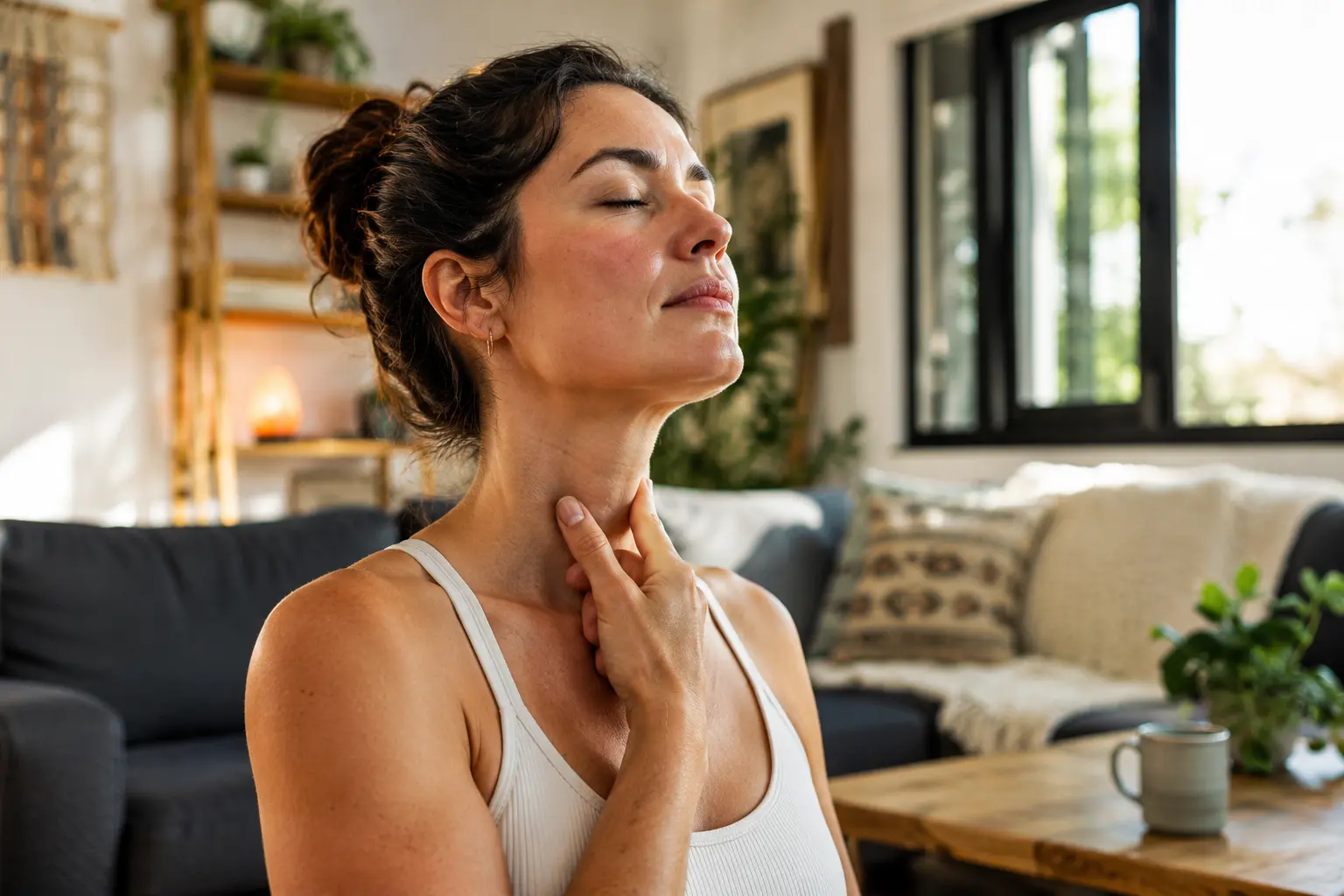
Your nervous system is stuck in overdrive, your chest feels tight, and nothing seems to calm you down, but vagus nerve exercises might be the missing piece that finally brings your body back into balance.
Understanding vagus nerve exercises
The vagus nerve is your body’s longest cranial nerve, stretching from your brain all the way down to your gut, and it acts like your internal communication highway. Think of it as the main cable connecting your brain to your heart, lungs, and digestive system. When this nerve is activated properly, it triggers what’s called the parasympathetic nervous system, which is essentially your body’s natural brake pedal. For women specifically, this matters because hormonal fluctuations throughout your cycle can make your nervous system more reactive. By engaging in targeted vagus nerve exercises, you can learn to stimulate this nerve intentionally, helping your body shift from a stressed, fight-or-flight state into a calm, rest-and-digest mode. This isn’t about forcing relaxation, it’s about giving your body the tools to regulate itself naturally.
- Regulate your heart rate and reduce stress.
- Enhance digestive function and strengthen immunity.
- Improve mood and combat anxiety.
- Boost overall relaxation response.
- Promote better sleep and hormonal balance.
Implementing deep breathing techniques
Deep breathing is one of the most direct ways to activate your vagus nerve, and the good news is you can do it anywhere, anytime. Start with diaphragmatic breathing, sometimes called belly breathing. Sit comfortably, place one hand on your chest and one on your belly, then breathe in slowly through your nose for a count of four, feeling your belly expand like a balloon filling with air. Hold for a count of four, then exhale through your mouth for a count of six or eight, making the exhale longer than the inhale. This extended exhale is key because it signals safety to your nervous system. Try the 4-7-8 technique: inhale for four counts, hold for seven, exhale for eight. Practice this for five minutes each morning or whenever you feel tension building. Women often find this especially helpful during stressful work meetings or before sleep, as it requires no equipment and fits seamlessly into daily life.
📘 Fix your day in under 2 minuteschoose where to begin:
Engaging in meditation and mindfulness practices
Mindfulness meditation doesn’t require sitting in silence for an hour or achieving some perfect mental state. It’s simply about training your attention to stay present rather than spiraling into worry. Find a quiet corner, even just five minutes, and focus on your breath or a simple body scan where you mentally move through each part of your body from head to toe, noticing sensations without judgment. When your mind wanders, gently bring it back. This practice increases vagal tone over time, meaning your vagus nerve becomes more responsive and efficient at calming your system. Many women report that consistent meditation helps them feel less reactive to daily stressors and more able to handle emotional situations with clarity. You might use a guided app, join a local meditation group, or simply sit with your eyes closed and count your breaths. The consistency matters more than perfection.
Exploring yoga poses for vagus nerve activation
Certain yoga poses directly stimulate the vagus nerve by creating gentle pressure or lengthening in the neck and chest area where the nerve runs. Cat-cow pose involves alternating between arching and rounding your spine, which massages your organs and activates the vagus nerve with each movement. Bridge pose, where you lie on your back and lift your hips toward the ceiling, opens your chest and throat, areas rich with vagal nerve endings. Fish pose stretches the front of your body and throat, further stimulating the nerve. Child’s pose, a restorative position, calms your system while gently engaging the vagus nerve. Start with five to ten minutes of these poses, moving slowly and breathing deeply. You don’t need to be flexible or experienced in yoga. The key is gentle, mindful movement combined with conscious breathing. Many women find that a short evening yoga routine helps them transition from a busy day into a more relaxed state.
Practicing cold exposure and laughter therapy
Cold exposure activates the vagus nerve through a process called the cold shock response. Start small: splash cold water on your face for ten to fifteen seconds, or take a cold shower for one to three minutes. This triggers an immediate parasympathetic response, lowering your heart rate and calming your nervous system. Some women use ice packs on their face or neck for similar effects. Laughter therapy works through a completely different mechanism but is equally powerful. When you laugh, genuinely or even intentionally, your vagus nerve fires up and releases calming neurotransmitters. Watch a funny show, spend time with people who make you laugh, or even practice intentional laughter for a few minutes. Both practices are free, accessible, and produce measurable changes in your nervous system within minutes. The combination of cold exposure and laughter gives you multiple tools to use depending on your mood and circumstances.
Vagus nerve exercises like deep breathing, meditation, yoga, cold exposure, and laughter therapy can help regulate bodily functions, reduce stress, improve mood, and enhance overall well-being.
Can everyone benefit from vagus nerve exercises?
Yes, vagus nerve exercises are beneficial for most individuals looking to enhance relaxation, reduce stress, and improve overall well-being. However, it’s always recommended to consult with a healthcare provider before beginning any new exercise routine.
How often should vagus nerve exercises be practiced?
Ideally, vagus nerve exercises should be practiced daily to maximize their benefits. Consistency is key in stimulating the vagus nerve and promoting relaxation and balance in your life.
Others also read:
Disclaimer: This article is for informational purposes only and is not a substitute for professional medical advice. Always consult a healthcare professional for personal guidance.
This guide has been prepared and reviewed by the GlobalHealthBeacon editorial team and reflects current medical research as of 2026. It provides structured, evidence-based information to support informed health decisions.
