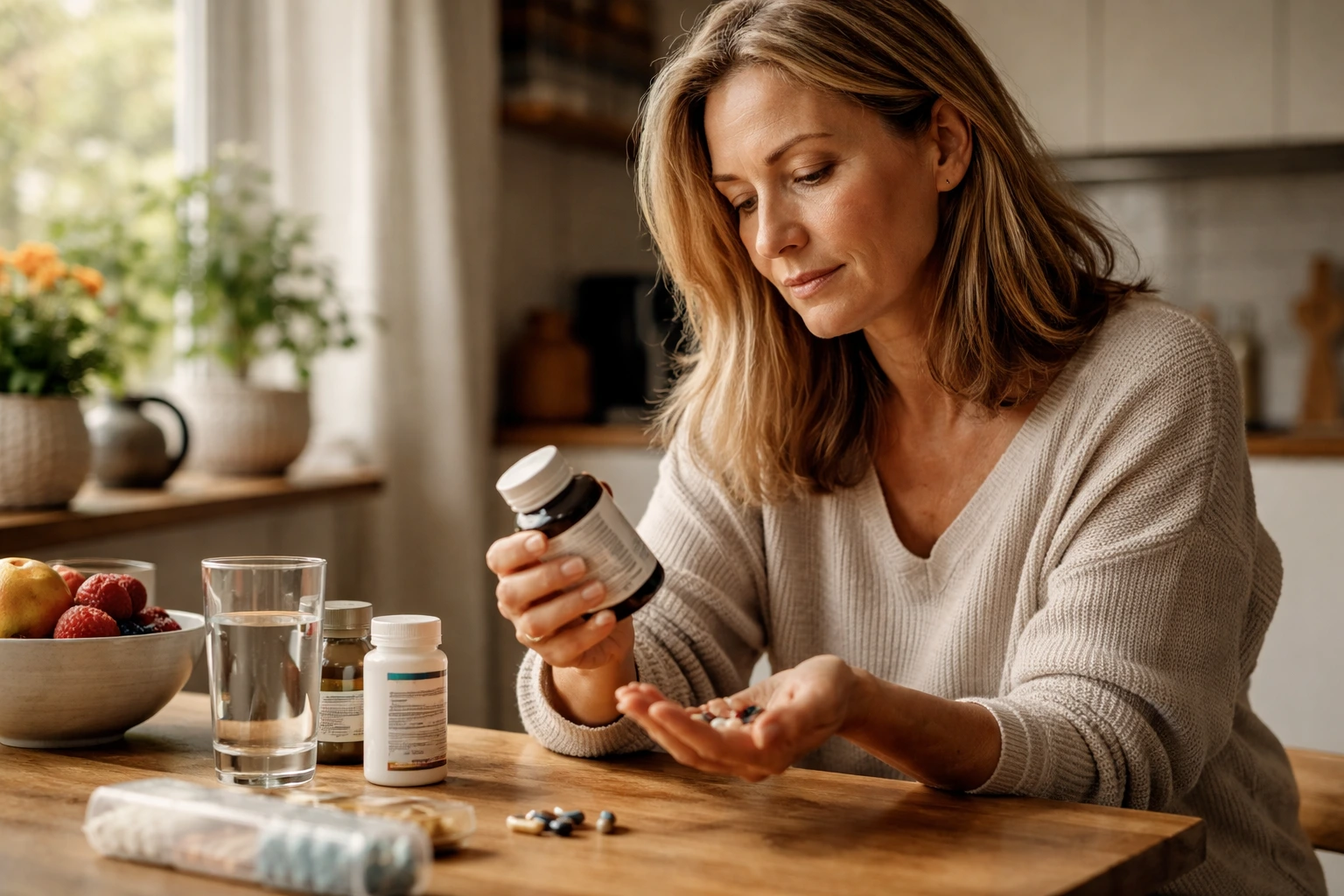
If you’re waking up drenched in sweat at 3 AM, snapping at loved ones over nothing, and feeling like your body has become a stranger, you’re not alone—and vitamins for perimenopause might be the missing piece your body has been asking for.
Vitamin D: The sunshine vitamin
Vitamin D functions as far more than a bone-building nutrient; it acts as a hormone regulator that directly influences estrogen and progesterone fluctuations during perimenopause. As women move through their 40s and 50s, skin thickness changes and sun exposure often decreases, making natural vitamin D synthesis increasingly difficult. Research indicates that women with adequate vitamin D levels report fewer hot flashes and better sleep quality. Consider Sarah, a 48-year-old woman who struggled with persistent fatigue and brain fog for two years. After blood work revealed a vitamin D level of 22 ng/mL (below the optimal range of 30-50), she began supplementing with 2,000 IU daily. Within eight weeks, her energy improved noticeably and her mood stabilized. The mechanism works because vitamin D receptors exist throughout the brain and reproductive tissues, directly affecting neurotransmitter production and hormonal signaling.
Vitamin B complex: Energy boosting blend
The B vitamin family, particularly B6 and B12, serves as essential cofactors in serotonin and dopamine synthesis, the neurotransmitters that regulate mood and motivation. During perimenopause, hormonal shifts increase the metabolic demand for these vitamins while simultaneously depleting existing stores. B6 specifically helps regulate homocysteine levels, which naturally rise during menopause and correlate with mood disturbances and cognitive changes. Imagine experiencing afternoon energy crashes so severe that you cancel plans, or anxiety that peaks without obvious triggers. Many women find that a comprehensive B complex supplement containing B1, B2, B3, B5, B6, B12, and folate addresses multiple symptoms simultaneously. One woman reported that adding a B-complex supplement to her routine reduced her afternoon fatigue by 60% within three weeks and noticeably improved her ability to handle stress. The key is consistency; B vitamins are water-soluble and require daily replenishment.
Vitamin E: Antioxidant defense
Vitamin E operates as a lipid-soluble antioxidant that protects cell membranes from oxidative stress, a process that accelerates during hormonal transition. Hot flashes and night sweats occur partly because declining estrogen disrupts the hypothalamus, the brain’s temperature regulation center, while simultaneously increasing free radical production. Multiple clinical studies document that women taking 400-800 IU of vitamin E daily experienced a 20-30% reduction in hot flash frequency and severity. Picture yourself able to sit through a work meeting or dinner without sudden waves of heat forcing you to excuse yourself. Vitamin E also supports skin elasticity and cognitive function, addressing multiple perimenopause concerns simultaneously. Natural sources like almonds, sunflower seeds, and spinach provide vitamin E alongside other beneficial compounds, though supplementation often proves more practical for achieving therapeutic doses. The antioxidant effect extends to protecting cardiovascular tissue, increasingly important as estrogen’s protective cardiovascular effects diminish.
- Include vitamin E-rich foods in your daily meals.
- Consult with a healthcare provider before starting any new supplement regimen.
- Monitor your symptoms closely to track improvements.
🔬 Science-backed benefits in 2 minuteschoose where to begin:
Magnesium: Muscle relaxant and mood stabilizer
Magnesium participates in over 300 enzymatic reactions in the body, including those governing muscle contraction, neurotransmitter release, and circadian rhythm regulation. Perimenopause dramatically increases magnesium requirements while dietary intake often falls short, creating a perfect storm for muscle cramps, insomnia, and emotional volatility. Women frequently experience nighttime leg cramps so intense they jolt awake, or anxiety that peaks in the evening when magnesium levels naturally dip lowest. Research shows that magnesium glycinate, a highly absorbable form, helps restore sleep architecture and reduces the frequency of middle-of-the-night awakenings that plague many perimenopausal women. One woman who had suffered from severe restless legs syndrome found that 300 mg of magnesium glycinate taken two hours before bed eliminated her symptoms within two weeks. Beyond sleep, magnesium supports serotonin production and helps regulate cortisol, the stress hormone that becomes increasingly dysregulated during hormonal transition. Pumpkin seeds, dark leafy greens, and dark chocolate provide dietary magnesium, though supplementation typically proves necessary for therapeutic benefit.
Omega-3 fatty acids: Brain and heart health
Omega-3 polyunsaturated fatty acids, particularly EPA and DHA, form structural components of neuronal membranes and regulate inflammatory pathways throughout the body. During perimenopause, declining estrogen removes its natural anti-inflammatory protection, making omega-3 supplementation increasingly valuable for cognitive preservation and mood stability. Women often report that brain fog during perimenopause feels like thinking through cotton, with difficulty concentrating and word-finding challenges that create anxiety about cognitive decline. Clinical research demonstrates that women consuming adequate omega-3 fatty acids experience less severe mood swings and better emotional resilience during hormonal fluctuations. One study participant noted that after adding a fish oil supplement containing 1,000 mg combined EPA and DHA daily, her ability to focus during work improved dramatically and her anxiety about memory loss diminished. Omega-3s also support cardiovascular health at a critical time, as perimenopause marks the beginning of accelerated cardiovascular disease risk. Fatty fish like salmon and sardines, chia seeds, and walnuts provide dietary sources, though supplementation ensures consistent intake of therapeutic doses.
Zinc: Immune support and hormonal balance
Zinc functions as a critical cofactor in immune cell development and hormonal receptor function, directly influencing how tissues respond to estrogen and progesterone fluctuations. Perimenopause often brings unexpected immune challenges, with women reporting increased susceptibility to infections, slower wound healing, and hair loss that creates visible reminders of internal hormonal chaos. Zinc deficiency becomes more common during perimenopause due to increased metabolic demands and reduced absorption efficiency that accompanies aging. Women frequently notice that minor cuts take longer to heal, or that they catch every cold circulating through their workplace, creating frustration and fatigue. Research indicates that maintaining adequate zinc levels supports immune resilience and may reduce the severity of perimenopausal symptoms including hot flashes and mood disturbances. One woman discovered that her persistent hair shedding, which had caused significant emotional distress, improved substantially after zinc supplementation brought her levels from 65 mcg/dL to the optimal range of 70-100 mcg/dL. Oysters, beef, and legumes provide dietary zinc, though bioavailability varies based on overall nutrient status and gut health.
Vitamins play a vital role in managing perimenopausal symptoms naturally. Vitamin D, B complex, E, magnesium, omega-3 fatty acids, and zinc offer unique benefits like hormonal balance, energy boost, antioxidant defense, and immune support. Consult with your healthcare provider for personalized recommendations tailored to your individual needs.
Are there any side effects of taking vitamins for perimenopause?
While vitamins are generally safe, excessive intake can lead to adverse effects. It’s essential to follow recommended doses and consult with a healthcare provider before starting any new supplement regimen to avoid potential side effects.
Can vitamins alone alleviate perimenopausal symptoms?
Vitamins can help manage perimenopausal symptoms, but they are most effective when combined with lifestyle modifications like a balanced diet, regular exercise, and stress management. A holistic approach is key to effectively navigating the perimenopausal phase.
Disclaimer: This article is for informational purposes only and is not a substitute for professional medical advice. Always consult a healthcare professional for personal guidance.
This article has been prepared and reviewed by the GlobalHealthBeacon editorial team and is based on current medical research and published scientific literature available in 2026. It provides structured, evidence-based information to support informed health decisions.
