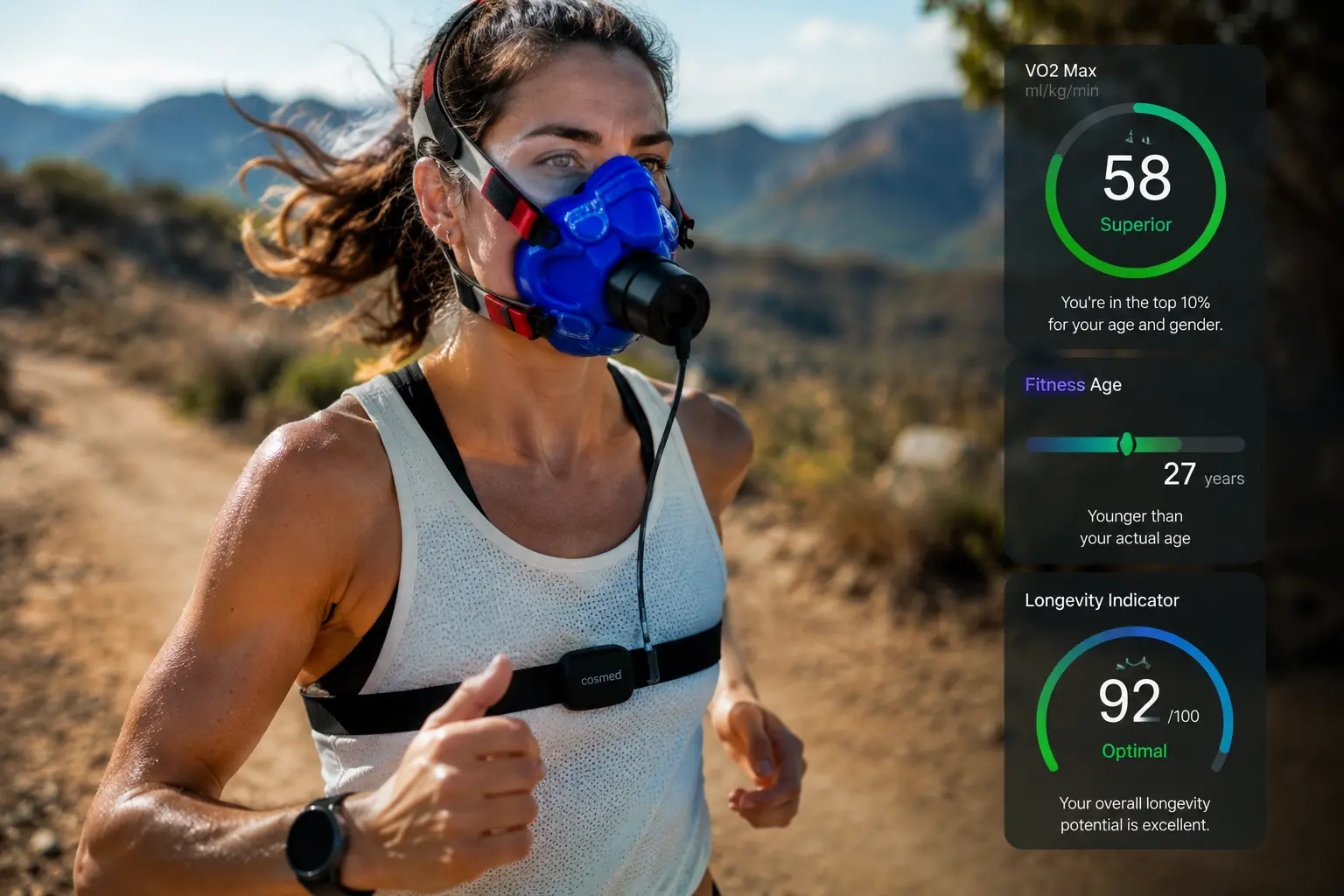
You’re hitting your twenties or thirties feeling fine, but deep down you wonder if you’re actually building the cardiovascular foundation that’ll keep you healthy for decades, and that’s where understanding vo2 max longevity marker becomes the game-changer you didn’t know you needed.
What is VO2 max?
VO2 max, or maximal oxygen uptake, is the maximum amount of oxygen your body can utilize during intense exercise, measured in milliliters of oxygen per kilogram of body weight per minute (ml/kg/min). Think of it as your cardiovascular engine’s horsepower. When you run hard, cycle fast, or push through a tough workout, your lungs pull in oxygen, your heart pumps it through your bloodstream, and your muscles use it for energy. The higher your VO2 max, the more efficiently this whole system works. A 25-year-old runner might have a VO2 max of 55 ml/kg/min, while an untrained person of the same age might be at 35. That difference isn’t just a number on a fitness tracker; it reflects real differences in how your body handles stress, recovers from illness, and maintains energy throughout your day.
- VO2 max is influenced by genetics, age, gender, training habits, and overall health.
- It is commonly measured in milliliters of oxygen per kilogram of body weight per minute (ml/kg/min).
- Improving your VO2 max can lead to enhanced athletic performance and better overall health outcomes.
Why is VO2 max important for longevity?
Research from major cardiovascular studies shows that people with higher VO2 max levels have significantly lower risks of heart disease, type 2 diabetes, obesity, and early mortality. A landmark study found that for every 3.5 ml/kg/min increase in VO2 max, mortality risk dropped by roughly 15 percent. This isn’t coincidence. When your cardiovascular system is strong, it handles inflammation better, regulates blood pressure more effectively, and keeps your metabolic health in check. Imagine your heart as a muscle that gets stronger with use. A young adult who builds cardiovascular fitness now isn’t just training for a 5K; they’re literally adding years to their life and quality to those years. The person who prioritizes aerobic fitness in their twenties often avoids the chronic disease spiral that catches many people off guard in their forties and fifties.
📘 Fix your day in under 2 minuteschoose where to begin:
How to improve your VO2 max naturally
Improving VO2 max requires consistent aerobic work, and the best approach combines steady-state cardio with high-intensity interval training (HIIT). Start with activities you actually enjoy: running, cycling, swimming, rowing, or even brisk hiking. A practical routine might look like three to four sessions per week, with two moderate-intensity sessions (where you can talk but not sing) and one to two HIIT sessions (short bursts of near-maximum effort followed by recovery). For example, a 30-minute run at a comfortable pace twice weekly, plus one session of eight 3-minute hard efforts with 2-minute recovery periods, creates real adaptation. Beyond exercise, sleep quality matters enormously; your body builds cardiovascular capacity during rest. Hydration supports oxygen transport, and a nutrient-dense diet with adequate iron, B vitamins, and antioxidants fuels the process. Many young adults underestimate how much their sleep and nutrition sabotage their training gains.
Monitoring your progress and setting goals
Tracking progress keeps motivation high and reveals what actually works for your body. Use a fitness watch or app to log workouts, noting how your resting heart rate trends downward over weeks (a sign of improving fitness). Every four to eight weeks, do a simple assessment: run or cycle at a steady, hard effort for a set distance or time, then compare your heart rate and how you felt. Wearable devices estimate VO2 max using heart rate data, and while not lab-perfect, they show trends. Set realistic goals; if you’re starting at 35 ml/kg/min, aiming for 45 in six months is ambitious but achievable with consistent training. Break the goal into smaller milestones: improve by 2 points every six weeks. Avoid the common mistake of ramping up intensity too fast, which leads to burnout or injury. Gradual progression, consistency over perfection, and celebrating small wins keeps you engaged for the long haul.
Seeking professional guidance and support
A fitness trainer, sports medicine doctor, or exercise physiologist can design a plan tailored to your current fitness level, health history, and goals. They catch mistakes like overtraining, identify movement imbalances that limit performance, and adjust your program as you improve. If you have any underlying health concerns, a doctor’s clearance before starting intense training is wise. Some people respond quickly to interval training while others build VO2 max better through longer, steady efforts; a professional helps you find your pattern. Group fitness classes, running clubs, or training partners also provide accountability and make the process social rather than isolating. Many young adults skip this step thinking they can figure it out alone, but personalized guidance often cuts months off the learning curve and prevents injuries that derail progress entirely.
Your VO2 max is one of the strongest predictors of how long and how well you’ll live. By understanding what it is, why it matters, and how to build it through consistent aerobic training, smart recovery, and professional support, you’re taking control of your health trajectory right now. The good news is that VO2 max is trainable at any age, and the habits you build in your twenties and thirties compound into decades of vitality.
What factors can influence my VO2 max?
Genetics set a ceiling, but training, age, gender, sleep quality, nutrition, and stress levels all influence where you land within that range. You can’t change your genes, but you can optimize everything else. Consistent aerobic exercise, adequate recovery, iron-rich nutrition, and stress management all push your VO2 max upward. Even if your parents weren’t athletes, you can build significant cardiovascular capacity through deliberate training.
How often should I check my VO2 max?
Assess your VO2 max every four to eight weeks if you’re actively training to improve it. Wearable devices give ongoing estimates, but formal fitness tests through a gym or sports medicine clinic are more accurate. Frequent testing isn’t necessary; what matters is consistent training and periodic check-ins to confirm you’re making progress and adjust your approach if needed.
Disclaimer: This article is for informational purposes only and is not a substitute for professional medical advice. Always consult a healthcare professional for personal guidance.
This guide has been prepared and reviewed by the GlobalHealthBeacon editorial team and reflects current medical research as of 2026. It provides structured, evidence-based information to support informed health decisions.
