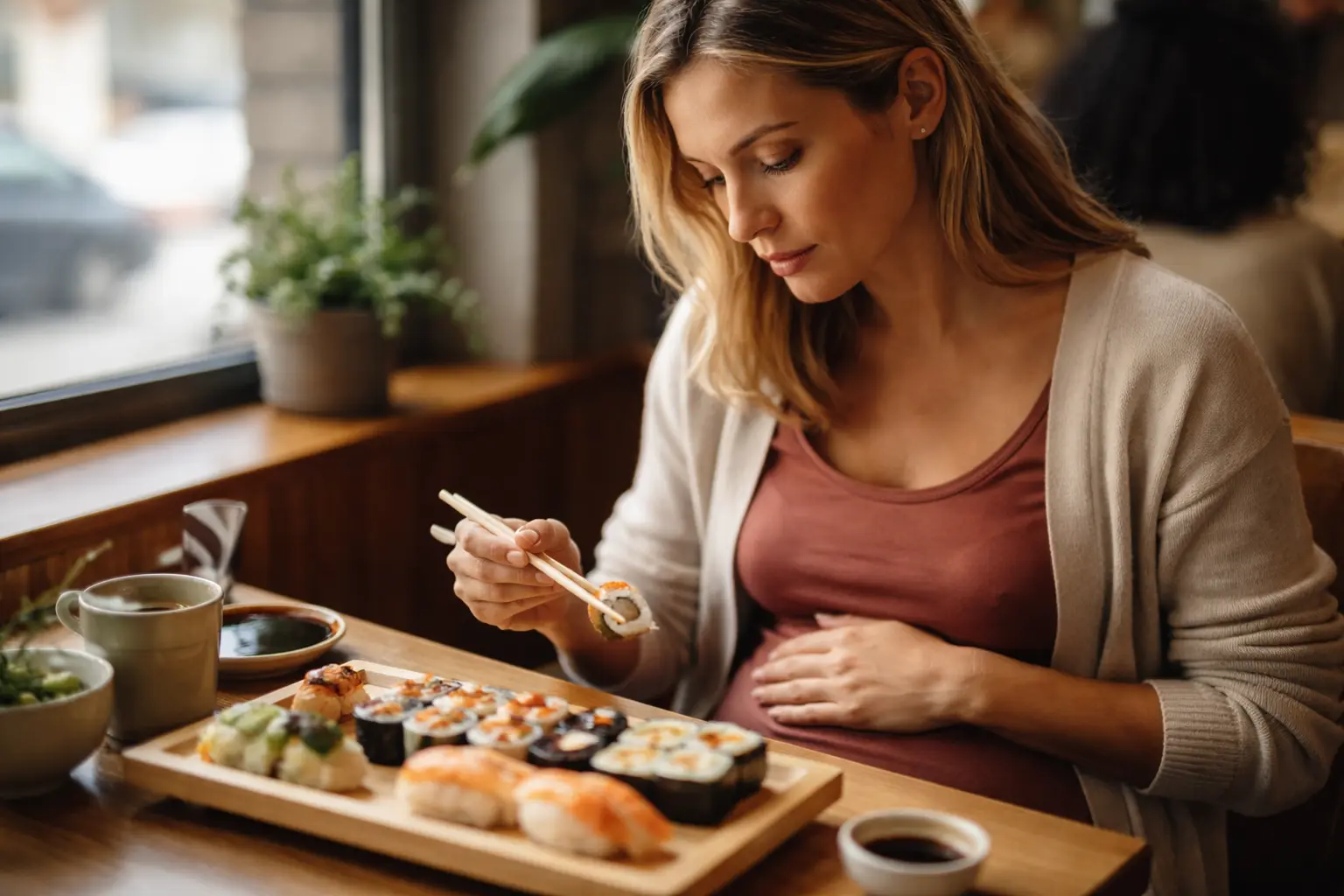
You’re craving sushi, you’re pregnant, and suddenly every article online makes you feel like you’re about to poison your baby just by looking at a California roll, so let’s cut through the noise and figure out which sushi to eat when pregnant without losing your mind.
Understanding sushi and pregnancy
Sushi carries a reputation that precedes it when pregnancy enters the picture. The dish, rooted in Japanese culinary tradition, typically combines rice, vegetables, and raw or cooked seafood, which is where the concern originates. Raw fish can harbor Listeria monocytogenes and other pathogens that pose specific risks during pregnancy when immune function shifts. But here’s the reality: sushi itself isn’t the enemy. A pregnant woman eating a spicy tuna roll at a reputable restaurant isn’t automatically putting her baby at risk. The key lies in understanding what makes certain preparations safer than others. Cooked sushi options, vegetarian varieties, and properly sourced ingredients can deliver the nutritional benefits sushi offers, including high-quality protein and omega-3 fatty acids, without the bacterial exposure. Think of it this way: pregnancy changes how your body handles certain foods, not because sushi is inherently dangerous, but because your immune system is working differently to support fetal development.
Safe sushi options for expecting moms
When you walk into a sushi restaurant while pregnant, your safest bets are the cooked options that still deliver authentic flavor and satisfaction. Fully cooked shrimp rolls, crab rolls, and tempura-based varieties eliminate the raw fish variable entirely. Vegetarian rolls with avocado, cucumber, carrot, and pickled vegetables offer fiber and micronutrients without any animal protein concerns. Consider a spicy cooked scallop roll or an eel and avocado roll, both of which provide that rich umami flavor you’re craving. Egg-based options like tamago rolls are also safe since the egg is cooked during preparation. Many restaurants now offer creative alternatives like seared tuna rolls, where the outside is briefly cooked while maintaining tenderness. A practical example: Sarah, a 28-year-old in her second trimester, discovered she could satisfy her sushi cravings with California rolls made with imitation crab and cooked shrimp, plus vegetable-forward rolls that became her go-to order. The texture and satisfaction remained, just without the risk.
Steps to enjoy sushi safely during pregnancy
Safety starts before you even order. First, choose restaurants with established reputations and visible food safety certifications. Call ahead and ask about their sourcing practices and whether they use sushi-grade fish that’s been properly frozen to kill parasites. When you arrive, inspect the restaurant’s cleanliness and observe how staff handles food preparation. Second, communicate with your server about your pregnancy and ask which items are fully cooked. Don’t assume a roll is cooked based on its name alone. Third, avoid high-mercury fish species including swordfish, king mackerel, shark, and tilefish, as mercury crosses the placental barrier and can affect fetal neurological development. Stick with lower-mercury options like shrimp, crab, and cooked salmon. Fourth, eat sushi in moderation as part of a balanced diet rather than as a frequent meal. Finally, if you experience any unusual symptoms like nausea, vomiting, or abdominal pain after eating sushi, contact your healthcare provider immediately. A common mistake is assuming all raw fish preparations are equally risky, when in reality, sushi-grade fish that’s been properly frozen is significantly safer than random raw fish.
- Choose reputable sushi restaurants with food safety certifications.
- Ensure all seafood is fresh, properly cooked, and sourced responsibly.
- Avoid high-mercury fish species like swordfish and king mackerel.
🔬 Science-backed benefits in 2 minuteschoose where to begin:
Nutritional benefits of sushi for expectant mothers
Sushi delivers genuine nutritional value when you’re pregnant, which is why completely avoiding it isn’t necessary. Cooked fish and seafood in sushi rolls provide high-quality protein essential for fetal tissue development and maternal blood volume expansion. Omega-3 fatty acids, particularly EPA and DHA found in salmon and other fatty fish, support fetal brain and eye development, with research suggesting adequate intake correlates with better cognitive outcomes. Seaweed wrapping offers iodine, a mineral critical for thyroid function in both mother and developing baby. Avocado in rolls contributes folate, potassium, and healthy monounsaturated fats. Vegetable-based rolls with cucumber, carrot, and pickled vegetables provide fiber, which helps manage pregnancy-related constipation, plus various vitamins and minerals. A practical scenario: Jennifer, a 26-year-old in her first trimester dealing with food aversions, found that cooked shrimp and vegetable rolls were among the few foods she could tolerate comfortably. The combination of protein, healthy fats, and easily digestible carbohydrates from rice helped stabilize her energy levels throughout the day.
Precautions to take while consuming sushi
Moderation matters more during pregnancy than at any other time. Eating sushi once or twice weekly is generally considered safe, but daily consumption increases your exposure to potential contaminants and mercury accumulation. Watch portion sizes and balance sushi meals with other protein sources throughout the week. Be aware of sodium content in sushi, particularly in soy sauce and pickled ingredients, as excessive sodium can contribute to water retention and blood pressure changes during pregnancy. Store-bought sushi that’s been sitting at room temperature for hours poses greater bacterial growth risk than freshly prepared restaurant sushi. If you prepare sushi at home, use only sushi-grade fish from trusted sources and follow proper food handling protocols. Pay attention to how your body responds after eating sushi. Some pregnant women experience heartburn or indigestion more readily, and spicy rolls might exacerbate this. Always consult your healthcare provider before making significant dietary changes, especially if you have gestational diabetes or other pregnancy-related conditions that might require modified food choices. A common mistake is treating pregnancy sushi restrictions the same way you’d treat restrictions for immunocompromised individuals, when the actual risk profile is different.
Scientific insights on pregnancy sushi safety
Current medical evidence suggests that pregnant women can safely enjoy sushi when specific guidelines are followed. The American College of Obstetricians and Gynecologists acknowledges that properly handled cooked seafood poses minimal risk during pregnancy. Research on Listeria contamination in sushi specifically shows that risk increases primarily with raw fish consumption and improper storage conditions, not with the sushi format itself. Studies on mercury accumulation indicate that occasional consumption of lower-mercury fish varieties doesn’t result in fetal exposure levels of concern. The freezing process used for sushi-grade fish effectively eliminates parasitic risks that concern healthcare providers. A 2023 review in the Journal of Maternal-Fetal and Neonatal Medicine found no significant adverse outcomes in pregnancies where women consumed cooked sushi options regularly compared to those who avoided sushi entirely. The scientific consensus emphasizes informed choice rather than blanket avoidance. By understanding the actual mechanisms of risk, pregnant women can make decisions aligned with their preferences and circumstances rather than relying on outdated or overly cautious guidelines.
Sushi safety during pregnancy hinges on choosing cooked options, avoiding high-mercury fish species, and selecting restaurants with strong food safety practices. The nutritional benefits of sushi, including protein and omega-3 fatty acids, support fetal development when consumed thoughtfully. Rather than complete avoidance, informed moderation allows pregnant women to enjoy sushi while minimizing potential health risks.
Is it safe to eat raw sushi while pregnant?
Raw sushi carries increased risk of Listeria and parasitic infections during pregnancy when immune function is altered. Cooked sushi options provide similar satisfaction and nutritional benefits without these risks. If you choose raw fish, ensure it’s sushi-grade and from a reputable source, but cooked alternatives are the safer choice.
What are the key nutrients in sushi beneficial for pregnant women?
Sushi provides omega-3 fatty acids essential for fetal brain and eye development, high-quality protein for tissue growth, iodine from seaweed for thyroid function, and folate from vegetables. These nutrients support both maternal health and fetal development when sushi is consumed as part of a balanced diet.
Others also read:
Disclaimer: This article is for informational purposes only and is not a substitute for professional medical advice. Always consult a healthcare professional for personal guidance.
This article has been prepared and reviewed by the GlobalHealthBeacon editorial team and is based on current medical research and published scientific literature available in 2026. It provides structured, evidence-based information to support informed health decisions.
← Back to the Main page on: which sushi to eat when pregnant
