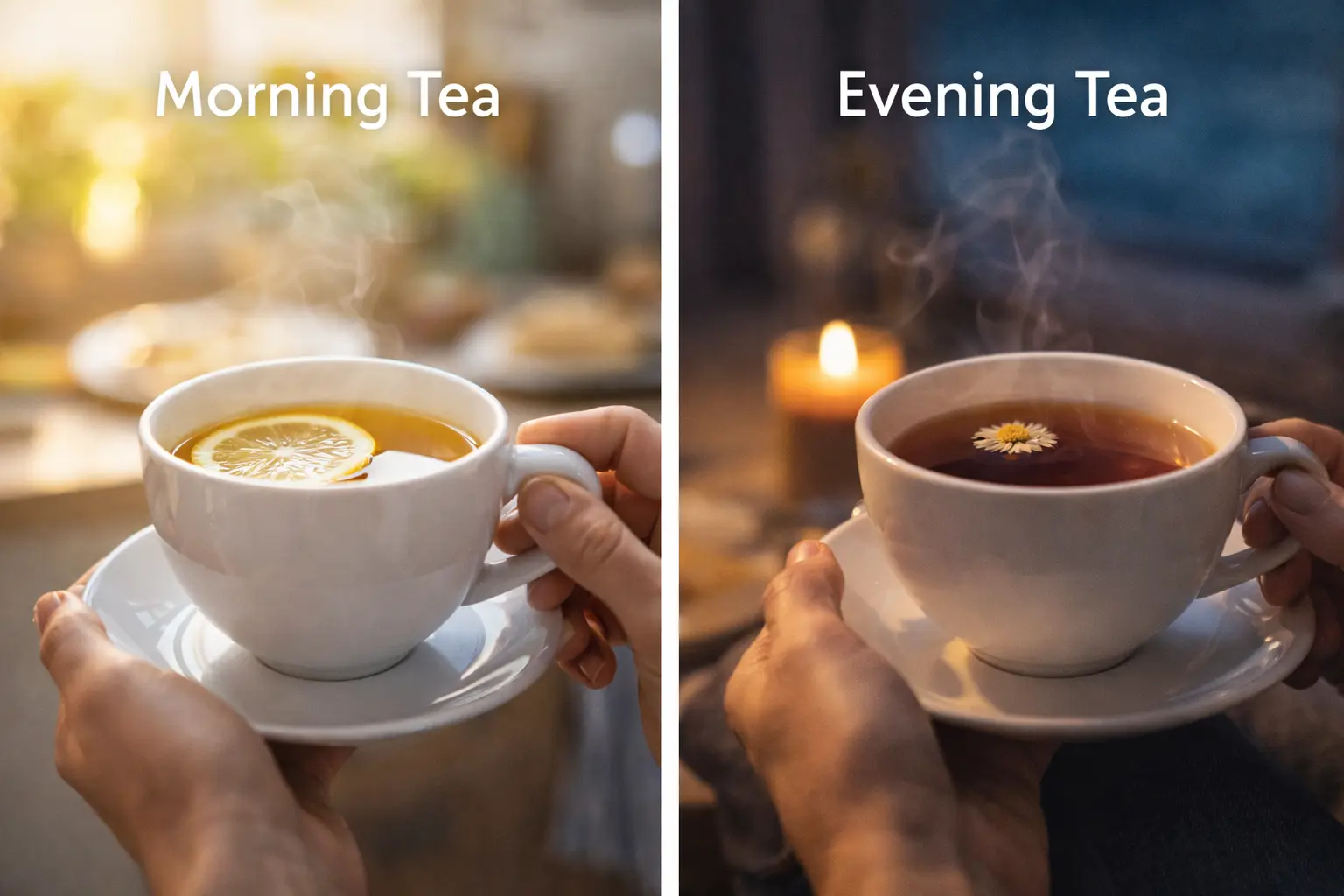
You wake up groggy, reach for coffee out of habit, then wonder why you are jittery by noon, and by evening you cannot sleep because your mind is racing – what if you could actually figure out which tea to drink in the morning vs evening to feel sharp when it matters and calm when you need rest?
Morning tea selection
Starting your day with the right tea can make a measurable difference in how you feel and function. Black tea and green tea contain moderate levels of caffeine, typically 25 to 50 milligrams per cup depending on steeping time, which is enough to gently elevate alertness without the jolt of coffee. Consider a real scenario: Margaret, a retired teacher in her late sixties, switched from her usual morning coffee to a cup of black tea and noticed she felt focused during her morning reading without the afternoon energy crash. The key is understanding that caffeine sensitivity varies with age and individual metabolism. Green tea offers an additional benefit through L-theanine, an amino acid that promotes calm focus rather than nervous energy. Start with one cup between 6 and 9 AM to align with your natural cortisol rhythm, and avoid brewing too long, as this increases caffeine extraction and can lead to overstimulation.
Evening tea choices
As daylight fades and your body prepares for sleep, herbal teas become your allies in the transition toward rest. Chamomile, peppermint, and rooibos are caffeine-free options that have been studied for their calming properties. Chamomile contains apigenin, a compound that binds to receptors in your brain associated with relaxation and sleep onset. Picture this: Robert, a 72-year-old who struggled with evening restlessness, began sipping chamomile tea at 7 PM and found his mind quieted within 30 minutes. Peppermint aids digestion, which is particularly helpful if you eat dinner earlier in the evening. The ritual itself matters too. Holding a warm cup, inhaling the steam, and taking time to sit quietly signals to your nervous system that the active part of your day has ended. Aim for herbal tea between 7 and 9 PM, at least two hours before bed, to allow time for the liquid to move through your system without disrupting sleep.
Factors to consider before choosing tea
Selecting the right tea is not one-size-fits-all. Your caffeine sensitivity, existing health conditions, medications, and daily hydration needs all play a role. Some people metabolize caffeine quickly and feel no effects from afternoon tea, while others remain sensitive well into the evening. If you take medications for blood pressure, heart rhythm, or anxiety, certain teas may interact with these treatments. A practical approach involves keeping a simple log for two weeks: note which tea you drink, when you drink it, and how you feel afterward. Do you sleep well? Feel alert? Experience any digestive changes? This personal data becomes invaluable. Additionally, consider your individual tolerance. Someone with acid reflux might find black tea irritating, while another person thrives on it. Your healthcare provider can review your specific situation and offer personalized guidance based on your medical history and current medications.
- Assess your caffeine tolerance by noting how you feel after different teas at different times.
- Review any medications or health conditions with your doctor to identify potential tea interactions.
- Track your hydration and energy levels daily to find patterns that work for your body.
- Start with small amounts of new teas to observe how your body responds.
- Adjust brewing time and temperature to control caffeine strength based on your sensitivity.
🔬 Science-backed benefits in 2 minuteschoose where to begin:
Tea and hydration balance
While tea contributes to your daily fluid intake, it should not replace plain water. Caffeinated teas have a mild diuretic effect, meaning they increase urination slightly, so balancing them with water is essential. A practical guideline for seniors is to drink about half your body weight in ounces of water daily, plus additional water for every cup of caffeinated tea consumed. For example, if you weigh 150 pounds, aim for 75 ounces of water, plus an extra 8 to 12 ounces for each cup of black or green tea. Herbal teas do not have this effect and count fully toward hydration. Dehydration in older adults can be subtle, leading to fatigue, dizziness, or confusion that might be mistaken for other issues. A simple check is to observe your urine color. Pale yellow indicates good hydration, while dark yellow suggests you need more fluids. Keep a water bottle nearby when you drink tea, and sip water throughout the day alongside your tea routine.
Tea brewing techniques
How you prepare your tea directly affects both its flavor and its health properties. Water temperature and steeping time control the extraction of beneficial compounds and caffeine. Black tea brews best at 200 to 212 degrees Fahrenheit for 3 to 5 minutes. Green tea requires cooler water, around 160 to 180 degrees, for 2 to 3 minutes, because hotter water can make it bitter and extract excessive caffeine. Herbal teas are forgiving and typically steep at boiling temperature for 5 to 10 minutes. A practical tip: if you do not have a thermometer, let boiling water cool for about 3 to 5 minutes before pouring over green tea. Loose leaf tea often yields better results than tea bags because the leaves have more room to unfurl and release their compounds. Invest in a simple infuser or strainer, and you will notice the difference in taste and potential benefits. Experiment with steeping times to find your preference. Shorter steeps give lighter flavor and less caffeine, while longer steeps intensify both.
Tea selection personalization
Your ideal tea routine is uniquely yours, shaped by your taste preferences, daily schedule, and wellness goals. Some people thrive on a consistent ritual, drinking the same tea every morning and evening, while others enjoy variety. Consider keeping a small selection on hand: perhaps a black tea and a green tea for mornings, and two or three herbal options for evenings. Try new teas gradually, one at a time, so you can clearly observe how each affects you. Pay attention to sensory details. Do you prefer floral notes like jasmine, or earthier flavors like oolong? Does the warmth of the cup comfort you, or do you prefer iced tea in warmer months? Your preferences matter because consistency comes from enjoyment. If you love your morning tea, you will look forward to it and maintain the habit. If evening tea becomes a calming ritual you genuinely enjoy, you are more likely to stick with it. Over time, you will discover which teas support your energy, mood, and sleep in ways that feel natural and sustainable.
Morning teas like black or green tea can boost alertness through caffeine and compounds like L-theanine, while herbal teas like chamomile are ideal for relaxation in the evening. Consider factors like caffeine sensitivity, hydration needs, and medications when selecting your daily teas. Proper brewing techniques maximize benefits, and personalizing your tea choices based on taste and wellness goals ensures you maintain a sustainable routine.
Can I drink black tea in the evening?
Black tea contains caffeine, typically 25 to 50 milligrams per cup, which can interfere with sleep if consumed in the evening. Caffeine sensitivity varies by individual and age, but most people find that consuming caffeinated tea after 2 or 3 PM may disrupt sleep quality. Opt for caffeine-free herbal teas instead for a better night’s rest, or choose black tea only in the early morning.
Is it safe to drink green tea every morning?
Green tea is generally safe to consume in moderation daily for most people. However, individuals with certain health conditions such as iron deficiency anemia, heart arrhythmias, or anxiety disorders should consult with a healthcare provider before incorporating it into their daily routine. Additionally, those taking medications for blood pressure or heart conditions should discuss green tea consumption with their doctor to rule out interactions.
Others also read:
Disclaimer: This article is for informational purposes only and is not a substitute for professional medical advice. Always consult a healthcare professional for personal guidance.
This article has been prepared and reviewed by the GlobalHealthBeacon editorial team and is based on current medical research and published scientific literature available in 2026. It provides structured, evidence-based information to support informed health decisions.
← Back to the Main page on: which tea to drink in the morning vs evening
