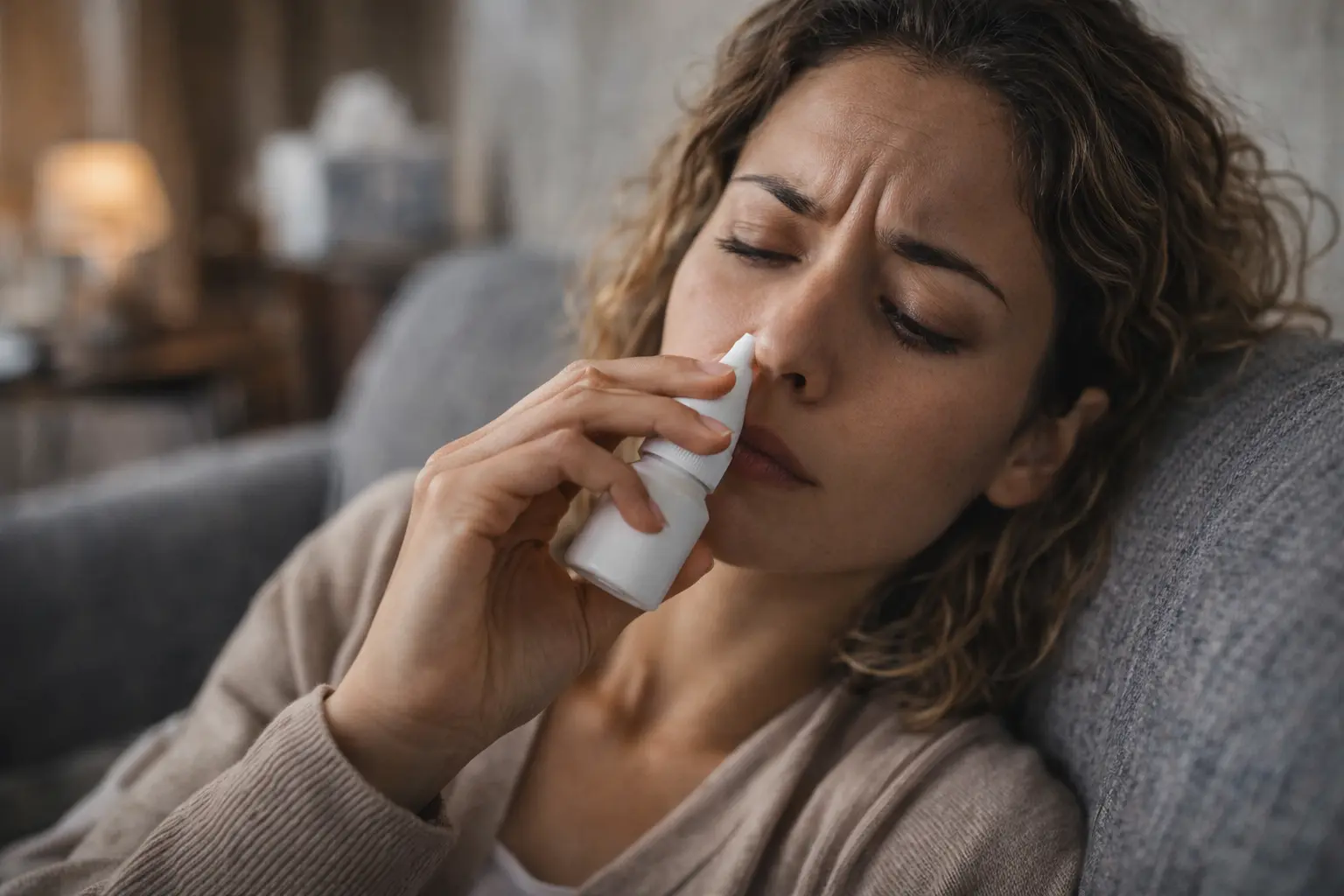
You reach for that nasal spray bottle dozens of times a day, and even though it used to work like magic, now it barely helps and your nose feels more stuffed than ever, so let’s talk about why is nasal spray addictive and how you can finally escape this frustrating cycle.
Understanding nasal spray addiction
Nasal spray addiction, medically known as Rhinitis Medicamentosa, sneaks up on you quietly. It starts innocently enough. You use a decongestant spray for a few days during a cold, and it works beautifully. Your nasal passages open up, you can breathe freely, and life feels normal again. But then something unexpected happens. After about a week of regular use, your nasal passages start rebelling. The congestion creeps back, sometimes even worse than before. So you spray again, and again, thinking you just need a bit more relief. What you don’t realize is that your nasal lining has become dependent on the medication. The blood vessels in your nose have adapted to the spray, and without it, they swell up in what doctors call rebound congestion. For seniors especially, this dependency can develop faster because age-related changes in nasal tissue make the passages more sensitive and prone to irritation. Many older adults find themselves trapped, using the spray multiple times daily just to breathe normally.
- Overuse of nasal sprays can damage the delicate lining of the nasal passages.
- Seniors are particularly vulnerable to this addiction due to age-related changes in nasal function.
- Symptoms of nasal spray addiction include worsening congestion, nasal irritation, and difficulty breathing.
Breaking the cycle of addiction
Breaking free from nasal spray addiction takes patience and a thoughtful plan, not cold turkey quitting. Imagine trying to stop suddenly after months of daily use, your nose would feel completely blocked and you’d likely reach for that bottle again within hours. Instead, gradual cessation works better. One effective approach involves slowly tapering your usage, perhaps switching to saline sprays which contain only salt water and won’t create dependency. Another strategy is diluting your decongestant spray with saline solution over time, gradually reducing the active ingredient concentration. Steam inhalation from a hot shower or a bowl of hot water can provide natural congestion relief without any chemical dependency. Nasal steroid sprays, prescribed by a doctor, can help reduce inflammation while you’re weaning off decongestants. Some seniors find success using a humidifier in their bedroom at night, which keeps nasal passages moist and reduces the urge to spray. The key is having alternatives ready so when the urge hits, you have something else to reach for instead.
💬 Ready to feel better in 2 minutes?choose where to begin:
Seeking professional guidance
This is where your healthcare team becomes invaluable. An ENT specialist or allergist understands exactly what’s happening in your nasal passages and can create a personalized plan tailored to your specific situation. They might recommend a gradual weaning schedule, specific saline irrigation techniques, or prescription medications that address underlying allergies or sinus issues you didn’t even know you had. Some seniors discover their nasal spray addiction was actually masking an untreated allergy or chronic sinusitis that needed proper medical attention all along. Your doctor can also monitor your progress, checking that your nasal passages are healing and that congestion is genuinely improving rather than just being masked. They’ll watch for signs of infection or complications and adjust your treatment if needed. Don’t feel embarrassed bringing this up during your appointment. Healthcare providers see this situation regularly and they’re there to help, not judge. Many have helped countless seniors successfully break free from this cycle.
Embracing natural remedies
Natural approaches can be surprisingly effective once you’ve broken the spray habit. Neti pots and saline rinses flush out irritants and mucus without any chemical dependency risk, and many seniors find the ritual itself calming and therapeutic. A good humidifier in your bedroom adds moisture to the air while you sleep, reducing nighttime congestion and the temptation to spray before bed. Staying hydrated by drinking plenty of water helps thin mucus naturally, making congestion easier to manage. Avoiding common triggers like dust, pet dander, and pollen reduces the congestion that made you reach for spray in the first place. Some seniors benefit from elevating their head while sleeping, which helps drainage and reduces nighttime stuffiness. Warm compresses over your sinuses can provide soothing relief, and simple steam inhalation from a cup of hot tea offers both comfort and practical benefit. These remedies work best as part of a complete approach that includes medical guidance and gradual cessation from the spray.
Understanding why nasal spray becomes addictive empowers you to take control of your nasal health instead of letting it control you. Breaking free involves gradual steps, professional medical support, and discovering natural alternatives that work with your body rather than against it. The path forward isn’t quick, but it’s absolutely achievable, and countless seniors have successfully reclaimed their ability to breathe freely without dependency.
Is nasal spray addiction common among seniors?
Yes, nasal spray addiction can affect seniors, particularly due to age-related changes in nasal function and the increased likelihood of allergies or sinus issues.
Can nasal spray addiction be reversed?
With proper medical guidance and alternative treatments, nasal spray addiction can be effectively reversed, allowing seniors to regain control of their nasal health.
Others also read:
Disclaimer: This article is for informational purposes only and is not a substitute for professional medical advice. Always consult a healthcare professional for personal guidance.
This article presents an experience-based perspective and has been reviewed by the GlobalHealthBeacon editorial team in 2026. It provides structured, evidence-based information to support informed health decisions.
