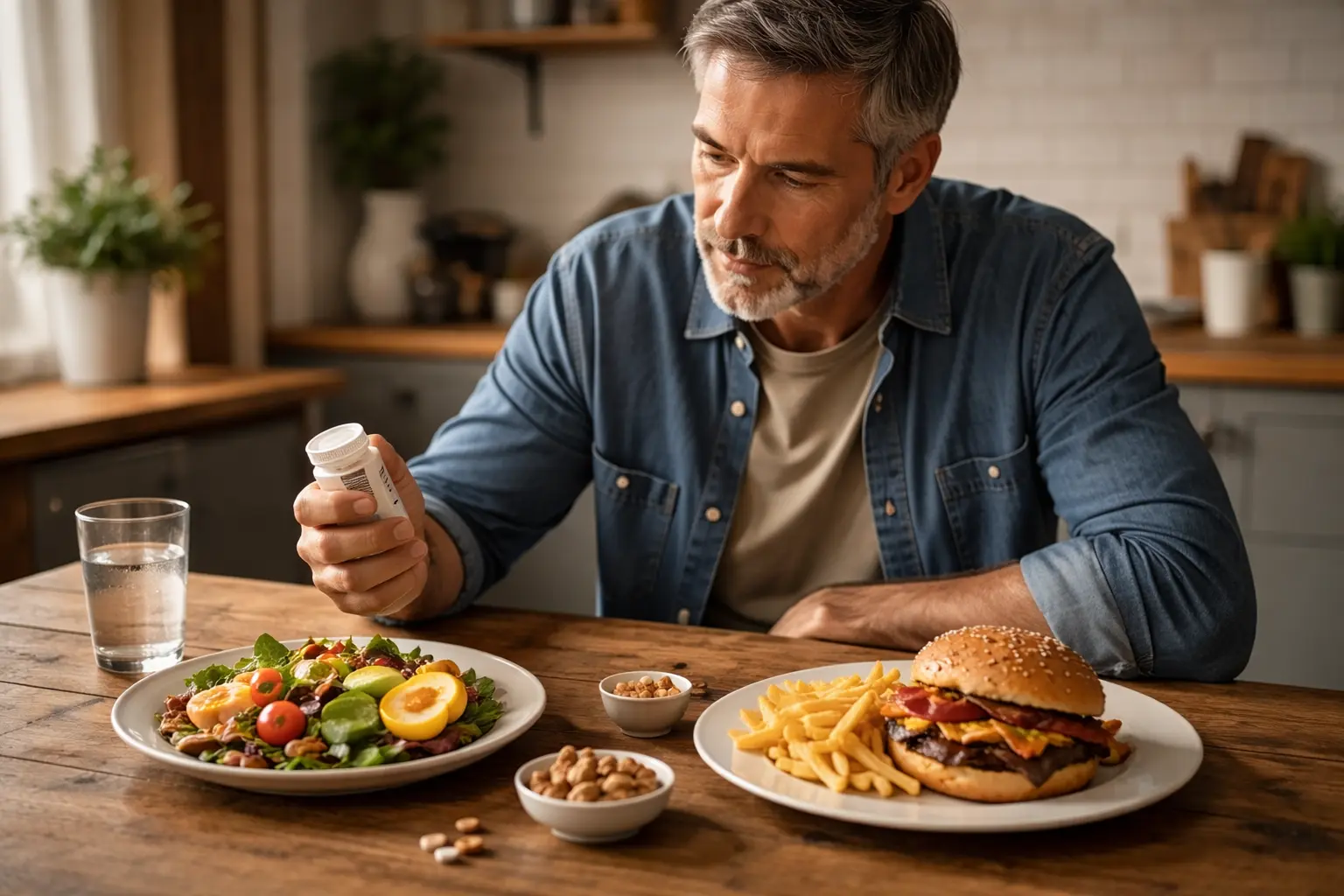
Your doctor hands you a cholesterol report with numbers that might as well be in another language, and suddenly you’re worried about hdl versus ldl cholesterol without actually understanding what either one does to your body.
What is HDL cholesterol?
HDL, or high-density lipoprotein cholesterol, is often referred to as the good cholesterol because it actively works to protect your heart. Think of HDL as a cleanup crew moving through your bloodstream. When you have adequate HDL levels, these particles pick up excess LDL cholesterol from your artery walls and transport it to your liver for disposal. For seniors, this becomes increasingly important because arterial flexibility naturally decreases with age. A 68-year-old woman named Margaret discovered her HDL was only 35 mg/dl during a routine checkup. Her doctor explained that this low level meant her arteries had less protection against plaque buildup. Within six months of adding three 30-minute walks weekly and switching to olive oil in her cooking, Margaret’s HDL rose to 52 mg/dl. The difference felt tangible to her: less fatigue, better energy during her grandchildren’s visits. HDL levels above 60 mg/dl are considered protective against heart disease, while levels below 40 mg/dl for men and below 50 mg/dl for women signal increased cardiovascular risk.
- HDL levels above 60 mg/dl are considered protective against heart disease.
- Regular physical activity, a healthy diet rich in fruits and vegetables, and avoiding smoking can increase HDL levels.
- Monitoring HDL levels is crucial for assessing cardiovascular health.
Understanding LDL cholesterol
LDL, or low-density lipoprotein cholesterol, is known as the bad cholesterol because high levels contribute to plaque formation inside your arteries. Imagine LDL particles as delivery trucks carrying packages of cholesterol through your bloodstream. When there are too many trucks and not enough cleanup crews (HDL), packages start piling up on your artery walls, narrowing the passages where blood flows. This buildup, called atherosclerosis, restricts blood flow to your heart and brain, increasing your risk of heart attack and stroke. For seniors, this process has often been developing for decades. A 72-year-old man named Robert had an LDL reading of 180 mg/dl and initially dismissed it as just a number. Six months later, he experienced chest pain during his morning walk. After a stent procedure, Robert finally understood that his LDL wasn’t abstract. Now he takes a statin medication, follows a diet low in saturated fats, and checks his LDL quarterly. His current level of 95 mg/dl represents a dramatic shift in his daily life and peace of mind.
📘 Fix your day in under 2 minuteschoose where to begin:
The ideal balance
Your cholesterol numbers don’t exist in isolation. What matters most is the relationship between HDL and LDL, along with your total cholesterol and triglycerides. The goal is straightforward: push HDL upward while pulling LDL downward. For most seniors, an ideal LDL target is below 100 mg/dl, though those with existing heart disease should aim for below 70 mg/dl. HDL should be 60 mg/dl or higher for both men and women. Some doctors also calculate your cholesterol ratio by dividing total cholesterol by HDL. A ratio below 5 is generally considered good, while below 3.5 is excellent. Consider a 65-year-old couple, James and Patricia, who both received similar cholesterol reports but had different risk profiles. James had total cholesterol of 220 with HDL of 35 and LDL of 160. Patricia had total cholesterol of 210 with HDL of 65 and LDL of 120. Despite similar total numbers, Patricia’s balance was significantly healthier because her protective HDL was higher. This illustrates why understanding the relationship between these numbers matters more than fixating on any single figure.
Tips for improving your cholesterol levels
Improving cholesterol requires a two-pronged approach: lifestyle changes and, when necessary, medication. Start with movement. Exercise doesn’t have to mean joining a gym. A 70-year-old named Susan began with 20-minute walks three times weekly and saw her HDL increase by 8 points within two months. Swimming, dancing, or even gardening counts. Next, examine your plate. Swap butter for olive oil, choose grilled fish over fried chicken, and add oats, nuts, and beans to your meals. These foods contain soluble fiber that binds to cholesterol and helps remove it from your body. Reduce saturated fats found in red meat, full-fat dairy, and processed foods. If lifestyle changes alone don’t move your numbers after three to six months, medications like statins can significantly lower LDL. Some seniors worry about side effects, but most tolerate them well, and the cardiovascular benefits typically outweigh concerns. Schedule regular check-ups every three to six months initially to track progress, then annually once stable. Work with your doctor to create a personalized plan rather than comparing your numbers to a neighbor’s results.
Tracking your progress
Monitoring cholesterol is an ongoing conversation with your body and your healthcare team. Request a lipid panel blood test annually, or more frequently if your doctor recommends it or if you’re making lifestyle changes. Keep a simple record of your results with dates. Many seniors find it helpful to write down their numbers on a calendar or use a health app to visualize trends over time. A 66-year-old retired teacher named David created a spreadsheet tracking his HDL, LDL, total cholesterol, and triglycerides alongside notes about his exercise frequency and diet changes. Over 18 months, he could see exactly which habits correlated with improvements. When his numbers plateaued, he adjusted his routine. This active engagement transformed cholesterol management from something that felt like a burden into something he felt in control of. Share your results with family members, especially adult children, since cholesterol patterns often run in families. Understanding your numbers empowers you to make informed decisions about medications, lifestyle adjustments, and preventive care. Your cholesterol story isn’t written in stone; it’s a narrative you continue to shape through daily choices.
A clear understanding of HDL versus LDL cholesterol levels is essential for assessing your risk of heart disease. By focusing on increasing HDL and decreasing LDL through lifestyle changes and monitoring, you can take control of your cardiovascular health proactively.
How do I raise my HDL cholesterol levels?
Engage in regular physical activity, consume a healthy diet rich in fruits and vegetables, quit smoking, and consider medications under the guidance of your healthcare provider to elevate your HDL levels.
What foods can help lower LDL cholesterol?
Incorporate foods like oats, nuts, olive oil, fatty fish, and fruits high in fiber into your diet to help lower LDL cholesterol levels and improve your overall cardiovascular health.
Others also read:
Disclaimer: This article is for informational purposes only and is not a substitute for professional medical advice. Always consult a healthcare professional for personal guidance.
This guide has been prepared and reviewed by the GlobalHealthBeacon editorial team and reflects current medical research as of 2026. It provides structured, evidence-based information to support informed health decisions.
