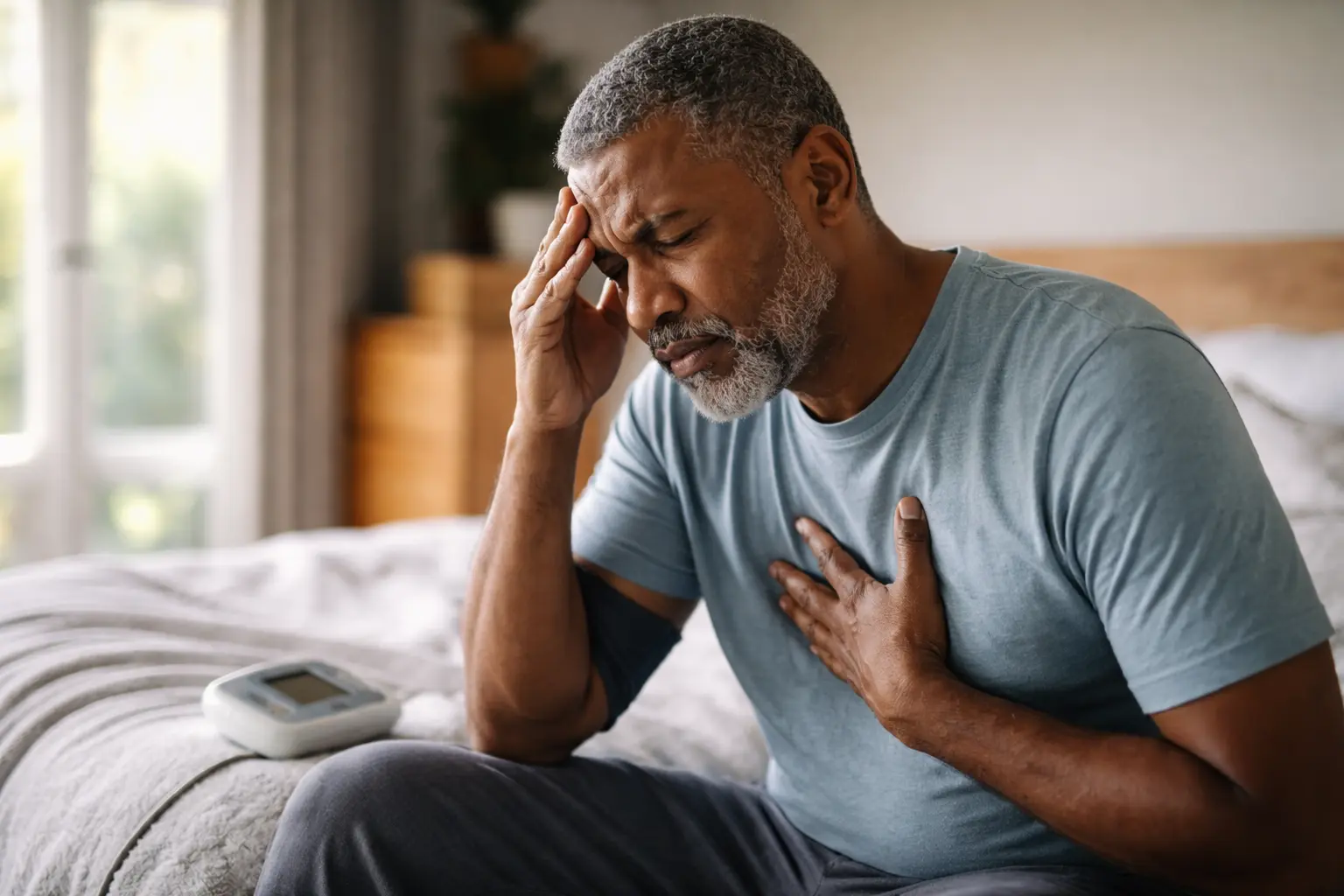
Your head is pounding like nothing you’ve felt before, your chest feels tight, and something deep down tells you this isn’t normal, and that’s exactly what hypertensive crisis symptoms feel like, and you need to know what’s happening right now.
What are hypertensive crisis symptoms?
A hypertensive crisis happens when your blood pressure spikes dangerously high, and your body sends out unmistakable distress signals. Picture this: you’re sitting at home on a Tuesday afternoon, and suddenly a severe headache hits you that’s completely different from any headache you’ve experienced before. It’s not the dull ache you get from stress or tension. This is sharp, intense, and often feels like pressure building behind your eyes. At the same time, you might notice you’re struggling to catch your breath, even though you’re just sitting down. Your chest feels tight, almost like someone’s wrapping a band around it. You might also notice a nosebleed that won’t stop after a few minutes of pressure. These symptoms don’t appear randomly. They’re your body’s way of telling you that your blood pressure has reached dangerous levels and requires immediate medical attention. Don’t wait, don’t hope it passes, and don’t try to manage it at home with rest alone.
- Sudden, severe headaches that differ from your usual headaches
- Shortness of breath or difficulty breathing
- Nosebleeds that don’t stop quickly
- Chest pain or tightness
Risk factors and causes
Seniors face a higher risk of hypertensive crisis because your body changes with age. Your blood vessels become less flexible, your heart has to work harder to pump blood, and if you’ve been managing high blood pressure for years, the strain adds up. Consider Margaret, a 72-year-old who’s had hypertension for a decade. She felt fine, so she occasionally skipped her blood pressure medication. One evening, she experienced a severe headache and chest tightness that sent her to the emergency room. Her blood pressure was critically elevated because she hadn’t taken her medication consistently. This is one of the most common causes of hypertensive crisis in seniors: not taking prescribed medications as directed. Other triggers include sudden stress, like a family emergency or loss, which can cause blood pressure to spike rapidly. Substance use, including stimulants or certain over-the-counter medications like decongestants, can also trigger a crisis. Underlying conditions like kidney disease or sleep apnea compound the risk. Understanding your personal risk factors helps you stay vigilant and take preventive action.
📘 Fix your day in under 2 minuteschoose where to begin:
Prevention and lifestyle changes
Preventing a hypertensive crisis starts with daily choices that add up over time. Regular physical activity, even gentle walking for 30 minutes most days, helps your cardiovascular system function better and keeps blood pressure more stable. A balanced diet low in sodium is crucial. Instead of reaching for processed foods high in salt, focus on fresh vegetables, lean proteins, and whole grains. Imagine preparing a simple dinner: grilled salmon with roasted broccoli and brown rice, seasoned with herbs instead of salt. That’s the kind of meal that supports your heart health. Stress management matters more than you might think. Try meditation, deep breathing exercises, or activities you enjoy like gardening or reading. Taking your blood pressure medications exactly as prescribed, even when you feel fine, is non-negotiable. Set phone reminders if you need to. Attend all your doctor’s appointments for routine check-ups and blood pressure monitoring. These visits catch problems early before they become crises. Keep a blood pressure log at home if your doctor recommends it. Small, consistent actions create a protective barrier against hypertensive crisis.
When to seek medical help
Knowing when to act quickly is the difference between a managed situation and a medical emergency. If you experience severe chest pain that radiates to your arm or jaw, confusion or difficulty thinking clearly, sudden vision changes or blurred sight, difficulty speaking or slurred speech, or severe headache combined with any other symptom mentioned in this article, call emergency services immediately. Don’t drive yourself. Don’t wait to see if it improves. Don’t minimize what you’re feeling because you’re worried about being a burden. These are all signs of a hypertensive emergency. Think of it this way: your body is sending an urgent message, and ignoring it could lead to stroke, heart attack, or kidney damage. A 68-year-old man named Robert noticed sudden blurred vision and a severe headache one evening. He almost brushed it off as fatigue, but his daughter insisted he call 911. At the hospital, doctors found his blood pressure was critically high and he was at risk for stroke. Early intervention prevented serious harm. Trust your instincts and your body’s signals. When in doubt, seek immediate medical help.
Emergency response and treatment
When you arrive at the emergency room with hypertensive crisis symptoms, medical staff work quickly to stabilize your condition and lower your blood pressure safely. They’ll monitor your vital signs continuously, check your heart function with an EKG, and run blood tests to assess organ damage. The treatment approach depends on how severe your crisis is and whether your organs are affected. Some patients receive fast-acting medications intravenously to bring blood pressure down gradually, not too quickly, because dropping it too fast can cause other problems. Others may need hospitalization for several days of monitoring and medication adjustment. For example, a senior might receive labetalol or nicardipine through an IV, which lowers blood pressure over minutes to hours. Once stabilized, doctors work with you to adjust your long-term medication plan to prevent future crises. This might mean changing medications, adding new ones, or adjusting doses. You’ll receive clear instructions about taking medications at home, dietary changes, and follow-up appointments. The entire process focuses on protecting your heart, brain, and kidneys from damage. Recovery involves patience and commitment to your new treatment plan.
Recognizing hypertensive crisis symptoms like severe headaches, chest pain, shortness of breath, and nosebleeds can save your life. Seniors face elevated risk due to age-related changes and underlying conditions, but prevention through medication adherence, lifestyle changes, and stress management is possible. When warning signs appear, seek emergency medical help immediately rather than waiting or hoping symptoms resolve. Understanding your personal risk factors and maintaining regular doctor visits creates a safety net. Treatment in an emergency setting stabilizes your condition and prevents serious complications like stroke or heart damage. Your awareness and quick action are your strongest defenses against hypertensive crisis.
How can I differentiate between a regular headache and a symptom of hypertensive crisis?
A typical headache may be mild and manageable with over-the-counter pain relievers, while a hypertensive crisis headache is severe and sudden, often accompanied by other symptoms like chest pain or shortness of breath. If unsure, seek immediate medical help.
Are seniors more susceptible to hypertensive crises?
Yes, seniors are at a higher risk of experiencing hypertensive crises due to age-related changes in blood vessels and conditions like hypertension. Regular monitoring of blood pressure and adherence to prescribed medications are crucial for prevention.
Others also read:
Disclaimer: This article is for informational purposes only and is not a substitute for professional medical advice. Always consult a healthcare professional for personal guidance.
This guide has been prepared and reviewed by the GlobalHealthBeacon editorial team and reflects current medical research as of 2026. It provides structured, evidence-based information to support informed health decisions.
