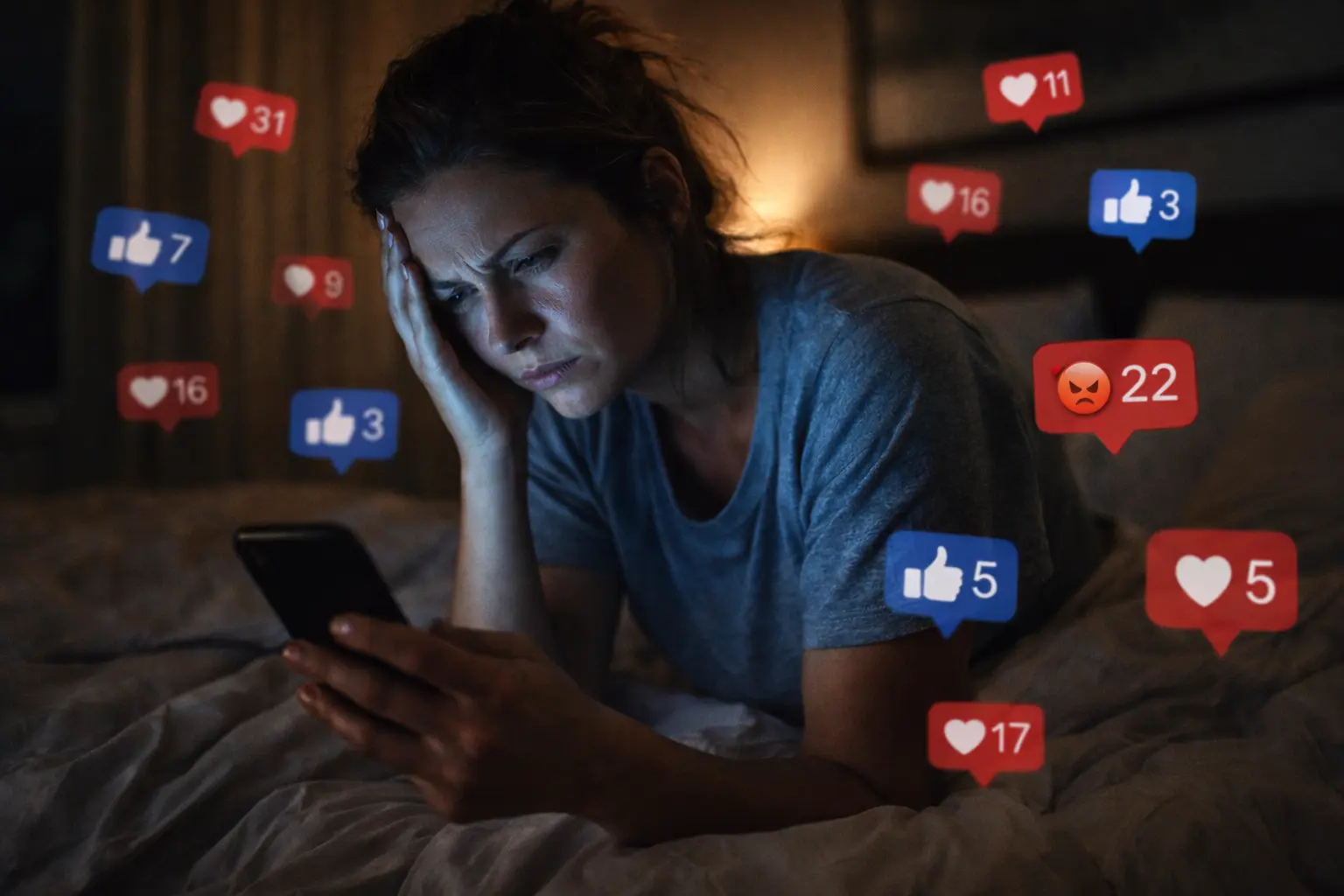
You’re scrolling at midnight again, heart racing, comparing your body to filtered images, and suddenly three hours vanished while your anxiety spiked and your sleep went nowhere – this is why social media harms health, and you’re not alone in feeling it.
Recognizing the signs of social media impact on health
The warning signs often creep in quietly, so quietly you might not notice them at first. You wake up groggy even though you got eight hours of sleep, but your phone was in your hand until 2 AM. Your shoulders feel tight during work meetings, and you realize you’ve been doom-scrolling through comparison posts all morning. Maybe you notice your mood shifts after spending time on certain apps, or you find yourself reaching for your phone the moment you feel bored or anxious. These aren’t random occurrences. Your body is sending clear signals that something needs to change. Pay attention to when you feel most stressed, most inadequate, or most exhausted. Track your sleep quality on nights when you use social media heavily versus nights when you put the phone away. Notice if your anxiety spikes after certain types of content. These patterns reveal the real connection between your screen time and your well-being.
- Elevated stress and anxiety levels, especially after comparing yourself to others online
- Poor sleep quality and irregular patterns from late-night scrolling and blue light exposure
- Comparison and self-esteem issues triggered by curated, filtered content
Understanding the link between social media and mental health
Social media platforms are engineered to keep you engaged, which means they’re designed to trigger emotional responses. When you see a friend’s vacation photos, your brain registers a gap between her life and yours. When you see a fitness influencer’s transformation, you measure yourself against an unrealistic standard. This constant comparison activates your stress response system. Your cortisol levels rise. Over time, this creates a feedback loop: you feel inadequate, so you scroll more seeking validation through likes and comments, which temporarily feels good but ultimately deepens the cycle. Research shows women are particularly vulnerable to this pattern because social media often emphasizes appearance, relationships, and lifestyle achievements. The curated nature of what you see online means you’re comparing your behind-the-scenes reality to everyone else’s highlight reel. This distortion damages self-perception and fuels anxiety and depression. Understanding this mechanism is the first step toward protecting yourself from its effects.
📘 Fix your day in under 2 minuteschoose where to begin:
Setting boundaries for a healthier social media experience
Boundaries aren’t about quitting social media entirely unless that’s what you choose. They’re about reclaiming control. Start by identifying your specific problem areas. Do you scroll mindlessly first thing in the morning? Do certain accounts trigger comparison spirals? Does evening scrolling sabotage your sleep? Once you know your patterns, create concrete rules. Set app time limits on your phone and actually stick to them. Remove social media apps from your home screen so accessing them requires intention, not habit. Establish phone-free zones, like your bedroom or dinner table. Schedule specific times for social media rather than checking constantly throughout the day. Unfollow or mute accounts that make you feel inadequate, even if they’re from people you know. Curate your feed intentionally so it shows you content that educates, inspires, or genuinely makes you happy. Consider a weekly digital detox, even just 24 hours, to reset your relationship with these platforms. These boundaries take practice to maintain, but they work.
Finding balance and fostering positive habits
Replacing social media time with meaningful activities is essential. When you feel the urge to scroll, redirect that impulse toward something nourishing. Call a friend instead of messaging her. Read a book you’ve been putting off. Take a walk without your phone. Practice a hobby that requires your full attention, whether that’s cooking, painting, gardening, or learning something new. Prioritize face-to-face interactions because they provide genuine connection that social media can never replicate. Notice how different you feel after an hour with a friend in person versus an hour scrolling through her updates. Invest in activities that make you feel capable and proud, not inadequate. Exercise, creative projects, learning, and helping others all boost mental health in ways social media cannot. Build a life that’s interesting enough that you don’t need constant external validation. When you have real accomplishments, real connections, and real joy in your daily life, the pull of social media naturally weakens. You’re not fighting the urge to scroll; you’re simply too engaged in living.
Seeking professional support and resources
If you’ve tried setting boundaries and adjusting your habits but still struggle with anxiety, depression, or compulsive social media use, professional support can help. Therapists trained in cognitive behavioral therapy can help you identify and change thought patterns that keep you trapped in comparison cycles. Some therapists specialize in technology and digital wellness, understanding the unique challenges of modern life. Online communities focused on digital wellness connect you with others facing similar struggles, reducing shame and isolation. Your doctor can also help, especially if you’re experiencing sleep disruption or anxiety symptoms. Many employers offer employee assistance programs that include free counseling sessions. If you’re concerned about addiction-like patterns, organizations like the Center for Humane Technology offer resources specifically designed to help people regain control. Seeking help isn’t weakness; it’s wisdom. Your mental health matters more than any app.
Understanding why social media harms health is the foundation for protecting yourself. By recognizing the specific signs in your own life, understanding the psychological mechanisms at play, setting realistic boundaries, building a life rich with offline meaning, and reaching out for support when needed, you can transform your relationship with these platforms. You don’t have to choose between staying connected and staying well. You can do both by being intentional, aware, and willing to prioritize your health.
How can I tell if social media is negatively impacting my health?
Notice patterns in your mood, sleep, and anxiety levels. Do you feel worse after scrolling? Does your sleep suffer on nights you use social media? Do you compare yourself to others and feel inadequate? Are you reaching for your phone to cope with boredom or stress? Track these patterns for a week and you’ll have clear data about whether social media is harming you.
What steps can I take to protect my mental health from social media?
Start by setting specific boundaries: remove apps from your home screen, set daily time limits, establish phone-free times and spaces, unfollow accounts that trigger comparison, and schedule dedicated social media times rather than constant checking. Replace scrolling time with face-to-face connections, hobbies, and activities that build real confidence. If you struggle despite these changes, talk to a therapist or counselor who specializes in digital wellness.
Others also read:
Disclaimer: This article is for informational purposes only and is not a substitute for professional medical advice. Always consult a healthcare professional for personal guidance.
This guide has been prepared and reviewed by the GlobalHealthBeacon editorial team and reflects current medical research as of 2026. It provides structured, evidence-based information to support informed health decisions.
