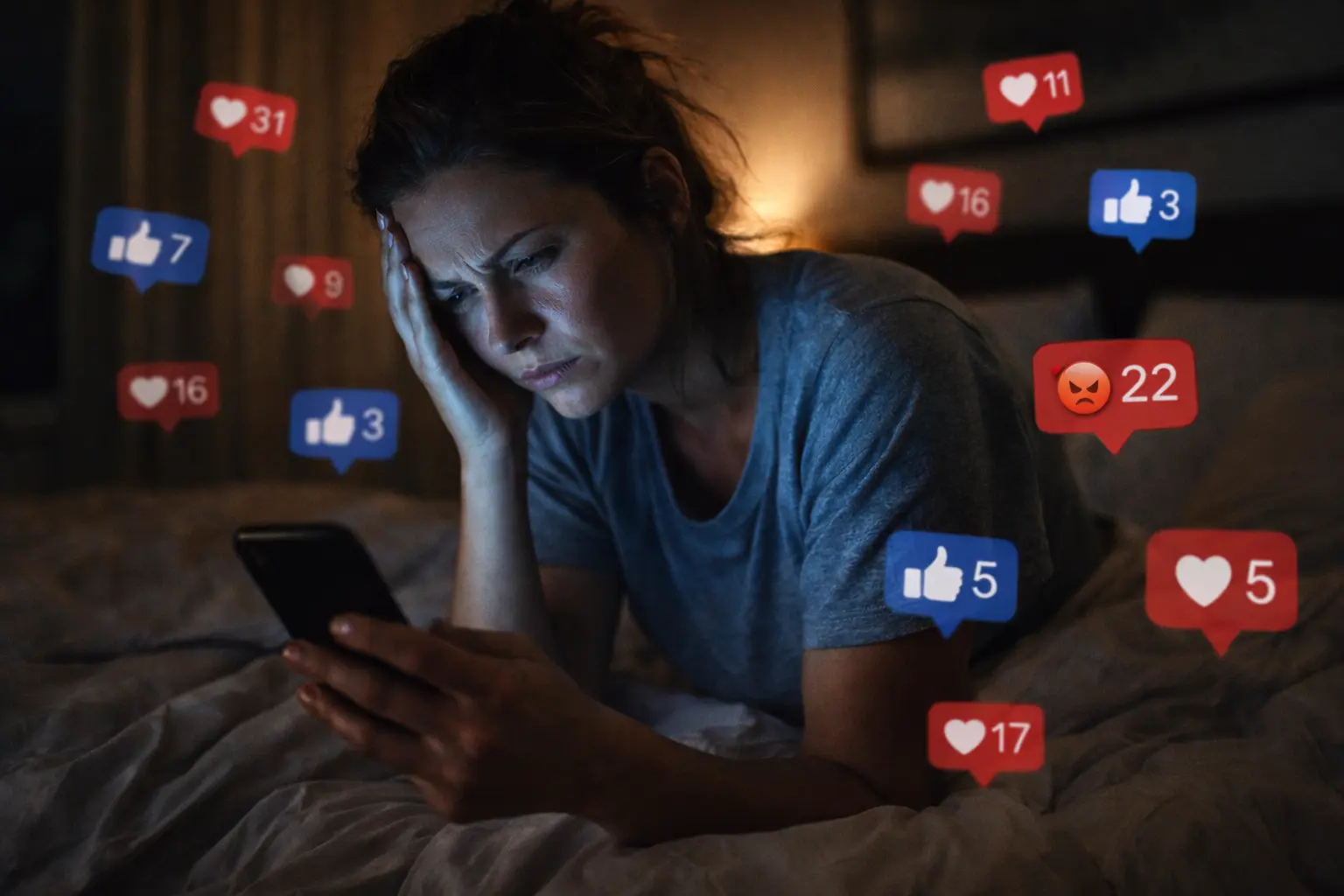
You scroll through Facebook and suddenly feel worse about yourself, or you’re glued to your phone at night and can’t sleep, or you stumble onto something that leaves you anxious for hours – this is why social media harms health, and it’s happening to millions of seniors right now.
The role of social media in senior health
Social media has quietly woven itself into daily life for seniors in ways that weren’t possible a decade ago. What started as a simple way to stay connected has become a constant presence, and the health effects are real. Consider Margaret, a 68-year-old who joined Facebook to see photos of her grandchildren. Within months, she found herself checking her phone first thing in the morning and last thing before bed. The blue light disrupted her sleep, and the endless scroll of comparison left her feeling inadequate. Beyond screen time, seniors face specific risks: cyberbullying from strangers or even family members online, exposure to health misinformation that contradicts medical advice, and the psychological toll of seeing curated versions of others’ lives. The key is recognizing these patterns early. Notice if you’re spending more time online than intended, if social media leaves you feeling drained rather than connected, or if you’re losing sleep because of it. Understanding these warning signs is the first step toward taking control.
- Understanding the risks associated with excessive social media use
- Identifying signs of negative effects on mental and physical health
- Exploring ways to maintain a healthy balance with social media consumption
Combatting social isolation through technology
Loneliness is a real health crisis for seniors, and social media, when used intentionally, can be a genuine lifeline. Take Robert, a widower who moved to a new city at 72. He felt completely isolated until he found an online gardening community where members shared tips, photos, and encouragement. Within weeks, he had meaningful conversations with people who shared his passion. Social media can reconnect you with old friends, help you find communities around your interests, and provide virtual activities when mobility is limited. The difference between helpful and harmful use comes down to intention and awareness. Instead of passively scrolling, join groups focused on your hobbies, set specific times to video call family, or participate in online classes. Choose platforms and accounts that energize you rather than drain you. Mute or unfollow accounts that trigger comparison or negativity. The goal is to use social media as a tool for genuine connection, not as a substitute for it. When used this way, it becomes a bridge to community rather than a source of isolation.
📘 Fix your day in under 2 minuteschoose where to begin:
Protecting mental well-being online
The mental health risks online are significant and often invisible until they’ve already affected you. Cyberbullying happens to seniors more than many realize, whether through mean comments, exclusion from online groups, or targeted harassment. Misinformation spreads rapidly too, especially health-related claims that contradict what your doctor has told you. Then there’s the constant exposure to negative news, divisive politics, and tragic stories that can fuel anxiety and depression. Helen, a 74-year-old, spent her mornings reading news feeds and found herself increasingly anxious and angry by noon. She didn’t realize the connection until her therapist pointed it out. The solution involves practical boundaries: limit news consumption to specific times rather than constant checking, fact-check health claims through reputable sources like your doctor or Mayo Clinic, and report or block accounts that are unkind. Curate your feed intentionally by following accounts that inspire, educate, or make you smile. If someone’s posts consistently upset you, unfollow without guilt. Your mental health is more important than maintaining every online connection.
Maintaining physical health amidst digital distractions
Sitting while scrolling through social media is one of the most deceptive health traps. You don’t feel like you’re doing anything harmful, but hours pass without movement, your posture suffers, and your sleep gets disrupted by blue light exposure. Studies show that excessive screen time is linked to weight gain, poor circulation, and weakened muscles in seniors who are already at risk for falls and mobility loss. James, a 70-year-old, realized he was spending four hours daily on his tablet, mostly in bed. His back pain worsened, his sleep became fragmented, and he felt more fatigued. Once he set boundaries, everything improved. Create a practical plan: use your phone or tablet in a chair with good posture, not in bed. Set a timer to take a break every 30 minutes to stand, stretch, or walk. Stop using screens at least one hour before bedtime to allow your brain to wind down naturally. Replace some scrolling time with physical activity, even gentle walks or stretching. These small changes protect your body and often improve sleep quality, energy levels, and overall mobility.
Seeking support and professional guidance
If social media is genuinely affecting your mood, sleep, relationships, or sense of self-worth, that’s a signal to reach out for help. There’s no shame in this. A therapist or counselor can help you understand why certain platforms trigger you and develop personalized strategies to change your relationship with them. Your primary care doctor can also assess whether social media use is contributing to sleep problems, anxiety, or depression and recommend next steps. Some seniors benefit from digital wellness coaching or apps that limit screen time. Others find that talking to a trusted friend or family member about their struggles makes a real difference. Support groups, both online and in-person, exist specifically for people working on healthier technology habits. The key is recognizing when you need help and taking action. You don’t have to figure this out alone, and reaching out is a sign of strength, not weakness. Your health and well-being are worth the effort.
Understanding how social media affects senior wellness means recognizing both its benefits and risks. Social media can connect you with community and loved ones, but it can also harm sleep, mental health, and physical activity if used without intention. The path forward involves setting boundaries, curating your feed mindfully, protecting yourself from misinformation and cyberbullying, and seeking professional support when needed. By taking control of how you use these platforms, you can enjoy the genuine benefits while protecting your overall health.
How can seniors protect their mental health while using social media?
Start by limiting exposure to negative news and divisive content. Unfollow or mute accounts that trigger comparison or anxiety. Fact-check health claims through trusted sources like your doctor. Set specific times for social media use rather than constant checking. Report or block unkind behavior immediately. Follow accounts that inspire or educate you. If you feel consistently anxious or sad after using social media, talk to a mental health professional about strategies tailored to your situation.
Is social media entirely detrimental to senior health?
No. When used intentionally and with awareness, social media can be valuable for staying connected with family, finding communities around shared interests, accessing educational content, and combating loneliness. The key is moderation, setting boundaries, and choosing how you use it rather than letting it use you. The risks come from passive, endless scrolling and comparison, not from purposeful, time-limited engagement.
Others also read:
Disclaimer: This article is for informational purposes only and is not a substitute for professional medical advice. Always consult a healthcare professional for personal guidance.
This guide has been prepared and reviewed by the GlobalHealthBeacon editorial team and reflects current medical research as of 2026. It provides structured, evidence-based information to support informed health decisions.
