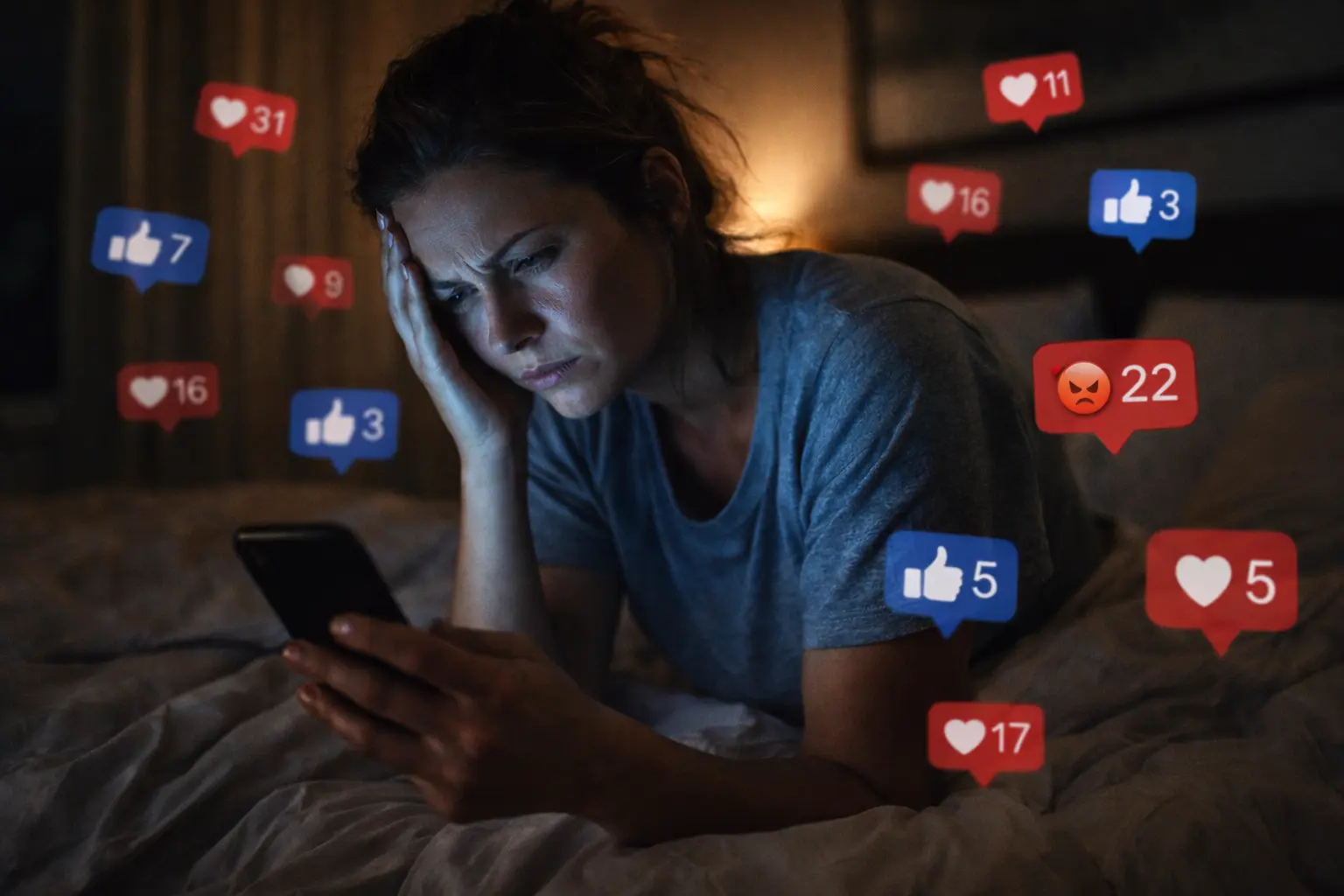
You’re scrolling through Facebook at midnight again, comparing your life to everyone else’s highlight reel, and suddenly you feel that familiar knot of anxiety in your chest—this is exactly why social media harms health, and it’s time to understand what’s actually happening to you.
The impact of social media on mental health
Social media platforms create an environment where comparison becomes almost automatic. When you log into Facebook or Instagram, you’re instantly exposed to curated versions of other people’s lives, which can trigger feelings of inadequacy and self-doubt. Consider Margaret, a 68-year-old grandmother who spent her mornings scrolling through photos of her friends’ vacations and grandchildren’s achievements. Over time, she began feeling like her own life wasn’t measuring up, even though she had a loving family and fulfilling hobbies. The anxiety crept in slowly. Beyond comparison, cyberbullying affects seniors too, often in subtle ways through dismissive comments or exclusion from online groups. Additionally, the time spent on screens replaces face-to-face conversations with family and friends, leading to genuine isolation. Studies show that excessive social media use correlates with increased depression, anxiety, and loneliness in older adults. The mental health impact isn’t just about sadness—it’s about losing connection to what makes life meaningful.
- Comparison to others can lead to feelings of inadequacy
- Online bullying and cyberbullying can cause emotional distress
- Reduced real-life interactions can lead to feelings of isolation
Physical health challenges associated with social media use
The physical toll of social media often goes unnoticed until problems develop. Spending hours scrolling means your eyes are strained from constant screen exposure, leading to digital eye fatigue and blurred vision. Your sleep suffers too—the blue light from phones and tablets suppresses melatonin production, making it harder to fall asleep at night, which then affects your energy levels the next day. Consider Robert, a 72-year-old who found himself checking his phone in bed before sleep, then lying awake for hours. His daytime fatigue led to poor posture while sitting, neck pain, and reduced motivation for physical activity. Sedentary behavior compounds these issues, contributing to weight gain, weakened muscles, and increased risk of cardiovascular problems. The longer you sit while scrolling, the less you move, and movement is essential for maintaining bone density and flexibility in your later years. What starts as innocent screen time can cascade into genuine physical decline if left unchecked.
📘 Fix your day in under 2 minuteschoose where to begin:
How social media can impact relationships
Social media creates false expectations about how relationships should look and function. You see couples posting romantic gestures and family photos that represent only the best moments, not the everyday reality of commitment and compromise. This can breed jealousy and suspicion in your own relationships when your partner doesn’t match the idealized versions you see online. Digital communication through messaging and comments sometimes replaces deeper conversations, leading to misunderstandings because tone and intention get lost in text. Helen and Tom, both in their 60s, found themselves arguing more after joining Facebook groups and messaging apps. Tom felt hurt when Helen liked another man’s posts, while Helen felt Tom didn’t engage enough with her online updates. They were communicating more frequently but connecting less meaningfully. The constant stream of notifications and messages can also create pressure to respond immediately, adding stress to relationships. Real intimacy requires presence and vulnerability, things that social media inherently discourages.
Strategies to mitigate the harmful effects of social media
Taking control starts with concrete, manageable steps rather than complete avoidance. Set specific time limits for social media use—perhaps 20 minutes in the morning and 20 minutes in the evening—and use phone reminders to alert you when time is up. Remove social media apps from your phone so accessing them requires deliberate effort through a browser, creating friction that discourages mindless scrolling. Schedule regular offline activities that genuinely interest you: gardening, reading, cooking, or joining a local club. These activities provide real engagement and connection that social media can never replicate. Practice the ‘one-for-one’ rule: for every 10 minutes on social media, spend 10 minutes in face-to-face interaction or a hobby. Curate your feed ruthlessly by unfollowing accounts that trigger comparison or negativity, and follow only those that inspire or genuinely inform you. Before bed, establish a no-screens rule at least one hour before sleep to protect your sleep quality. If you notice anxiety rising when you use social media, that’s your signal to take a break. Trust your body and emotions—they’re telling you something important.
Seeking support and professional help
If social media use is significantly affecting your mood, sleep, or relationships, reaching out to a mental health professional isn’t weakness—it’s wisdom. A therapist or counselor can help you understand the specific triggers that make you vulnerable to social media’s negative effects and develop personalized strategies. Some seniors benefit from cognitive behavioral therapy, which addresses the thought patterns that fuel comparison and anxiety. Your primary care doctor can also be a starting point; they can screen for depression and anxiety and refer you to appropriate resources. Support groups for older adults, whether online or in-person, provide community and shared understanding. Many communities offer digital literacy classes that teach healthy technology use specifically for seniors. If you’re struggling with loneliness that social media seems to promise but never delivers, addressing the root cause through real community involvement—volunteer work, senior centers, religious groups, or hobby clubs—creates genuine belonging. Professional support acknowledges that this is a real challenge, not something you should simply endure alone.
Social media presents real risks to mental, physical, and emotional health for seniors, manifesting as anxiety, loneliness, sleep disruption, and relationship strain. The evidence is clear: mindful awareness of your usage patterns and deliberate choices about when and how you engage are essential. Prioritizing face-to-face connections, setting firm boundaries around screen time, and seeking professional support when needed create a foundation for healthier living. Your well-being matters more than staying connected to every update.
How can social media negatively impact mental health?
Social media impacts mental health through several mechanisms: constant comparison to others erodes self-esteem, curated content creates unrealistic expectations, cyberbullying causes emotional pain, and reduced real-life interaction increases loneliness. The dopamine-driven feedback loop of likes and comments can also create dependency and anxiety when engagement is low. For seniors specifically, exclusion from online groups or dismissive comments can feel particularly isolating.
What are some strategies to combat the harmful effects of social media?
Effective strategies include setting specific daily time limits with phone reminders, removing apps from your phone to reduce easy access, scheduling regular offline activities you enjoy, unfollowing accounts that trigger negative emotions, avoiding screens one hour before bed, and replacing social media time with face-to-face interactions. If anxiety or depression persists, consulting a mental health professional provides personalized guidance. The key is treating social media as a tool you control, not something that controls you.
Others also read:
Disclaimer: This article is for informational purposes only and is not a substitute for professional medical advice. Always consult a healthcare professional for personal guidance.
This guide has been prepared and reviewed by the GlobalHealthBeacon editorial team and reflects current medical research as of 2026. It provides structured, evidence-based information to support informed health decisions.
