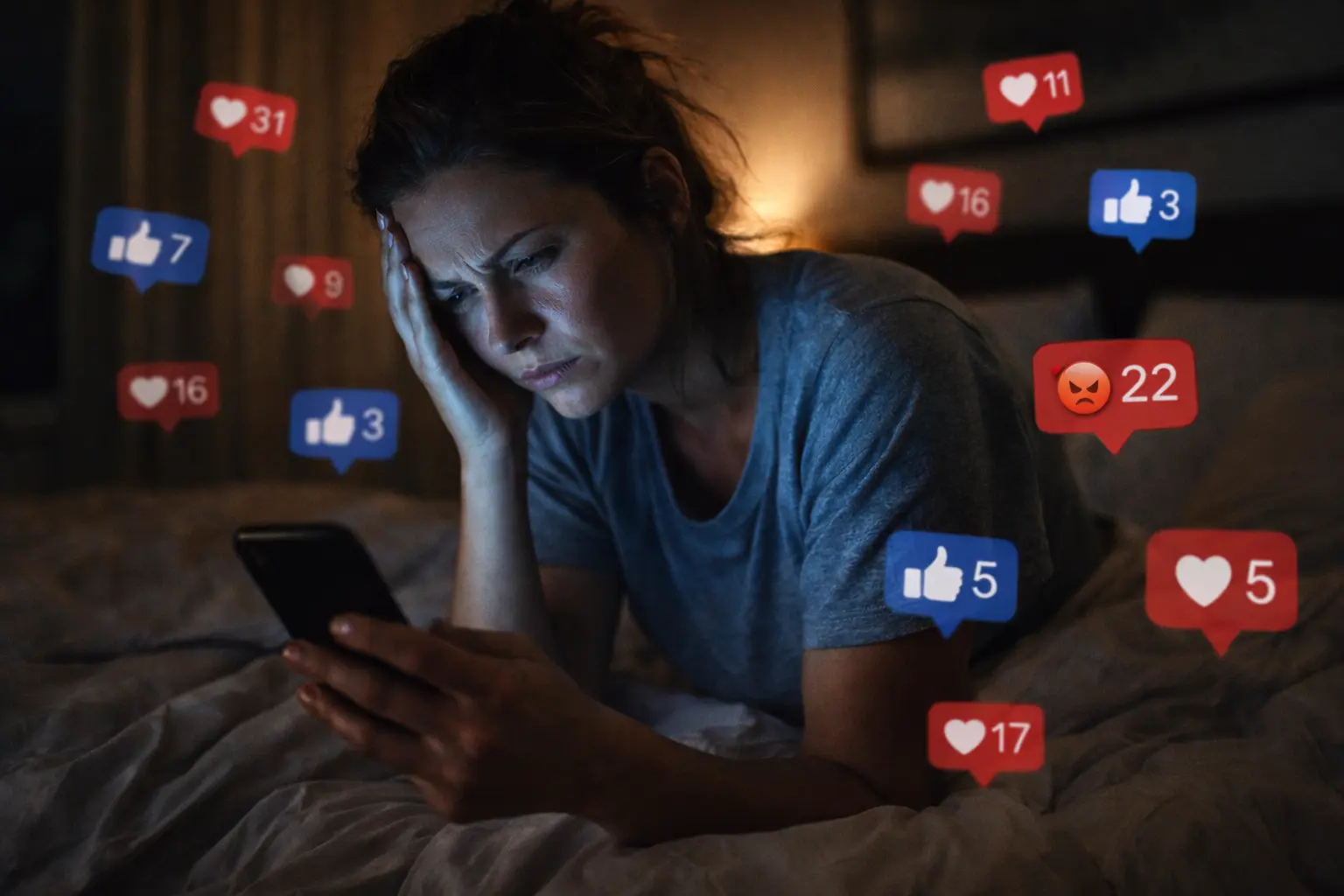
You’re scrolling through endless feeds at midnight, your eyes burning, your mind racing with other people’s highlight reels, and suddenly you realize hours have vanished and you feel more alone than ever – this is why social media harms health, and it’s hitting seniors harder than anyone expected.
Social media addiction: the neurological connection
When you tap that like button or see a notification pop up, your brain releases dopamine, the same chemical involved in reward and pleasure. For seniors, this neurological response can become surprisingly powerful. Imagine Margaret, a 68-year-old grandmother who started checking Facebook to see photos of her grandchildren. Within months, she found herself reaching for her phone first thing in the morning and last thing before bed, compulsively refreshing her feed even when nothing new appeared. Research shows this happens because social media platforms are deliberately designed to trigger these reward cycles. Each notification, each comment, each new follower creates a small hit of dopamine that keeps you coming back. Over time, the brain adapts and requires more frequent interactions to achieve the same satisfaction. This is neurologically similar to how substance dependencies develop, though the mechanism involves digital stimuli rather than chemical substances. The prefrontal cortex, which handles impulse control and decision-making, can become less responsive to these repeated rewards, making it harder to simply put the phone down.
Impact on mental health: isolation and comparison
Paradoxically, a platform designed to connect people often leaves seniors feeling more isolated than before. When you spend hours watching others’ vacation photos, family gatherings, and achievements, a subtle but persistent sense of inadequacy creeps in. Consider Robert, a 72-year-old widower who joined Instagram to stay connected with friends. Instead, he found himself comparing his quiet evenings to his friends’ active social calendars, their grandchildren’s accomplishments to his own family situation. The curated nature of social media means you’re seeing highlight reels, not reality. Everyone posts their best moments, their happiest photos, their proudest achievements. What you don’t see are the difficult days, the arguments, the loneliness others experience. For seniors who may already face real-world isolation due to mobility issues, loss of loved ones, or retirement from work, this digital comparison can intensify feelings of loneliness. Studies show that passive scrolling, where you simply consume content without engaging, correlates more strongly with depression than active interaction. The constant exposure to seemingly perfect lives can fuel a sense of missing out, even when you’re actually maintaining meaningful relationships offline.
Cognitive decline: the age-related vulnerability
The human brain changes with age, and navigating complex social media platforms places unexpected cognitive demands on aging minds. Social media interfaces require you to process multiple streams of information simultaneously: notifications, messages, comments, suggested posts, advertisements, and trending topics all compete for your attention. For seniors, this cognitive load can be particularly taxing. Your working memory, the mental workspace where you hold and manipulate information, has a limited capacity. When you’re trying to follow a conversation thread while simultaneously processing video autoplay, sidebar recommendations, and pop-up alerts, your working memory becomes overwhelmed. This isn’t a sign of decline or inability; it’s simply how attention works under excessive demand. Additionally, the constant switching between tasks and platforms fragments your focus in ways that can affect memory formation. When you’re jumping between Facebook, email, and a news article every few minutes, your brain doesn’t consolidate information as effectively. Some research suggests that this fragmented attention, sustained over months and years, may contribute to cognitive difficulties. Furthermore, excessive screen time can reduce engagement in cognitively stimulating offline activities like reading books, playing chess, or having deep conversations, which are known to maintain cognitive sharpness in aging adults.
- Establish a specific daily time window for social media use, such as 30 minutes in the afternoon, rather than checking throughout the day to reduce cognitive fragmentation and decision fatigue.
- Engage in offline activities that challenge your mind, such as reading, puzzles, learning a new skill, or having substantive conversations with friends and family to maintain cognitive reserve.
- Prioritize in-person social connections and community activities that provide both cognitive stimulation and genuine emotional connection beyond digital interactions.
🔬 Science-backed benefits in 2 minuteschoose where to begin:
Physical health implications: sedentary lifestyle
Screen time and social media use are inherently sedentary activities. When you’re scrolling through posts, you’re sitting still, often for extended periods. For seniors, this matters significantly because physical activity becomes increasingly important for maintaining bone density, muscle mass, cardiovascular health, and balance. Consider Dorothy, a 70-year-old who spent her mornings on Facebook instead of her usual walk around the neighborhood. Over six months, she noticed she felt weaker, her knees ached more, and she became winded more easily. The connection isn’t mysterious: reduced movement directly impacts physical health. Extended sitting increases risk of obesity, type 2 diabetes, cardiovascular disease, and certain cancers. It also weakens muscles and bones, increasing fall risk, which is a serious concern for seniors. Social media can become a substitute for activities that used to structure your day. Instead of gardening, visiting friends, or attending community events, you’re home on your device. The sedentary behavior itself is one problem, but the opportunity cost is another. Those hours spent scrolling are hours not spent moving your body, which needs regular activity to function optimally. Even light movement, like standing while using social media or taking short walking breaks between browsing sessions, can help mitigate some of these effects.
Sleep disruptions: blue light exposure
Your body has an internal clock called your circadian rhythm that regulates sleep and wakefulness. This rhythm is strongly influenced by light exposure, particularly blue light, which signals to your brain that it’s daytime. Screens emit significant amounts of blue light, and when you use social media in the evening or before bed, you’re essentially telling your brain to stay awake. For seniors, sleep quality is already often compromised due to age-related changes in sleep architecture. Adding screen time in the hours before bed makes the problem worse. Imagine James, a 75-year-old who started scrolling through news and social media at 9 PM to unwind. He noticed it took him until midnight or later to fall asleep, and he woke multiple times during the night. The blue light suppresses melatonin production, the hormone that makes you feel sleepy. This disruption can lead to insomnia, fragmented sleep, and daytime fatigue. Poor sleep in seniors is linked to increased risk of falls, cognitive decline, mood disorders, and weakened immune function. The problem compounds because poor sleep makes you more likely to reach for your phone the next day to combat fatigue, creating a cycle. Additionally, the stimulating nature of social media content, with its constant novelty and emotional triggers, activates your nervous system when it should be winding down.
Digital well-being: balancing online and offline interactions
The goal isn’t to abandon social media entirely, but to use it intentionally as one tool among many for connection and information. Digital well-being means being thoughtful about when, how, and why you engage online. Start by examining your actual motivations. Are you using social media to see specific people’s updates, or are you mindlessly scrolling? Are you seeking connection, or filling time? Once you’re clear on your purpose, you can use social media more strategically. Set specific times for checking platforms rather than constant access. Many seniors find that checking Facebook once daily for 15 minutes to see family updates works better than checking throughout the day. Prioritize the offline activities that matter most to you: time with family, hobbies, physical activity, or community involvement. These activities provide genuine connection, cognitive stimulation, and physical health benefits that social media cannot replicate. Consider joining in-person groups, clubs, or classes based on your interests. The combination of social connection, purposeful activity, and physical engagement creates a foundation for well-being that digital interaction alone cannot provide. Balance matters more than elimination. Some seniors thrive with a small, intentional social media presence. Others find they feel better with minimal use. The key is making conscious choices rather than defaulting to habitual scrolling.
The science reveals that social media’s impact on senior health extends across multiple dimensions: neurological reward systems that can drive compulsive use, psychological effects including isolation and comparison, cognitive demands that strain aging minds, physical consequences of sedentary behavior, sleep disruption from blue light exposure, and the opportunity cost of time spent online rather than engaged in health-promoting activities. Understanding these mechanisms helps you make informed decisions about your own use. Digital well-being for seniors isn’t about judgment or restriction, but about intentional choices that support your overall health and quality of life.
Can social media use lead to addiction in seniors?
Yes, seniors can develop patterns of compulsive social media use similar to addiction. The dopamine reward system that drives this behavior operates the same way across all ages. What differs is that seniors may have more time available and fewer competing demands, which can intensify the pattern. Additionally, if social media becomes a primary source of social connection due to isolation or mobility limitations, the psychological pull can become particularly strong. Recognizing compulsive use patterns and intentionally building alternative sources of engagement and connection can help.
How can seniors protect their mental health while using social media?
Protect your mental health by being intentional about your use. Set specific times for checking social media rather than constant access throughout the day. Follow accounts and people who genuinely matter to you rather than accumulating large numbers of connections. Limit passive scrolling and instead use social media for specific purposes like seeing family updates. Engage in regular offline activities that provide genuine social connection, such as in-person gatherings, clubs, or community groups. If you notice social media use is increasing your feelings of loneliness or inadequacy, reduce your time or take breaks. Remember that what you see online is curated and doesn’t represent reality.
Others also read:
Disclaimer: This article is for informational purposes only and is not a substitute for professional medical advice. Always consult a healthcare professional for personal guidance.
This article has been prepared and reviewed by the GlobalHealthBeacon editorial team and is based on current medical research and published scientific literature available in 2026. It provides structured, evidence-based information to support informed health decisions.
