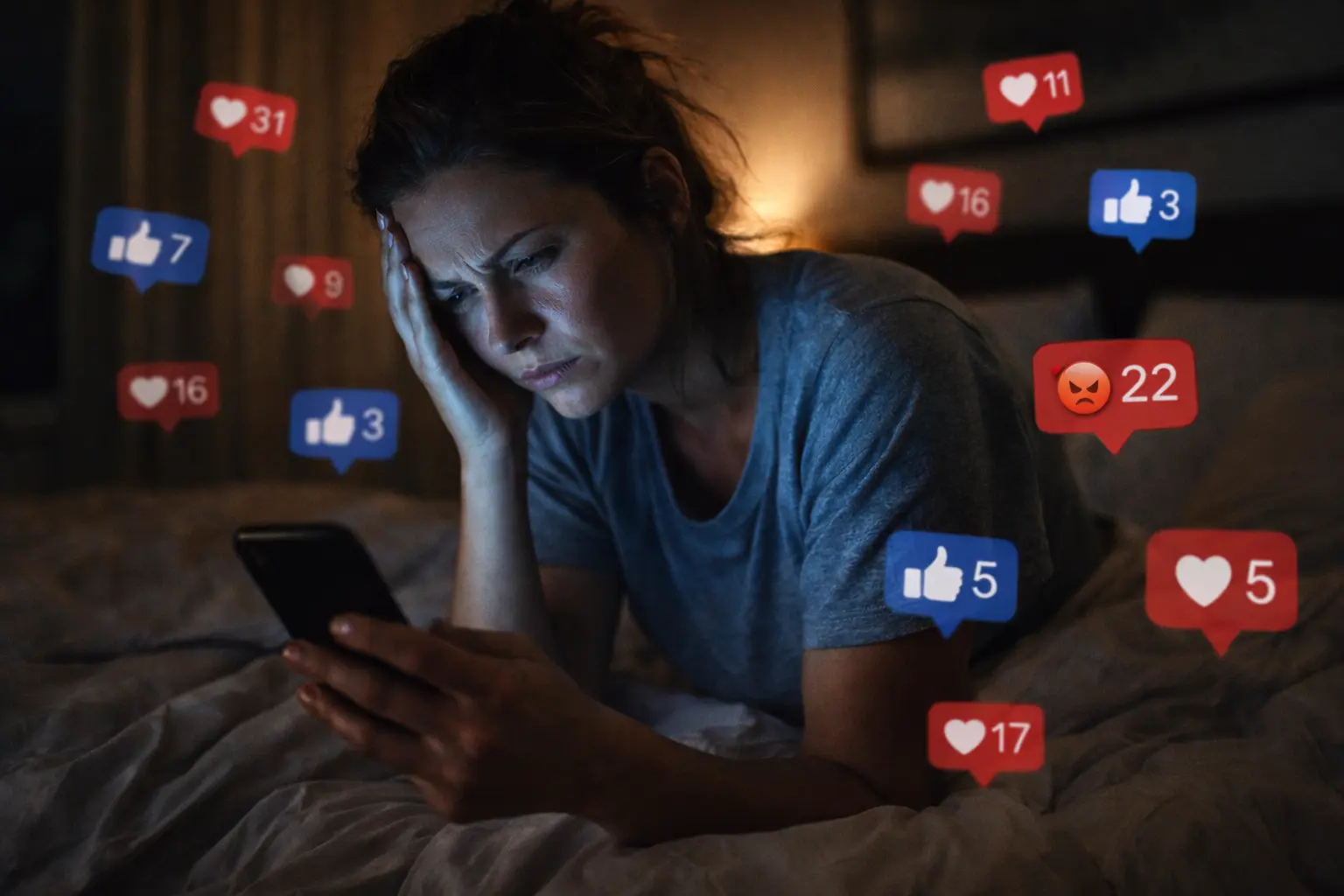
You scroll through your feed and suddenly feel like you’re not enough, watching perfectly filtered lives while yours feels messy and real, and that’s exactly why social media harms health in ways science is only beginning to fully understand.
Social comparison and body image
The average woman encounters thousands of curated images daily, each one a carefully constructed version of someone’s best moment. Research shows this constant exposure creates a psychological phenomenon called upward social comparison, where women measure themselves against these polished standards and inevitably fall short. Consider Sarah, a 35-year-old who spent an hour each morning scrolling through fitness influencers before realizing her anxiety about her appearance had intensified. The images trigger a cascade of neurological responses: your brain registers the gap between the filtered version and your reflection, releasing stress hormones that reinforce negative self-perception. Studies indicate women who frequently engage with appearance-focused content report significantly lower body satisfaction and higher rates of body dysmorphia. The problem deepens because algorithms learn what keeps you engaged, so if you pause on a fitness transformation post, you’ll see more, creating a feedback loop that normalizes unrealistic standards as achievable goals.
Mental health challenges
Depression and anxiety among women have risen sharply alongside social media adoption, and the connection isn’t coincidental. When you compare your internal experience to someone else’s external presentation, loneliness deepens even when you’re surrounded by hundreds of online friends. Imagine receiving 50 likes on a photo while a friend gets 500, triggering feelings of social rejection that your brain processes similarly to physical pain. The constant validation-seeking cycle activates reward pathways in the brain, creating dependency patterns similar to other behavioral addictions. Women report experiencing heightened anxiety before posting, during the waiting period for engagement, and after checking metrics. The highlight reel effect is particularly damaging: you see friends’ vacations, promotions, and perfect relationships while your own struggles remain private, creating an illusion that everyone else’s life is thriving. Research from major universities documents that women who limit social media use for just two weeks show measurable improvements in mood and self-esteem, suggesting the platform itself, not individual weakness, drives these mental health shifts.
Potential risks for physical health
Sedentary behavior represents one of the most underestimated health consequences of social media use. You sit down for what feels like five minutes and suddenly two hours have passed, your body barely moving while your mind stays hyperactive. This prolonged sitting increases risk for obesity, type 2 diabetes, and cardiovascular disease at rates comparable to smoking. Women who spend more than three hours daily on social platforms show measurably reduced physical activity levels and higher BMI measurements. The mechanism is straightforward: scrolling replaces movement, and the dopamine hits from notifications keep you anchored to your device. Beyond sedentary time, social media often triggers stress eating or restrictive eating patterns as women internalize appearance standards. The physical toll accumulates silently: poor posture from hunching over phones, eye strain, repetitive strain injuries, and metabolic slowdown from inactivity. Breaking this pattern requires intentional intervention, not willpower alone.
- Schedule specific times for physical activity by treating movement like a non-negotiable appointment, whether that’s a 20-minute walk, yoga session, or strength training, and use phone reminders to transition away from screens.
- Implement the 20-20-20 rule: every 20 minutes of screen time, look at something 20 feet away for 20 seconds to reduce eye strain and create natural breaks that interrupt scrolling patterns.
- Practice mindful eating by eating meals away from screens, noticing hunger and fullness cues without the distraction of content, and choosing nourishing foods intentionally rather than stress-eating while scrolling.
🔬 Science-backed benefits in 2 minuteschoose where to begin:
Impact on sleep patterns
Your phone’s blue light doesn’t just illuminate your face at night; it actively suppresses melatonin production, the hormone that signals your body it’s time to sleep. When you scroll in bed, you’re essentially telling your brain to stay alert while your body expects rest, creating a biological conflict that leaves you wired and exhausted simultaneously. Women are particularly vulnerable to sleep disruption because hormonal fluctuations throughout the menstrual cycle already affect sleep quality, and social media use compounds this vulnerability. The average woman checks her phone 96 times daily, often during the critical hour before bed when sleep preparation should be happening. This habit creates a vicious cycle: poor sleep increases emotional reactivity and anxiety, which drives more social media use as a coping mechanism, which further damages sleep. Research documents that women who use social media within an hour of bedtime take 40 minutes longer to fall asleep and experience more fragmented sleep throughout the night. The cumulative effect of chronic sleep disruption includes weakened immune function, increased inflammation, hormonal imbalances, and accelerated cognitive aging.
Cyberbullying and online harassment
Women face disproportionate rates of online harassment, from subtle comments questioning appearance to explicit threats and coordinated attacks. Unlike traditional bullying that ends when you leave school or work, cyberbullying follows you home, into your bed, and into your private thoughts at 3 AM when you’re replaying a cruel comment. The permanence and public nature of online harassment creates unique psychological trauma: your vulnerability is documented, searchable, and potentially reshared indefinitely. Women report experiencing harassment across platforms at rates 1.5 times higher than men, with appearance-based criticism being the most common form. The psychological impact extends beyond the moment of attack; studies show women who experience cyberbullying develop heightened anxiety, social withdrawal, and decreased self-worth that persists long after the incident. The ambiguity of online interactions amplifies harm: you can’t read tone or facial expressions, so neutral comments feel hostile, and you replay interactions obsessively seeking hidden meaning. Many women develop hypervigilance around their online presence, carefully curating every post to avoid triggering criticism, which paradoxically increases anxiety and reduces authentic self-expression.
Digital detox strategies
A digital detox doesn’t require abandoning social media entirely; it means reclaiming intentionality about when, how, and why you engage. Start by auditing your feed: unfollow accounts that trigger comparison, inadequacy, or negative self-talk, even if they’re from friends or influencers you admire. Replace passive scrolling with active choices by setting specific times for social media use rather than checking constantly throughout the day. Create physical boundaries by keeping phones out of bedrooms, using app timers that force you to stop, and designating phone-free times during meals and conversations. Redirect the time you reclaim toward activities that genuinely nourish you: time with people you care about, movement that feels good, creative pursuits, or simply rest. Notice what you’re seeking when you reach for your phone; often it’s connection, validation, or distraction from difficult emotions. Address those underlying needs directly rather than through social media. Many women find that even small changes like a one-week break reveal how much mental energy social media consumes and provide clarity about what kind of relationship they actually want with these platforms.
Social media’s impact on women’s health spans multiple dimensions: distorted body image from curated content, mental health challenges including anxiety and depression, physical health risks from sedentary behavior, sleep disruption from blue light and evening use, exposure to cyberbullying and harassment, and the cumulative stress of constant comparison. Understanding these mechanisms empowers you to make informed choices about your social media use. Digital detox strategies, mindful engagement, and intentional boundary-setting can help mitigate these adverse effects while preserving genuine connection.
How does social media affect women’s body image?
Social media exposes women to thousands of filtered, edited images daily that represent unrealistic beauty standards. This constant exposure triggers upward social comparison, where women measure themselves against these polished versions and experience increased body dissatisfaction, anxiety about appearance, and higher rates of body dysmorphia and eating disorders.
What can women do to protect their mental health on social media?
Women can protect their mental health by curating their feed intentionally, unfollowing accounts that trigger negative emotions or comparison, setting specific times for social media use rather than scrolling throughout the day, keeping phones out of bedrooms, and prioritizing real-life social interactions and activities that genuinely nourish them over virtual engagement.
Others also read:
Disclaimer: This article is for informational purposes only and is not a substitute for professional medical advice. Always consult a healthcare professional for personal guidance.
This article has been prepared and reviewed by the GlobalHealthBeacon editorial team and is based on current medical research and published scientific literature available in 2026. It provides structured, evidence-based information to support informed health decisions.
