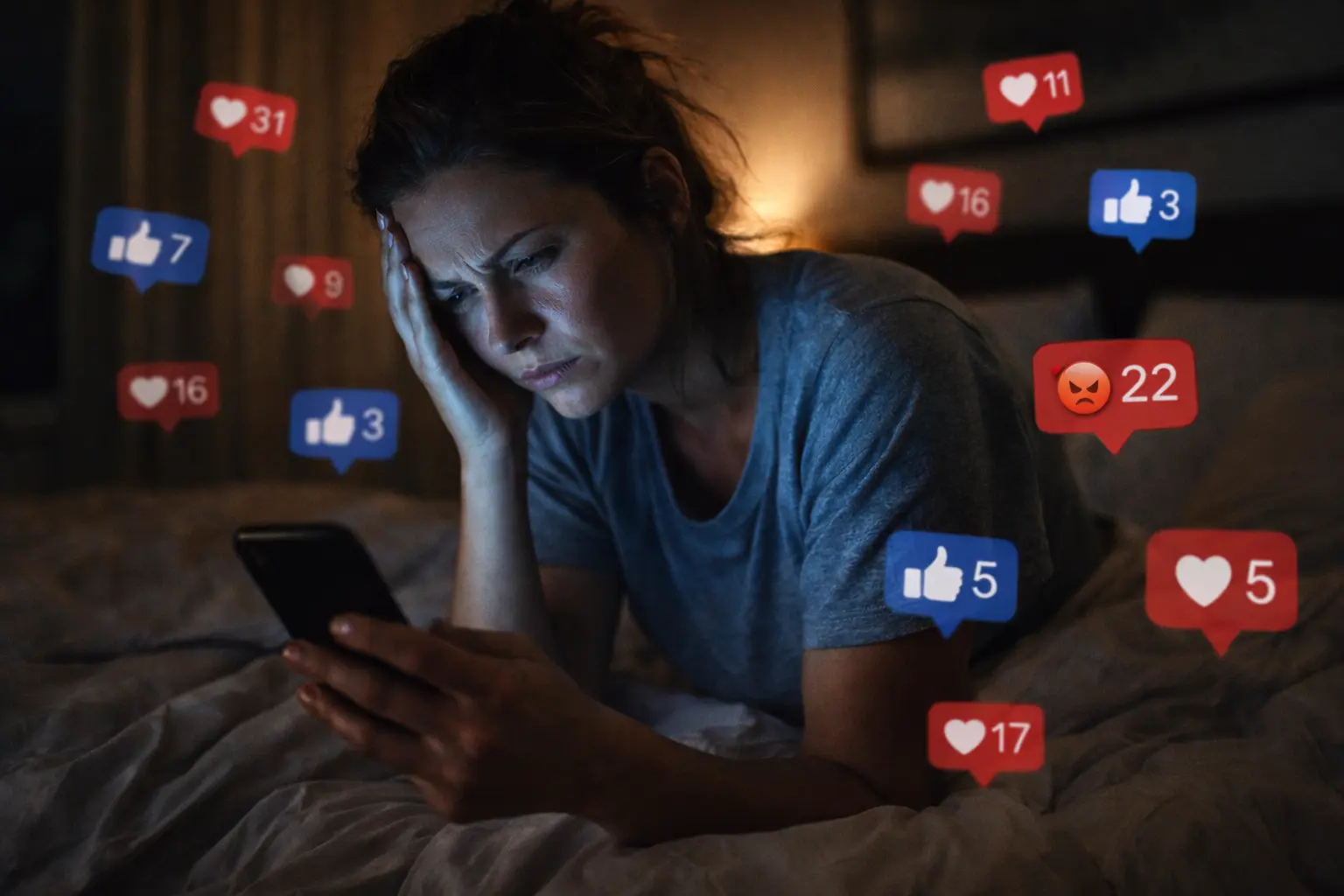
That pit in your stomach when you see another woman’s flawless vacation photos, her perfect body, her seemingly effortless life is exactly why social media harms health, and you’re not imagining it or being too sensitive about it.
Image insecurity: the unreal expectations
Sarah spent three hours editing a single photo before posting it last Tuesday. She adjusted the lighting, smoothed her skin, trimmed her waist by a few pixels. When she finally hit share, she felt a rush of validation as likes rolled in. But here’s what happened next: she found herself comparing her real, unfiltered face in the mirror to that edited version, and she felt devastated. This is the trap so many of us fall into. Scrolling through feeds filled with flawless models and influencers fuels a relentless cycle of comparison. We see these curated images and our brains register them as reality, even though we logically know they’re edited. The pressure to conform to these impossible beauty standards chips away at our confidence daily. Women find themselves yearning for bodies and faces that don’t actually exist, leading to diminished self-worth that can linger long after we close the app.
- Constant comparison to unrealistic beauty ideals
- Pressure to conform to edited and filtered body images
- Increased likelihood of developing body dysmorphia
Isolation amplified: loneliness in the digital age
Maya has 2,847 followers. She gets dozens of likes on every post. Yet she told her therapist last month that she’s never felt more alone. The comments feel hollow. The conversations feel performative. Everyone’s curating their best moments, so nobody’s really showing up as themselves. This paradox is real and it’s devastating. Despite being constantly connected online, many women experience heightened feelings of loneliness and isolation. We’re surrounded by digital noise but starving for genuine human connection. The superficial nature of social media interactions, where we exchange emojis and surface-level compliments, often leaves us craving something deeper. We might have hundreds of online friends but feel disconnected from all of them. The irony cuts deep: the platform designed to bring us together often leaves us feeling more invisible than ever, longing for real conversations with real people who see us for who we actually are.
💬 Ready to feel better in 2 minutes?choose where to begin:
Anxiety overload: the pressure to perform perfectly
Jessica spent her entire Sunday afternoon crafting the perfect caption for a photo she’d taken weeks ago. She deleted it four times. Was it too vulnerable? Too braggadocious? Would people judge her? The mental energy spent on maintaining a flawless online persona is exhausting and often invisible to those around us. The need to share meticulously crafted portrayals of our lives breeds constant anxiety and stress. Women feel pressured to maintain a facade of perfection, fearing judgment and criticism from their online circles. We become hyperaware of how we’re perceived, second-guessing every word, every image, every emotion we share. Some of us develop a habit of checking our phones obsessively to see how people are responding to our posts. This creates a feedback loop where our self-worth becomes tied to metrics and validation from strangers. The pressure to always appear fine, happy, and put-together takes a real toll on our mental health, leaving us exhausted and anxious about being our authentic selves.
Sleep saboteur: the blue light effect
Emma’s bedtime routine used to be simple: brush teeth, read a book, sleep. Now it’s brush teeth, scroll through social media for thirty minutes, stare at the ceiling for two hours unable to sleep. She’s not alone. Late-night scrolling exposes women to blue light emitted by screens, which tricks our brains into thinking it’s still daytime. This disrupts our circadian rhythm, the internal clock that tells us when to sleep and wake. Our bodies produce less melatonin, the hormone that helps us feel drowsy, when we’re exposed to blue light. The result is fragmented, poor-quality sleep that leaves us groggy and irritable the next day. This sleep disturbance has far-reaching effects on overall health and well-being. When we’re sleep-deprived, our immune system weakens, our mood suffers, and our ability to handle stress diminishes. Many women don’t realize that their late-night scrolling habit is directly connected to their fatigue, brain fog, and emotional struggles the next day.
Women’s mental and physical health can be significantly impacted by the detrimental effects of social media, from fostering image insecurity and loneliness to exacerbating anxiety and sleep disturbances.
Can social media usage really affect my sleep?
Yes, excessive use of social media, especially before bedtime, can disrupt your sleep patterns due to the exposure to blue light from screens.
How can I combat the negative effects of social media on my mental health?
Limiting screen time, curating a positive social media feed, and prioritizing real-life connections can help mitigate the adverse impact of social media on your mental well-being.
Others also read:
Disclaimer: This article is for informational purposes only and is not a substitute for professional medical advice. Always consult a healthcare professional for personal guidance.
This article presents an experience-based perspective and has been reviewed by the GlobalHealthBeacon editorial team in 2026. It provides structured, evidence-based information to support informed health decisions.
