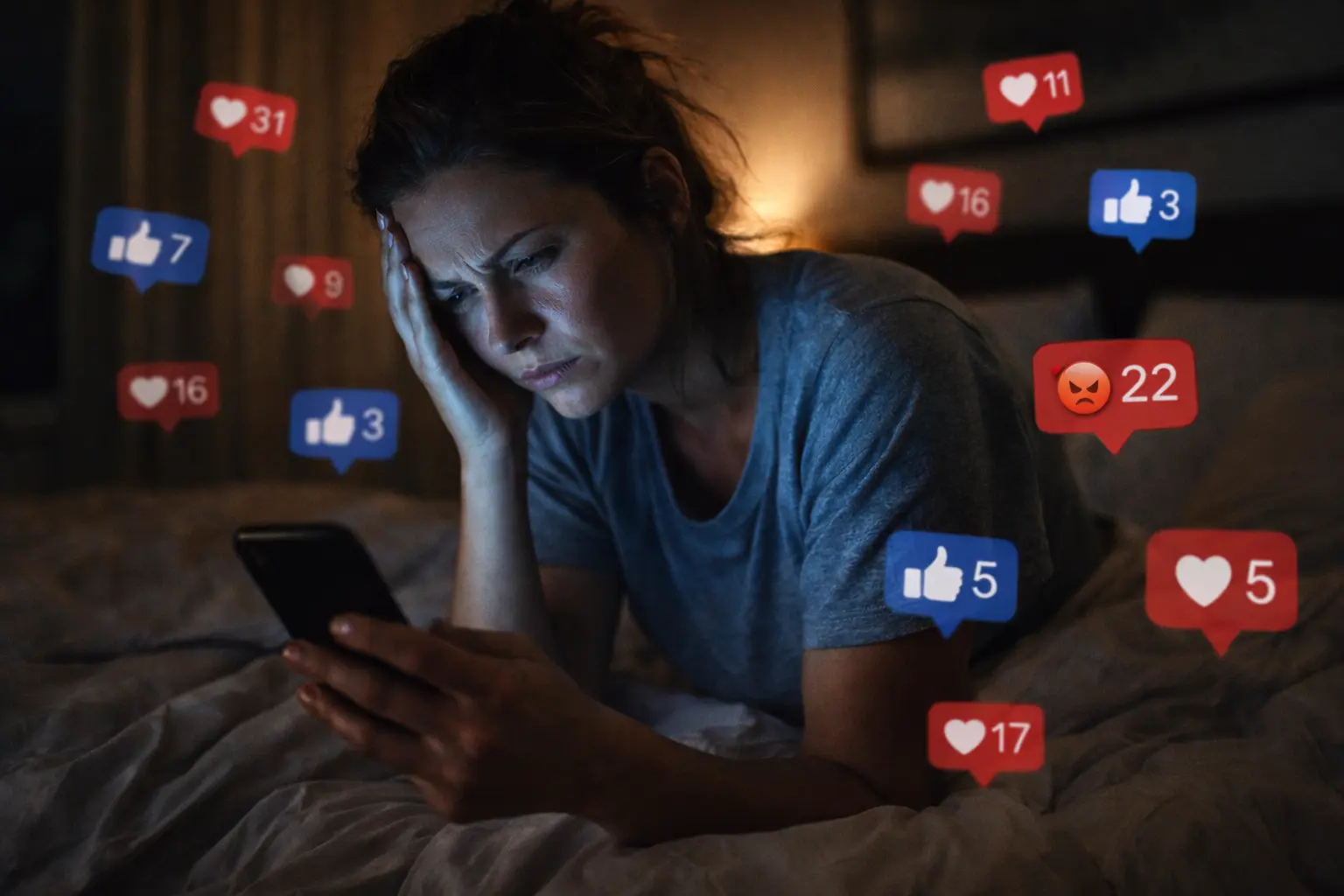
You wake up, check your phone, and suddenly your mood tanks because everyone else’s life looks perfect while yours feels messy and incomplete, and that sinking feeling is exactly why social media harms health more than most of us realize.
Social media and mental health
Picture this: you’re lying in bed at 11 PM, scrolling through Instagram, and you see a friend’s vacation photos, their fit body at the gym, their new relationship announcement. Within minutes, you’re comparing your life to theirs, and that nagging voice creeps in telling you that you’re not doing enough, not looking good enough, not living your best life. This is the reality for millions of young adults every single day. The mental toll goes beyond just feeling a little down. Constant exposure to curated, filtered versions of other people’s lives creates a distorted reality where you measure your worth against impossible standards. Anxiety creeps in slowly, stress becomes your baseline, and self-esteem takes a hit you didn’t see coming. Studies show that the more time you spend comparing yourself to others online, the more your confidence erodes.
- Increased anxiety and stress levels
- Distorted perception of reality
- Negative impacts on self-esteem
The influence on physical health
Let’s be real: when you’re scrolling, you’re not moving. You’re sitting on your couch, in bed, or hunched over your desk for hours without realizing how much time has passed. Your neck starts to hurt from looking down at your phone, your eyes feel strained from the constant screen exposure, and your posture slowly deteriorates into something that would make a chiropractor cringe. The sedentary nature of social media consumption is insidious because it doesn’t feel like you’re doing anything harmful. But your body knows. Decreased physical activity, poor posture, eye strain, and tension headaches become the new normal. You might notice you’re more tired, less energetic, and struggling to find motivation to exercise or move your body. The blue light from screens also affects your eyes in ways you might not immediately notice, but over time, digital eye strain becomes a real problem that affects your daily comfort and productivity.
💬 Ready to feel better in 2 minutes?choose where to begin:
Relationships and social connections
You’re sitting across from your best friend at coffee, but you’re both on your phones. You’re at a family dinner, but everyone’s scrolling instead of talking. This is the paradox of modern connection: we’re more plugged in than ever, yet we feel more isolated. Excessive social media use creates a strange dynamic where you feel like you have hundreds of friends online, but fewer genuine connections in real life. Face-to-face interactions require vulnerability, active listening, and presence, which feel harder after spending hours in the curated world of social media. Real relationships get neglected because the dopamine hit from likes and comments feels easier and more rewarding than the messy work of maintaining actual friendships. You might find yourself ghosting people, struggling with in-person conversations, or feeling disconnected even when surrounded by loved ones. The sense of loneliness paradoxically grows as your follower count increases, leaving you feeling more isolated than ever.
The impact on sleep patterns
You tell yourself you’ll just check social media for five minutes before bed. Two hours later, you’re still scrolling, your eyes are tired, but your mind is wired. The blue light from your screen is actively working against your body’s natural sleep-wake cycle, suppressing melatonin production and tricking your brain into thinking it’s still daytime. Even after you finally put your phone down, your mind keeps replaying the comments, the posts, the conversations you saw online. Sleep deprivation becomes chronic, and you don’t even realize how much it’s affecting you until you’re irritable, struggling to focus at work or school, and feeling mentally foggy throughout the day. Poor sleep compounds every other health issue: your immune system weakens, your mood deteriorates, your ability to handle stress diminishes, and your cognitive function takes a hit. The cycle continues because when you’re tired and stressed, you reach for your phone even more, seeking comfort in the very thing that’s keeping you awake.
Social media has a profound impact on both mental and physical health, affecting self-esteem, relationships, sleep patterns, and more. The constant comparison and exposure to curated content contribute to feelings of inadequacy, stress, and disconnection from real-life experiences.
Can social media cause depression?
While social media itself may not directly cause depression, the constant exposure to unrealistic standards and negative content can contribute to feelings of sadness and inadequacy, potentially worsening preexisting mental health issues.
How can I limit the negative effects of social media?
Setting boundaries, taking regular breaks, curating a positive feed, and prioritizing real-life interactions can help mitigate the negative impact of social media on your health.
Others also read:
Disclaimer: This article is for informational purposes only and is not a substitute for professional medical advice. Always consult a healthcare professional for personal guidance.
This article presents an experience-based perspective and has been reviewed by the GlobalHealthBeacon editorial team in 2026. It provides structured, evidence-based information to support informed health decisions.
