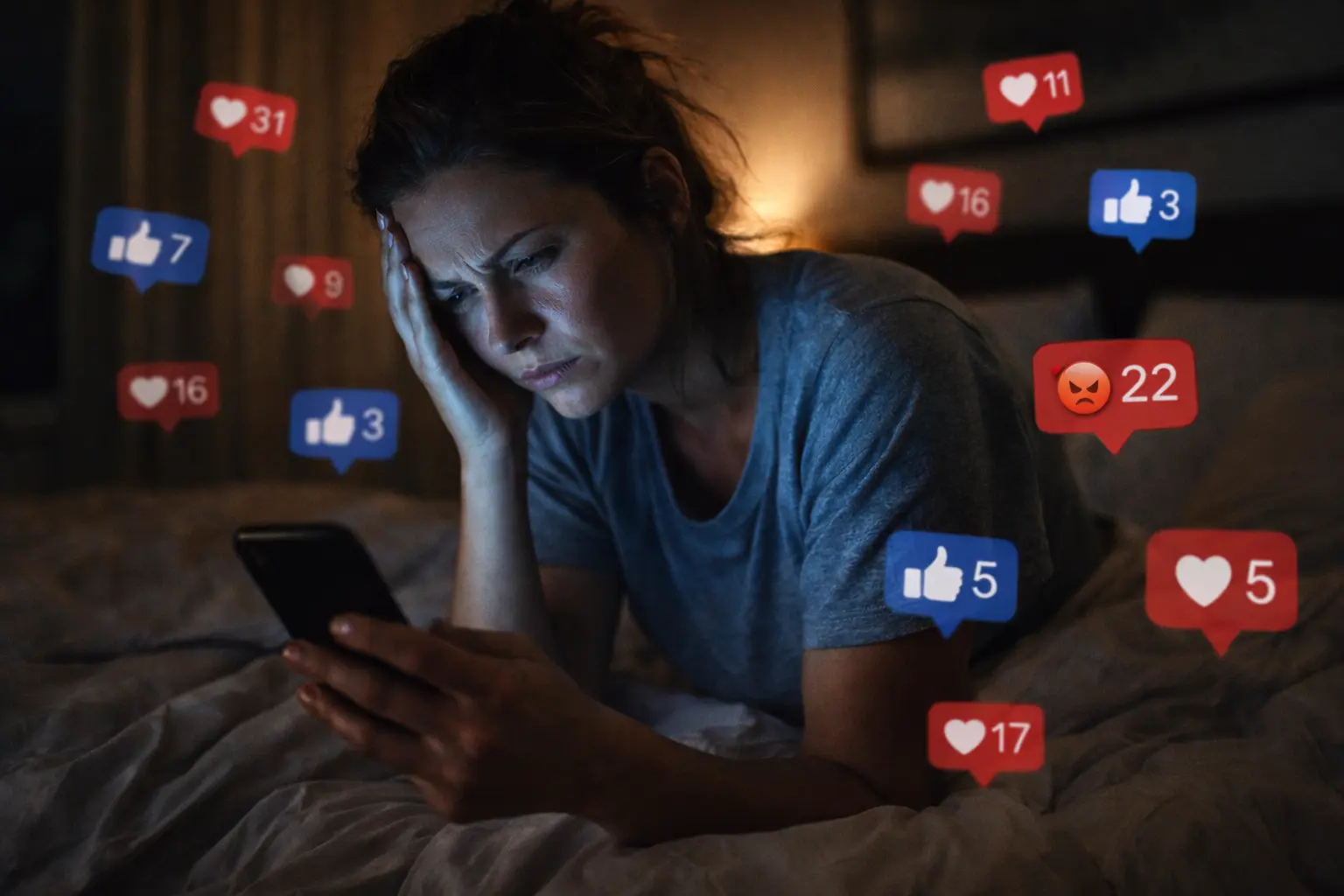
You’re scrolling at 2 AM again, heart racing, comparing your life to highlight reels, and you can’t figure out why social media harms health so badly when it’s supposed to keep you connected.
Excess dopamine release
Picture this: you post a photo and within minutes, notifications flood in. Each like triggers a dopamine hit in your brain’s reward center, creating a cycle that feels almost addictive. Dopamine is a neurotransmitter responsible for pleasure and motivation, but social media platforms are engineered to exploit this system. When you experience these frequent dopamine spikes from likes, comments, and shares, your brain adapts by requiring increasingly intense stimulation to achieve the same satisfaction. A young adult who once felt satisfied with 50 likes might now need 500 to feel that same rush. This process, called desensitization, means you’re chasing bigger and more frequent hits of validation. Over time, everyday activities that naturally produce dopamine, like exercise or face-to-face conversation, feel less rewarding by comparison. Your brain essentially recalibrates its baseline, making normal life feel duller and social media feel essential.
Decreased attention span
Your phone buzzes. You glance at it. Three seconds later, another notification. By the time you’ve returned to studying or reading, your focus is fractured. Research consistently shows that heavy social media users struggle to maintain concentration on single tasks for extended periods. The constant stream of short-form content, from TikTok videos to Instagram Reels, trains your brain to expect rapid stimulation and quick transitions. When you then try to read a textbook chapter or focus on work that requires sustained attention, your brain feels restless and unsatisfied. Young adults report difficulty completing assignments, reading books, or having uninterrupted conversations without checking their phones. The problem compounds because as your attention span shrinks, you become more dependent on the quick dopamine hits that social media provides. It’s not that your brain can’t focus anymore, but rather that it’s been conditioned to prefer rapid-fire content over deep engagement.
Impaired sleep patterns
You tell yourself you’ll scroll for just five minutes before bed, but 45 minutes later you’re still watching videos. Beyond the time lost, your screen is actively sabotaging your sleep biology. Smartphones and tablets emit blue light, which suppresses melatonin production, the hormone that signals your body it’s time to sleep. When you engage with social media late at night, you’re not just staying awake longer, you’re also stimulating your brain with emotionally charged content. A heated comment thread or anxiety-inducing news story activates your nervous system, raising cortisol levels and making it harder to wind down. Young adults who use social media within an hour of bedtime often experience delayed sleep onset, lighter sleep quality, and more nighttime awakenings. The cumulative effect of poor sleep compounds over weeks and months, affecting mood, immune function, and cognitive performance. Your body’s natural circadian rhythm becomes increasingly disrupted, making it harder to fall asleep even on nights when you do put the phone away.
- Reduce screen time before bedtime to promote better sleep.
- Establish a relaxing bedtime routine to signal your body that it is time to sleep.
- Create a tech-free zone in your bedroom to avoid distractions.
🔬 Science-backed benefits in 2 minuteschoose where to begin:
Increased anxiety and depression
You see a friend’s vacation photos and suddenly feel inadequate about your own life. This comparison trap is one of the most damaging psychological effects of social media. What you’re viewing is a carefully curated highlight reel, not reality, yet your brain treats it as truth. Studies have documented a strong correlation between heavy social media use and increased rates of anxiety and depression in young adults. The constant exposure to others’ seemingly perfect lives creates a distorted benchmark for your own worth. You internalize the message that your accomplishments, appearance, and experiences aren’t quite good enough. Over time, this erodes self-esteem and creates persistent feelings of inadequacy. Young adults report increased social anxiety, perfectionism, and body image concerns directly linked to social media consumption. The algorithm amplifies this by showing you content that triggers emotional responses, whether positive or negative, because engagement is profitable. What started as a way to stay connected becomes a source of chronic psychological stress.
Social isolation and FOMO
The irony is sharp: you’re connected to hundreds of people yet feel profoundly alone. Social media creates a paradox where increased online connection correlates with increased feelings of isolation. Fear of missing out, or FOMO, drives compulsive checking as you worry that something important is happening without you. You see peers at parties, events, or experiences you weren’t invited to, amplifying feelings of exclusion. This triggers a defensive cycle where you withdraw from real-world social engagement, preferring the safer, more controlled environment of online interaction. Young adults report spending more time on social media while simultaneously feeling lonelier and less connected to their actual communities. The problem deepens because real friendships require vulnerability, conflict resolution, and time investment, while online interactions offer instant gratification with minimal risk. Over time, your social skills may atrophy from disuse, making face-to-face interaction feel more anxiety-inducing. The platforms promise connection but deliver isolation wrapped in the illusion of community.
Cultivation of unhealthy habits
Scrolling becomes your default activity during every spare moment, replacing movement and meaningful engagement. Social media consumption is inherently sedentary, and the more time you spend on your phone, the less time you spend exercising, cooking healthy meals, or engaging in hobbies. Young adults who spend excessive time on social media often develop poor dietary habits, influenced by food content that glorifies unhealthy choices or creates unrealistic body standards. Procrastination becomes another byproduct as social media provides an endless escape from tasks that require effort or cause stress. The combination of physical inactivity, poor nutrition, sleep disruption, and chronic stress creates a compounding effect on your health. What begins as innocent scrolling gradually reshapes your daily habits and lifestyle patterns. Over months and years, these accumulated behavioral changes contribute to weight gain, metabolic issues, reduced fitness, and diminished overall well-being. The platforms aren’t designed with your long-term health in mind, they’re designed to maximize your engagement, regardless of the cost to your physical and mental health.
Excessive social media use can lead to a host of negative impacts on young adults, including impaired sleep, increased anxiety, decreased attention span, feelings of isolation, and the cultivation of unhealthy habits.
How can I reduce the negative effects of social media on my health?
Limit your screen time, especially before bedtime, and prioritize real-world interactions over virtual ones. Engage in activities that promote mental and physical well-being to counterbalance the negative impact of social media.
Is social media inherently harmful to young adults’ health?
While social media offers numerous benefits, excessive use can have negative effects on young adults’ health. It is essential to strike a balance between online and offline activities to maintain overall well-being.
Others also read:
Disclaimer: This article is for informational purposes only and is not a substitute for professional medical advice. Always consult a healthcare professional for personal guidance.
This article has been prepared and reviewed by the GlobalHealthBeacon editorial team and is based on current medical research and published scientific literature available in 2026. It provides structured, evidence-based information to support informed health decisions.
