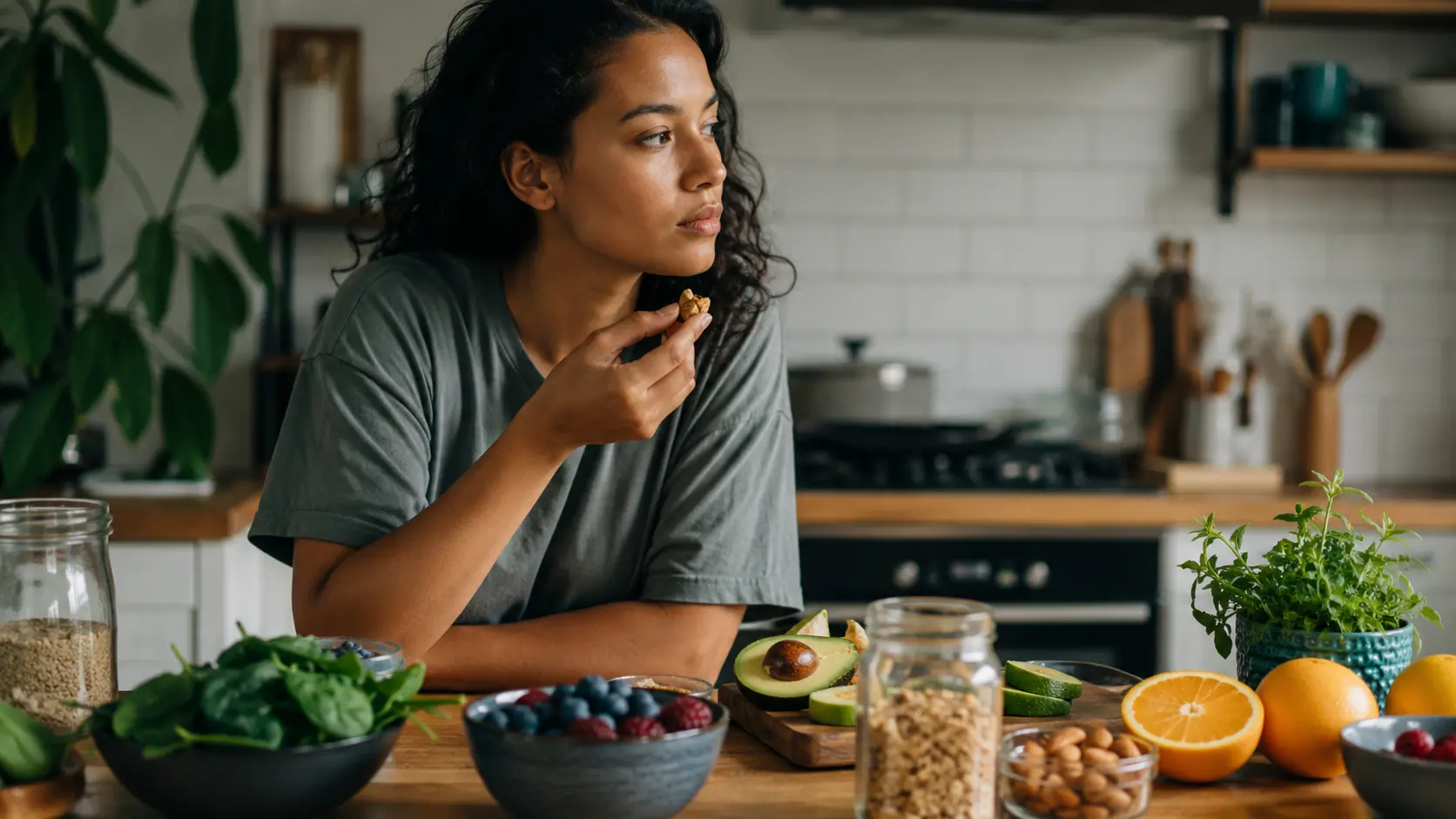
You wake up exhausted, push through afternoon crashes, and wonder why no amount of coffee seems to fix that bone-deep fatigue that’s become your normal, but what if superfoods for daily health could actually change that?
Energize your mornings with superfood smoothies
Picture this: it’s 6 AM and you’re already thinking about the day ahead. Instead of reaching for that third coffee, imagine starting with a smoothie that actually keeps you full and focused until lunch. I used to grab whatever was quickest, usually a pastry and black coffee, then wonder why I hit the wall by 10 AM. Now I blend kale, frozen blueberries, chia seeds, and almond milk in about two minutes. The difference is real. That sustained energy comes from the fiber, protein, and antioxidants working together. The kale gives you iron and calcium, the berries provide antioxidants that fight inflammation, and chia seeds add omega-3s and keep you feeling satisfied. Many women find that preparing smoothie packs the night before (freezing berries and greens in portions) transforms mornings from chaotic to manageable. You just grab, blend, and go. The key is variety: rotate your superfoods so you’re not bored and you’re hitting different nutrient profiles throughout the week.
- Include a variety of superfoods for a diverse range of nutrients
- Experiment with different ingredients to find your favorite combinations
- Prepare your smoothie the night before for a convenient grab-and-go breakfast option
Power up your lunch with superfood salads
Lunch used to mean a sad desk salad that left me hungry by 2 PM. Now it’s my favorite meal because I actually plan it. A superfood salad isn’t just lettuce and dressing. Start with a base of kale or spinach, add cooked quinoa for complete protein, throw in sliced avocado for healthy fats, sprinkle almonds or pumpkin seeds for crunch and minerals, and dress it with olive oil and lemon. This combination keeps you satisfied and energized through the afternoon slump. The quinoa provides all nine essential amino acids, the avocado contains potassium and healthy fats that slow digestion, and the greens pack vitamins and minerals your body needs. Many busy women batch-prep these on Sunday: cook the quinoa, chop vegetables, and store components separately so you can assemble fresh salads throughout the week. A common mistake is using heavy, creamy dressings that negate the health benefits. Stick to simple vinaigrettes or tahini-based dressings that complement rather than mask the real food flavors.
💬 Ready to feel better in 2 minutes?choose where to begin:
Boost your snack game with superfood options
The 3 PM snack attack is real, and that’s when most women reach for whatever’s convenient and regret it immediately. Instead, keep superfoods visible and accessible: a bowl of mixed nuts on your desk, Greek yogurt in the fridge, or dates stuffed with almond butter in your bag. I started keeping raw almonds, walnuts, and pumpkin seeds in small containers at work, and it completely eliminated my vending machine visits. These snacks provide sustained energy because they combine protein, healthy fats, and fiber. A handful of nuts gives you magnesium for muscle function and calm, seeds provide zinc and B vitamins, and Greek yogurt adds probiotics for gut health. The trick is portion control and preparation. Pre-portioning snacks into containers means you’re less likely to overeat mindlessly. Another game-changer: keeping superfood snacks visible rather than hidden. When healthy options are easy to grab, you naturally reach for them instead of whatever’s most convenient. Many women find that strategic snacking prevents the evening hunger that leads to larger dinners.
End your day with superfood-inspired dinners
Dinner is where many women let their guard down, reaching for takeout because cooking feels like too much after a long day. But a superfood dinner doesn’t have to be complicated. Baked salmon, roasted sweet potatoes, and steamed broccoli takes about 30 minutes and provides everything your body needs to repair itself overnight. Salmon is rich in omega-3 fatty acids that reduce inflammation and support brain health, sweet potatoes provide complex carbohydrates and beta-carotene for immune function, and broccoli contains sulforaphane, a compound with powerful antioxidant properties. I started meal-prepping dinners on Sunday: roasting a sheet pan of vegetables and proteins that I could mix and match throughout the week. This removes the decision fatigue that leads to poor choices. A common pitfall is cooking elaborate meals that feel unsustainable, then giving up entirely. Instead, master three to four simple dinner combinations that you genuinely enjoy and can prepare on autopilot. Your body does most of its cellular repair and recovery at night, so feeding it nutrient-dense foods at dinner directly impacts how you feel the next morning.
Integrating superfoods into everyday meals can revolutionize your health and well-being. From energizing smoothies to nutrient-packed salads and snacks, these simple dietary changes can have a profound impact on your daily life. Embrace the power of superfoods and feel the difference in your vitality and overall health.
How can superfoods benefit women’s health?
Superfoods are nutrient-dense foods that are rich in antioxidants, vitamins, and minerals, which can support women’s overall health and well-being. Incorporating superfoods into your diet can boost energy levels, improve digestion, and enhance your body’s natural defenses.
Are superfoods expensive to incorporate into daily meals?
While some superfoods may be pricier than others, there are many affordable options available. Items like beans, oats, and frozen berries are budget-friendly superfoods that provide numerous health benefits. It’s possible to create nutritious meals with superfoods without breaking the bank.
Others also read:
Disclaimer: This article is for informational purposes only and is not a substitute for professional medical advice. Always consult a healthcare professional for personal guidance.
This article presents an experience-based perspective and has been reviewed by the GlobalHealthBeacon editorial team in 2026. It provides structured, evidence-based information to support informed health decisions.
