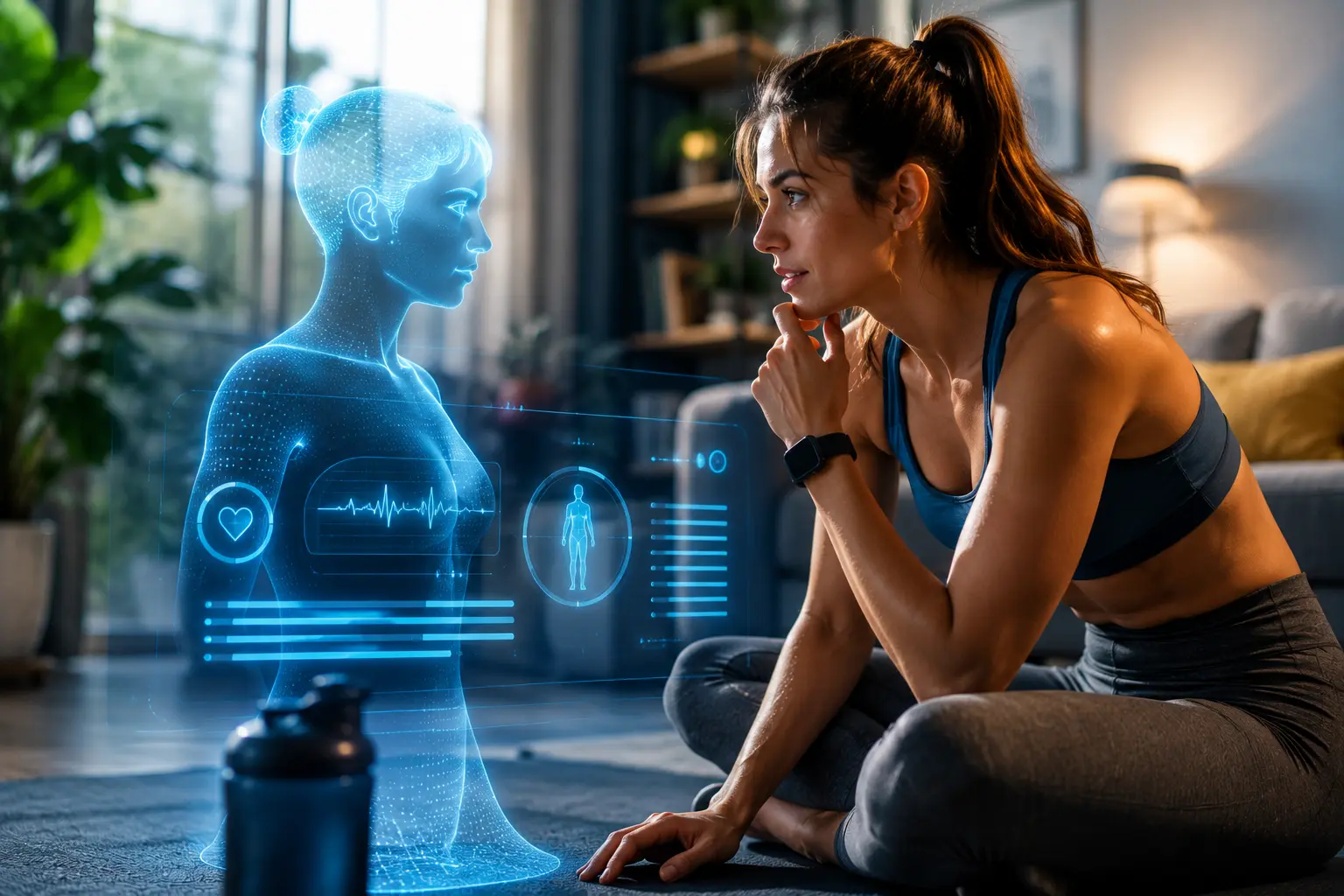
You’re drowning in conflicting fitness advice, your meal plans never stick, and you feel like you’re failing at health alone – but what if an ai health coach explained could finally be the personalized partner that actually gets your life and adapts to what you need?
What are AI health coaches?
AI health coaches are virtual assistants designed to provide personalized advice on fitness, nutrition, and overall well-being by analyzing your unique data and preferences. Think of them as a coach who lives in your phone, available at 3 AM when you’re deciding whether to order takeout or cook that meal you planned. These systems use advanced algorithms to learn from your habits, preferences, and goals over time. For example, if you log that you hate running but love dancing, a good AI coach won’t keep suggesting treadmill workouts. Instead, it adapts and suggests dance-based cardio routines that match your actual lifestyle. They track your progress, celebrate your wins, and adjust recommendations based on what’s working for you specifically. Unlike generic fitness apps that treat everyone the same way, AI coaches create a truly customized experience that evolves as your life changes.
- Customized guidance based on your individual health metrics and lifestyle patterns
- 24/7 support and motivation available whenever you need encouragement or have questions
- Regular feedback and progress tracking that holds you accountable without judgment
How do AI health coaches work?
AI health coaches utilize machine learning to interpret your input and generate actionable insights tailored specifically to your situation. Here’s how the process actually works: you start by answering questions about your current fitness level, dietary preferences, medical history, and what you want to achieve. The AI then analyzes this information alongside your daily logging of workouts, meals, and how you’re feeling. Over time, it identifies patterns in what motivates you, what derails you, and what produces actual results for your body. If you consistently skip workouts on Mondays but crush it on Wednesday mornings, the AI learns this and schedules your toughest sessions accordingly. When you log that you felt exhausted after a particular meal, it notes that and adjusts future recommendations. The system also learns from thousands of similar users, understanding what strategies work for women with comparable goals, bodies, and lifestyles. This combination of your personal data and broader pattern recognition creates recommendations that feel genuinely tailored rather than generic.
📘 Fix your day in under 2 minuteschoose where to begin:
Benefits of using AI health coaches
The primary advantage of AI health coaches is personalization at a scale that traditional coaching cannot match. You get expert-level guidance without the price tag of hiring a personal trainer or nutritionist, which can cost hundreds monthly. The accessibility factor matters too: you can ask questions at midnight, get meal suggestions while grocery shopping, or adjust your workout plan when unexpected life events happen. Many women appreciate that AI coaches don’t judge. There’s no embarrassment about admitting you ate an entire pint of ice cream or skipped three workouts because work was chaotic. The coach simply logs it and recalibrates. You also get instant feedback and progress visualization. Instead of waiting weeks to see results, you can watch trends emerge in your data. Some AI coaches integrate with wearables like fitness trackers and smartwatches, automatically capturing your sleep, heart rate, and activity levels without extra effort. This means recommendations become even more precise because the system knows not just what you did, but how your body responded.
Potential drawbacks to consider
While AI health coaches offer convenience, they have real limitations worth acknowledging. The biggest drawback is the lack of human connection and empathy. When you’re struggling emotionally with food or body image, an AI cannot provide the nuanced, compassionate support a human coach can offer. Some women find that algorithms, no matter how advanced, miss important context about their lives. For instance, an AI might not understand that your stress eating isn’t laziness but a response to anxiety that actually needs therapy, not just better meal planning. The quality of recommendations depends entirely on the AI’s underlying algorithm and the data you input. If you’re inconsistent with logging or provide inaccurate information, the system’s suggestions become less useful. Additionally, AI coaches cannot diagnose medical conditions or provide the kind of personalized advice a doctor or registered dietitian can. Some users also report that after the initial novelty wears off, the generic motivational messages start feeling repetitive and impersonal. Cost varies widely, and some premium AI coaches charge subscription fees that add up over time.
Tips for choosing the right AI health coach
Selecting an AI health coach requires evaluating several key factors to ensure it matches your specific needs and goals. Start by reading recent user reviews, specifically looking for feedback from women with similar goals to yours. Pay attention to whether reviewers mention the app being intuitive or frustrating to use, since you’ll be interacting with it daily. Check what data the app collects and how it uses your information, especially if you’re concerned about privacy. Look at the specific features offered: does it focus mainly on fitness, nutrition, or both? Does it integrate with apps or devices you already use? Try the free trial if available, spending at least a week with it to get a real feel for how the AI communicates and whether its recommendations resonate with you. Consider the cost relative to your budget and whether the subscription includes access to human support if you need it. Ask yourself whether you need an AI coach that emphasizes community features or if you prefer a private, one-on-one experience. Finally, think about your learning style. Some AI coaches use data visualizations and detailed explanations, while others keep things simple and motivational. Matching the coach’s communication style to how you actually learn makes a significant difference in whether you’ll stick with it.
AI health coaches provide personalized guidance and support for achieving health goals through data analysis and tailored recommendations. While convenient and accessible, it’s essential to weigh the benefits against potential drawbacks and choose a coach that suits your needs, communication preferences, and budget.
Are AI health coaches as effective as traditional coaching?
AI health coaches can be highly effective for providing personalized guidance and support, but some individuals may prefer the human interaction and empathy of traditional coaching methods. The best choice depends on your personality, budget, and whether you need emotional support alongside practical advice.
Can AI health coaches adapt to individual changes in health goals?
AI health coaches are designed to adapt to users’ changing needs and goals by continuously analyzing data and adjusting recommendations accordingly. You can update your goals anytime, and the system will recalibrate its suggestions to reflect your new priorities.
Others also read:
Disclaimer: This article is for informational purposes only and is not a substitute for professional medical advice. Always consult a healthcare professional for personal guidance.
This guide has been prepared and reviewed by the GlobalHealthBeacon editorial team and reflects current medical research as of 2026. It provides structured, evidence-based information to support informed health decisions.
