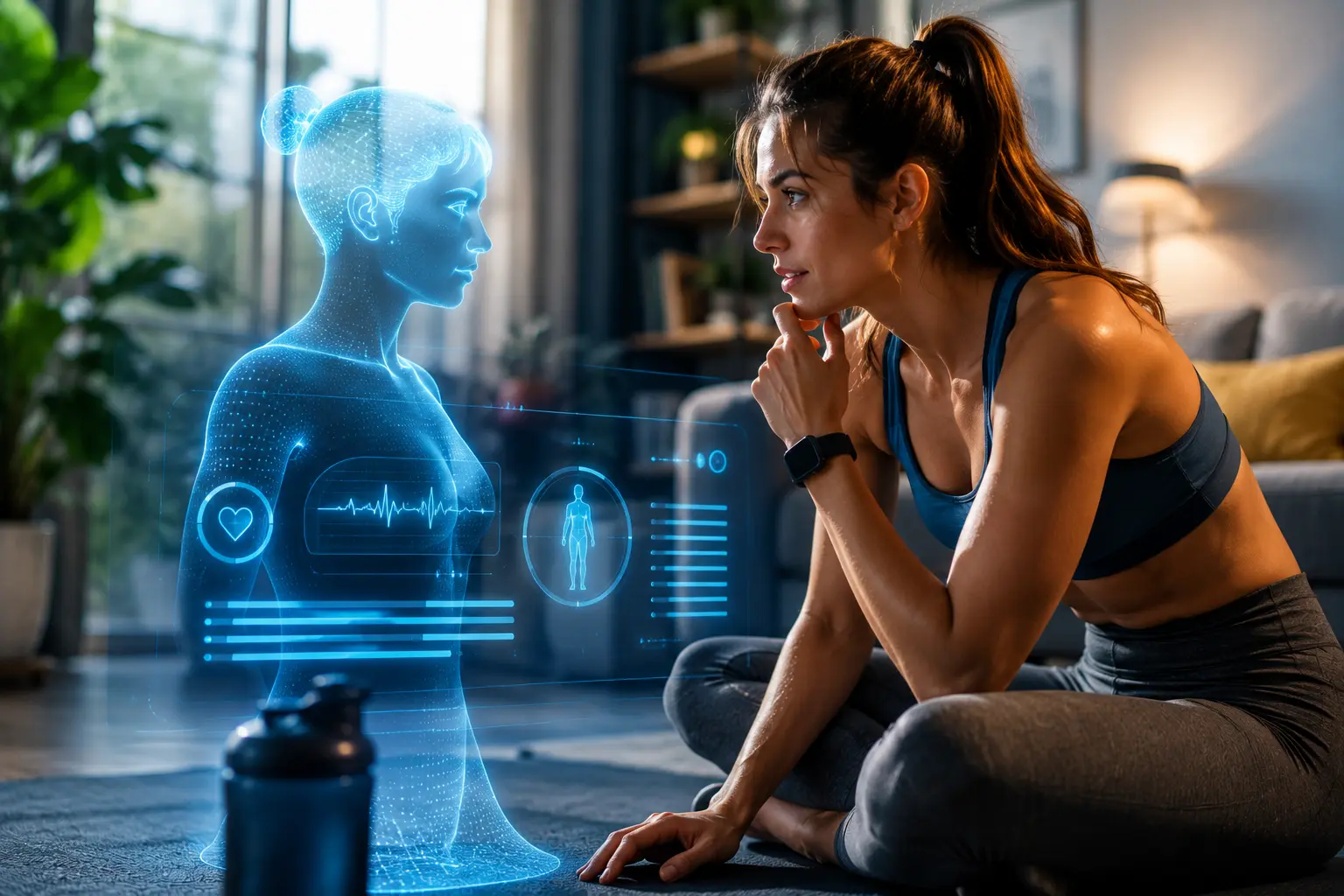
You’re juggling work, social life, and health goals, but nothing sticks because generic fitness apps feel like talking to a robot, and you’re tired of one-size-fits-all advice that ignores your actual life, so let’s break down how an AI health coach explained actually works for someone like you.
Understanding AI health coaching
AI health coaching operates by combining machine learning algorithms with behavioral science to create a coaching experience tailored specifically to you. Unlike a standard fitness app that simply tracks calories or steps, an AI health coach learns from your patterns, preferences, and lifestyle constraints. Imagine you log that you skipped your workout because of a stressful day at work. A smart AI coach recognizes this pattern and adjusts future recommendations to account for stress management techniques or shorter, high-intensity workouts that fit busy days. The system analyzes your data continuously, identifying what motivates you, what barriers you face, and how your body responds to different approaches. Over time, this creates a feedback loop where recommendations become increasingly personalized. For example, if you consistently exercise better in the morning and prefer strength training over cardio, the AI learns this and prioritizes morning strength sessions in your plan rather than pushing evening runs that you’ll skip.
- Receive personalized tips on exercise routines based on your schedule, fitness level, and preferences.
- Get insights on nutrition and meal planning that account for dietary restrictions, budget, and food preferences.
- Track your progress and receive feedback on your health goals with real-time adjustments to your plan.
Benefits of AI health coaching
The primary advantage of AI health coaching is availability without judgment or fatigue. A human coach has limited hours and energy, but an AI system provides support at 2 AM when you’re stressed about tomorrow’s presentation or at 6 AM when you’re deciding whether to hit the gym. This accessibility removes a major barrier young adults face: the guilt and shame of not having a coach available when motivation dips. Beyond availability, AI coaches excel at pattern recognition and consistency. They notice that you’re more likely to stick to workouts on Tuesdays and Thursdays, or that you eat healthier when you meal prep on Sundays. They use this data to send reminders and suggestions at optimal times. Consider a young adult managing both a demanding job and family responsibilities. An AI coach doesn’t just say exercise more; it identifies the 30-minute window on Wednesday evenings when you’re actually free and builds a micro-workout routine for that slot. The system also removes the intimidation factor. Many young adults avoid human coaches due to embarrassment about their current fitness level or health status. An AI coach provides honest feedback without judgment, creating a safer space for vulnerability and progress.
📘 Fix your day in under 2 minuteschoose where to begin:
Risks to consider
While AI health coaching offers convenience, several legitimate concerns deserve attention. Privacy is the most pressing issue. Health data is sensitive, and sharing information about your weight, mental health struggles, or medical conditions with an AI system requires trust in how that data is stored, encrypted, and used. Not all AI coaching platforms have transparent privacy policies, and some may sell anonymized data to third parties or use your information to train their algorithms further. Accuracy is another critical risk. An AI coach is only as good as its training data and algorithms. If the underlying data is biased or incomplete, recommendations may be ineffective or even harmful. For instance, many AI fitness models are trained primarily on data from young, able-bodied individuals, potentially offering poor guidance for someone with a chronic condition or disability. Additionally, AI lacks the nuance of human judgment. An AI might recommend increasing your workout intensity based on metrics alone, unaware that you’re recovering from an injury or dealing with burnout. There’s also the risk of over-reliance. Young adults might follow an AI recommendation instead of consulting a doctor when they should, or ignore warning signs because the AI doesn’t flag them. Finally, the motivational benefit can fade. The novelty of an AI coach wears off, and without human connection or accountability, some users lose engagement after the initial enthusiasm.
Tips for choosing an AI health coach
Selecting the right AI health coach requires evaluating several dimensions beyond flashy marketing. Start by checking transparency around data privacy. Read the privacy policy, understand where your data is stored, and confirm whether the platform is HIPAA-compliant if you’re sharing sensitive health information. Look for clear terms about data deletion and whether your information is sold or shared. Next, assess the evidence base. Does the platform cite research supporting its recommendations? Are the algorithms built on peer-reviewed studies or just general fitness trends? Read user reviews on independent sites, not just testimonials on the company’s website, to understand real-world experiences. Pay attention to whether the AI coach integrates with tools you already use, like your smartwatch or health app, since seamless integration reduces friction. Test the user interface with a free trial if available. An AI coach with beautiful design but confusing navigation will frustrate you quickly. Consider the personalization depth. Does it ask about your lifestyle, preferences, and constraints, or does it assume a generic user? A good AI coach should ask questions about your work schedule, sleep patterns, stress levels, and past experiences with fitness. Finally, think about hybrid options. Some platforms combine AI with human coaching or community support, offering the best of both worlds. If you’re new to structured health coaching, a hybrid model might provide the guidance and accountability an AI-only system can’t deliver. Ensure the cost aligns with your budget and that you understand what happens if you cancel.
Taking the next step
Starting with an AI health coach doesn’t require perfect readiness or a dramatic life overhaul. Begin by clarifying what you actually want to achieve. Are you aiming to build consistent exercise habits, improve nutrition, manage stress, or lose weight? Be specific. Vague goals like getting healthier lead nowhere, but concrete targets like exercising three times weekly or reducing added sugar give the AI something to work with. Next, choose a platform aligned with your goal and values, then commit to a trial period of at least four weeks. This gives the AI time to learn your patterns and for you to experience real feedback. During this period, be honest in your logging and responses. The more accurate your input, the better the recommendations. Set a realistic baseline. If you currently exercise zero times per week, jumping to five sessions is unsustainable. Let the AI coach you toward gradual progression. Track not just metrics like weight or steps, but also how you feel, your energy levels, and whether you’re enjoying the process. This qualitative feedback matters as much as quantitative data. Finally, revisit your goals monthly. Life changes, priorities shift, and your AI coach should adapt accordingly. If after four weeks you’re not seeing value or the recommendations feel generic, try a different platform. The right AI coach should feel like it understands your specific situation, not like it’s guiding you through a generic program.
AI health coaching utilizes artificial intelligence to deliver personalized guidance on fitness, nutrition, and overall well-being. By leveraging data analysis and behavior tracking, AI health coaches offer tailored recommendations and support to help individuals achieve their health goals effectively. For young adults, AI coaches provide accessible, judgment-free guidance available around the clock, though privacy, accuracy, and the risk of over-reliance warrant careful consideration when choosing a platform.
How does AI health coaching personalize recommendations?
AI health coaching personalizes recommendations by analyzing individual data including your exercise history, nutrition patterns, schedule constraints, preferences, and even stress levels. The system learns what motivates you, identifies barriers you face, and adjusts suggestions over time. For example, if you consistently skip evening workouts but complete morning sessions, the AI prioritizes morning training. This continuous feedback loop means recommendations become increasingly tailored to your actual life, not a theoretical ideal.
Are AI health coaching programs secure?
Security varies significantly between platforms. Before signing up, verify that the program is HIPAA-compliant if you’re sharing sensitive health information, review the privacy policy to understand how your data is stored and whether it’s sold to third parties, and confirm encryption standards. Not all AI coaching platforms have transparent security practices. Choose platforms with clear data protection policies and the ability to delete your information. When in doubt, consult the platform’s security documentation or contact their support team directly.
Others also read:
Disclaimer: This article is for informational purposes only and is not a substitute for professional medical advice. Always consult a healthcare professional for personal guidance.
This guide has been prepared and reviewed by the GlobalHealthBeacon editorial team and reflects current medical research as of 2026. It provides structured, evidence-based information to support informed health decisions.
