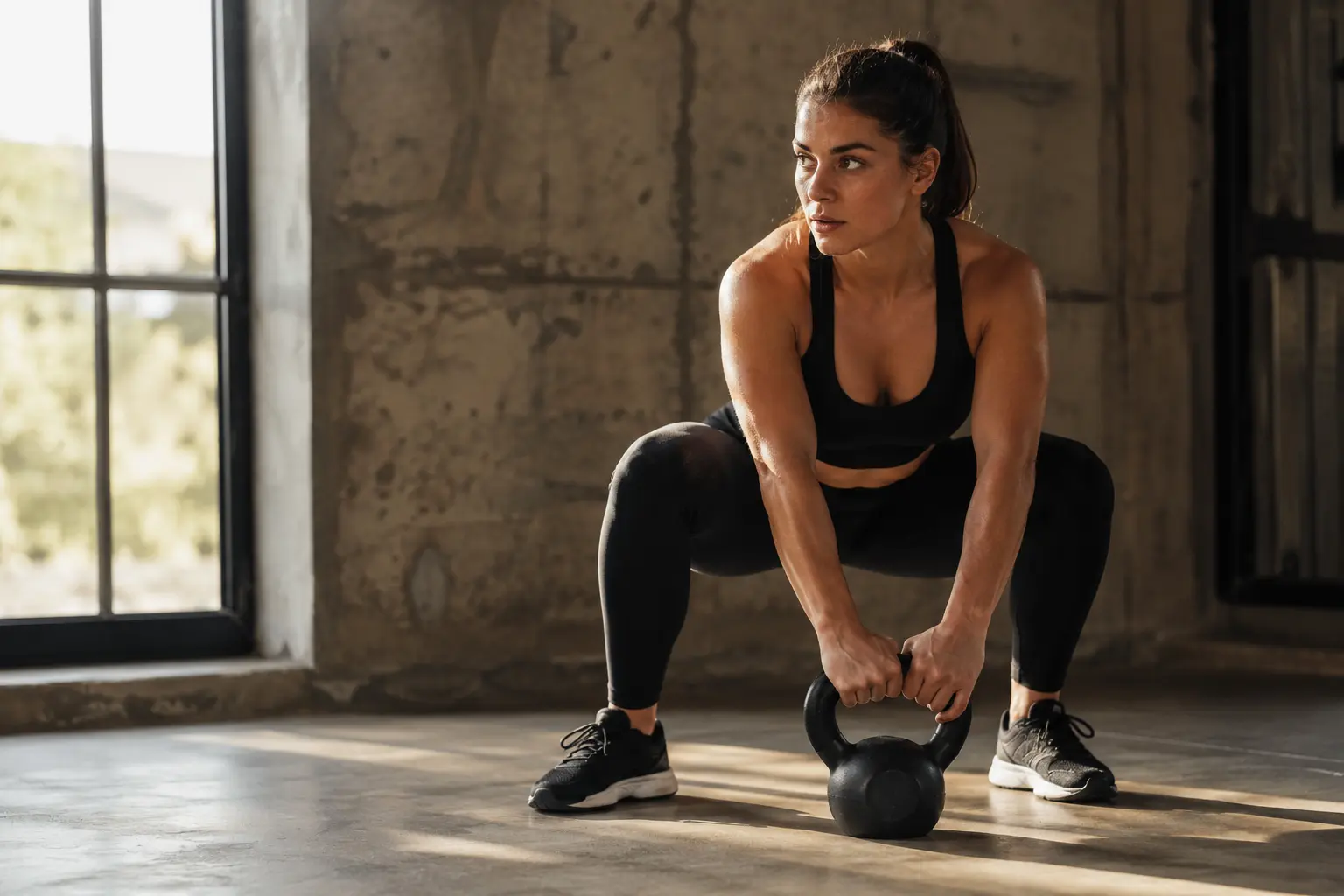
Struggling to climb stairs without thinking about it, or noticing your balance isn’t what it used to be? Functional strength training is the game-changer that rewires how your body moves through everyday life.
Understanding functional strength training
Functional strength training represents a departure from the traditional gym approach of isolating individual muscles. Instead, it centers on exercises that replicate the movements you perform daily: bending to pick up groceries, reaching for items on high shelves, or stabilizing yourself while walking on uneven surfaces. The science behind this approach is straightforward. Your body evolved to work as an integrated system, with multiple muscle groups coordinating simultaneously. When you train functionally, you’re teaching your muscles, joints, and nervous system to work together as they naturally do. For example, a squat engages your quadriceps, hamstrings, glutes, core, and even your stabilizer muscles in the ankles and hips all at once. This multi-joint, multi-muscle engagement creates what exercise physiologists call neuromuscular adaptation, where your nervous system becomes more efficient at coordinating complex movements. Research shows that this type of training improves proprioception, which is your body’s ability to sense where it is in space and how it’s moving.
Benefits of functional strength training
The benefits extend far beyond the gym floor and into your actual life. When you strengthen the muscles and joints used in daily activities, you’re building a protective buffer against injury. Consider a woman who regularly performs functional exercises like lunges and lateral movements. Over time, her ankles, knees, and hips become more resilient and stable, reducing her risk of sprains or falls. Enhanced core strength is another significant benefit. Your core isn’t just your abdominal muscles; it’s a complex system of muscles surrounding your spine that provides stability for nearly every movement. Functional training naturally strengthens this system because most compound movements require core engagement. Improved flexibility and posture follow naturally as well. When muscles work together efficiently, they’re less likely to develop the imbalances that create poor posture. Women often experience postural issues from desk work or carrying bags on one shoulder; functional training helps correct these patterns by promoting balanced strength development across the body.
How to get started with functional strength training
Beginning a functional strength training journey doesn’t require expensive equipment or gym membership. The most important first step is consulting with a fitness professional who can assess your current movement patterns and identify any limitations or asymmetries. This might reveal that your left hip is tighter than your right, or that you have weak glute muscles compensating with your lower back. Understanding your baseline is crucial because it prevents you from reinforcing bad movement patterns. Next, start with bodyweight exercises to establish a strong foundation. Movements like squats, lunges, push-ups, and planks teach your body proper movement mechanics without the added complexity of managing external weight. Spend at least two to four weeks mastering these basics, focusing on quality over quantity. Once you’ve developed solid form and can perform these movements with control, gradually introduce resistance through dumbbells, resistance bands, or kettlebells. This progression ensures your joints and connective tissues adapt safely to increasing demands. A practical example: begin with bodyweight squats, progress to goblet squats holding a dumbbell, then advance to barbell squats once your form is impeccable.
- Consult with a fitness professional to assess your movement patterns and identify any limitations before starting.
- Begin with bodyweight exercises like squats, lunges, and planks to master proper form and build foundational strength.
- Progress gradually to resistance equipment such as dumbbells, kettlebells, or bands once you demonstrate consistent control and technique.
🔬 Science-backed benefits in 2 minuteschoose where to begin:
Functional vs. traditional strength training
The distinction between these approaches matters because it affects how your training translates to real-world performance. Traditional strength training typically isolates specific muscles through machines or single-joint exercises. A leg extension machine, for instance, primarily targets the quadriceps while your hamstrings and glutes remain relatively inactive. This approach has merit for rehabilitation or addressing specific muscle weaknesses, but it doesn’t train your body the way it actually functions. Functional strength training emphasizes whole-body movements that require coordination and balance. A deadlift, for example, engages your legs, back, core, grip strength, and postural muscles simultaneously. Research comparing these approaches shows that functional training produces superior improvements in balance, coordination, and the ability to perform complex movements. Women who engage in functional training report greater confidence in their physical abilities and fewer movement-related injuries. The key difference is transfer: functional training skills transfer directly to daily life, while traditional isolation exercises may not translate as effectively to real-world movement demands.
Monitoring progress in functional strength training
Progress in functional strength training isn’t always measured by how much weight you lift. Instead, pay attention to meaningful changes in your daily life. Can you carry groceries upstairs without feeling winded? Can you get up from a low chair without using your hands? These real-world improvements are the true markers of progress. Joint stability is another important indicator. If your knees or ankles feel more secure during activities like hiking or walking on uneven surfaces, your stabilizer muscles are strengthening. Muscle endurance improvements are equally significant. Perhaps you used to feel fatigue after standing for extended periods, but now you can stand comfortably for hours. You might also notice improved posture throughout the day without conscious effort, suggesting that your muscles have adapted to support your spine more efficiently. Keeping a simple log of these observations helps you recognize progress that might otherwise go unnoticed. Some women also track performance metrics like how many push-ups they can do with proper form or how long they can hold a plank, which provides objective data alongside subjective improvements.
Incorporating functional strength training in your routine
Consistency matters more than intensity when building functional strength. Aiming for two to three sessions per week allows your body adequate recovery time while maintaining regular stimulus for adaptation. Each session doesn’t need to be lengthy; thirty to forty-five minutes of focused functional training is sufficient for most women. The key is pairing functional strength training with cardiovascular exercise for a well-rounded fitness regimen. While functional training builds strength and stability, cardiovascular exercise supports heart health and endurance. A practical weekly structure might look like: Monday and Thursday dedicated to functional strength training, Tuesday and Saturday for moderate cardio like brisk walking or cycling, and Wednesday and Sunday for active recovery or gentle stretching. This approach prevents overuse injuries while addressing multiple aspects of physical fitness. Real-world example: a woman might perform functional training on Monday focusing on lower body movements, then on Thursday emphasize upper body and core work. This variation prevents adaptation plateaus and ensures balanced development across all movement patterns.
Functional strength training focuses on enhancing overall physical function through exercises that mimic daily movements. It improves stability, balance, and coordination while preventing injuries and boosting core strength.
What equipment is needed for functional strength training?
Functional strength training can be done using bodyweight exercises, resistance bands, kettlebells, dumbbells, or stability balls.
Is functional strength training suitable for beginners?
Yes, functional strength training is suitable for beginners as it can be adapted to different fitness levels and abilities.
Others also read:
Disclaimer: This article is for informational purposes only and is not a substitute for professional medical advice. Always consult a healthcare professional for personal guidance.
This article has been prepared and reviewed by the GlobalHealthBeacon editorial team and is based on current medical research and published scientific literature available in 2026. It provides structured, evidence-based information to support informed health decisions.
