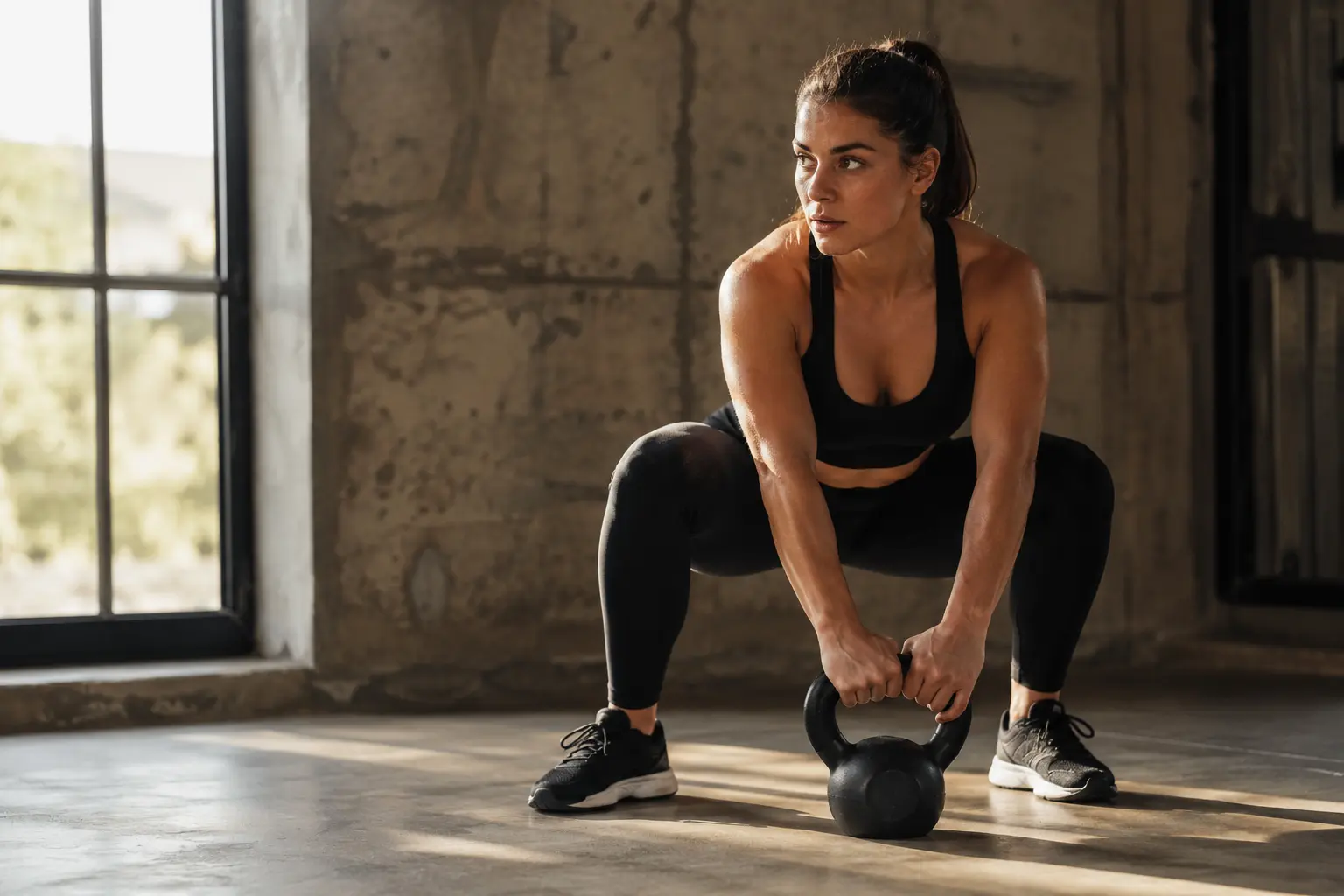
You’re stuck in a fitness routine that feels disconnected from real life, going through the motions at the gym without actually feeling stronger where it counts, and functional strength training is the reset your body has been waiting for.
Setting the foundation: what is functional strength training?
Functional strength training focuses on enhancing your body’s ability to perform real-life activities more efficiently, and it’s fundamentally different from traditional gym work. Instead of isolating single muscles with machines, functional training incorporates movements that mimic everyday tasks like lifting groceries, climbing stairs, or picking something up off the ground. Picture yourself moving through your day: bending down to tie your shoes, reaching overhead to grab something from a shelf, or stabilizing yourself while standing on one leg. These exact movement patterns form the foundation of functional training. It improves your overall physical functionality while reducing injury risk because your muscles learn to work together as they do in real life. Young adults especially benefit because building these patterns now prevents chronic pain and movement dysfunction later. Your core stabilizes, your balance improves, and your muscles develop real-world strength that translates to how you actually move.
- Enhances daily movement patterns
- Improves core stability and balance
- Boosts muscle strength and endurance
Key benefits of functional strength training
Functional strength training builds muscle while simultaneously increasing your overall fitness levels in ways that traditional strength work often misses. When you engage multiple muscle groups simultaneously, your body learns coordination and agility that creates a genuinely balanced physique. Consider a kettlebell swing: your legs drive the movement, your core stabilizes, your shoulders engage, and your grip strengthens all at once. This integrated approach means you’re training efficiency, not just size. For young adults, this translates to better posture, fewer aches, and improved athletic performance whether you play sports or simply want to move without pain. Your metabolism gets a boost because compound movements demand more energy. You’ll also notice improved functional capacity: stairs feel easier, carrying heavy items becomes manageable, and your body feels more resilient. The psychological benefit matters too. You’re building strength that directly impacts your daily life, creating a tangible connection between your workouts and how you actually feel moving through the world.
📘 Fix your day in under 2 minuteschoose where to begin:
Effective functional training exercises
The best functional exercises are deceptively simple because they mirror movements your body already knows. Squats teach your legs and core to work together while you lower and lift your body weight, exactly like sitting down and standing up. Lunges challenge your balance and leg strength in a single-leg pattern, mimicking how you walk and climb. Planks build core endurance by forcing your entire body to stabilize against gravity, strengthening the foundation that supports every movement you make. Kettlebell swings combine explosive power with hip drive, teaching your posterior chain to generate force efficiently. Push-ups engage your chest, shoulders, and core while teaching your body to move as one unit. Rows strengthen your back and improve posture, counteracting the forward slouch from desk work. Start with bodyweight versions of these movements to master the pattern, then add resistance as you grow stronger. The key is quality over quantity: one perfect squat teaches your body more than ten sloppy ones. Focus on controlled movement, full range of motion, and proper form before adding weight or complexity.
Progressive overload and variation
Progressive overload means gradually increasing the challenge your body faces, and it’s the engine that drives strength gains. You can’t do the same workout forever and expect results; your body adapts and plateaus. Start by mastering movement patterns with no weight, then add light resistance, then increase reps or sets, then add complexity or instability. For example, begin with standard squats, progress to goblet squats with a kettlebell, then advance to single-leg pistol squats. This progression keeps your nervous system engaged and forces continuous adaptation. Variation prevents boredom and trains your body to handle different movement demands. If you squat every session, your body becomes efficient at that exact pattern but potentially weak in other ranges. Rotate between different exercises targeting the same muscle groups: alternate between lunges and step-ups, between push-ups and dips, between rows and pull-ups. Change rep ranges too, sometimes doing heavy weight for low reps, other times lighter weight for higher reps. This variation keeps workouts fresh, prevents overuse injuries, and builds comprehensive strength that actually serves you in unpredictable real-world situations.
Rest and recovery importance
Rest isn’t laziness; it’s when your body actually builds the strength you’re training for. During workouts, you create microscopic damage in muscle fibers. During recovery, your body repairs that damage and builds back stronger. Without adequate rest, you stay in a damaged state, which leads to fatigue, decreased performance, and increased injury risk. Young adults often underestimate recovery because they feel invincible, but this is when building good habits matters most. Aim for 48 hours between intense sessions targeting the same muscle groups, which is why a three-day-per-week functional training schedule works well. On rest days, light activity like walking or gentle stretching promotes blood flow without adding stress. Sleep is non-negotiable: aim for seven to nine hours because that’s when growth hormone peaks and muscle repair accelerates. Nutrition matters too; your muscles need protein and carbohydrates to rebuild. Consider a simple recovery routine: foam rolling for five minutes, basic stretching, and staying hydrated. Listen to your body. If you feel constantly fatigued or sore, you’re not recovering enough. Pushing through genuine fatigue leads to injury and burnout, while respecting recovery builds sustainable strength that lasts.
Functional strength training emphasizes natural movements to enhance everyday performance, core stability, and muscle strength. Incorporate key exercises, focus on progressive overload, and prioritize rest for optimal results.
How many times a week should I do functional strength training?
Aim for 2-3 sessions per week, allowing for adequate rest days in between to promote muscle recovery and prevent overtraining.
Can functional strength training help with weight loss?
While functional strength training primarily focuses on enhancing physical functionality and muscle strength, it can indirectly support weight loss by increasing metabolism and promoting overall fitness.
Others also read:
Disclaimer: This article is for informational purposes only and is not a substitute for professional medical advice. Always consult a healthcare professional for personal guidance.
This guide has been prepared and reviewed by the GlobalHealthBeacon editorial team and reflects current medical research as of 2026. It provides structured, evidence-based information to support informed health decisions.
