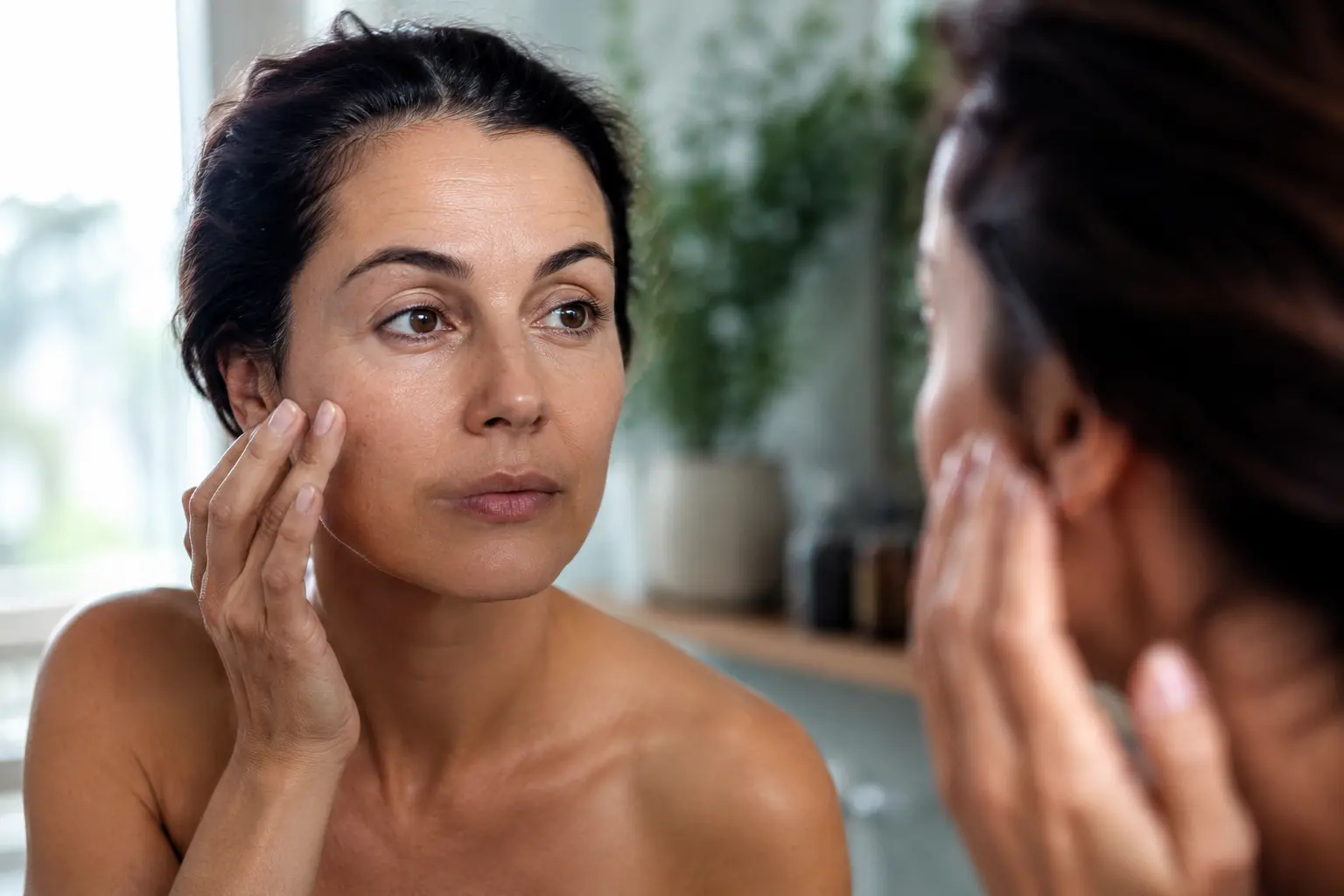
You’re staring in the mirror and wondering why your skin doesn’t look like it used to, even though you’re doing everything right, so let’s break down skin longevity explained and finally understand what’s actually happening beneath the surface.
The science of skin aging
Skin aging isn’t just one thing happening all at once. It’s actually two separate processes working simultaneously, and understanding the difference changes how you approach skincare. Intrinsic aging is the stuff you can’t control, the biological clock ticking away based on your genetics and how your body naturally ages over decades. Think of it like the predetermined programming in your cells. Extrinsic aging, on the other hand, is where your daily choices matter enormously. Every time you step outside without sunscreen, every time you skip sleep, every cigarette smoked, every moment of unmanaged stress, your skin registers it. UV radiation penetrates deep into the dermis, pollution particles settle into your pores, and environmental toxins trigger inflammatory responses. A woman in her forties might look dramatically different from another woman the same age simply because one protected her skin from the sun while the other didn’t. The science shows that while you can’t rewind your genetic clock, you absolutely can slow down the environmental damage that accelerates visible aging.
Cellular damage and repair
Picture your skin cells as tiny factories working 24/7 to keep everything functioning. Over time, these factories get damaged by free radicals from UV exposure, pollution, and oxidative stress. When damage accumulates faster than your body can repair it, that’s when you start seeing the visible signs. Collagen and elastin are the structural proteins that keep your skin plump and firm, but they break down when exposed to repeated stress. A woman who spent her twenties at the beach without protection might notice significant sagging by her fifties because those collagen fibers were damaged decades ago and never fully repaired. The process is gradual, which is why many women don’t notice changes until suddenly they do. Free radicals are essentially unstable molecules that steal electrons from healthy cells, creating a domino effect of damage. Your body does produce antioxidants naturally to fight this, but as you age, that production slows down. This is why the damage accumulates faster in your forties and fifties than it did in your twenties, even if you’re doing the same things.
Key strategies for skin longevity
There’s no single magic solution, but there are evidence-based strategies that work together to slow aging. Sun protection is non-negotiable because UV damage is cumulative and irreversible. A woman who starts using daily sunscreen at forty still benefits, but the woman who started at twenty will have noticeably better skin. Nutrition matters because your skin cells need raw materials to repair themselves. When you eat antioxidant-rich foods, you’re literally providing your body with the tools it needs to fight free radical damage from the inside. Skincare ingredients like retinoids work by increasing cell turnover, peptides signal your skin to produce more collagen, and hyaluronic acid holds moisture in the skin, plumping fine lines temporarily while deeper repair happens. The combination approach works better than any single product because you’re addressing aging from multiple angles. Many women make the mistake of expecting results in weeks when skin regeneration takes months. Your skin cells turn over roughly every 28 days, but collagen rebuilding takes much longer, so consistency matters more than perfection.
- Apply a broad-spectrum sunscreen with an SPF of at least 30 every single day, even on cloudy days and during winter, because UV rays penetrate clouds and reflect off snow and water.
- Include fruits, vegetables, nuts, and fatty fish in your diet for antioxidant support, aiming for colorful produce like berries, leafy greens, and orange vegetables that contain protective compounds.
- Incorporate retinol-based products in your nighttime skincare routine for skin renewal, starting with lower concentrations if you have sensitive skin and gradually increasing as your skin adapts.
🔬 Science-backed benefits in 2 minuteschoose where to begin:
The role of lifestyle choices
Your skin is a mirror of your overall health, and this is where many women realize their skincare routine can only do so much. Smoking accelerates aging by restricting blood flow to your skin and depleting antioxidants, which is why smokers often look years older than non-smokers. Poor diet means your skin cells lack the nutrients they need to repair and regenerate. A woman eating processed foods and sugar will see more inflammation and faster collagen breakdown than a woman eating whole foods, even if they use identical skincare products. Sleep deprivation triggers cortisol release, which breaks down collagen and increases inflammation. Chronic stress does the same thing, which is why high-stress periods often coincide with skin flare-ups and accelerated aging. These lifestyle factors work synergistically, meaning poor sleep plus stress plus a bad diet creates exponentially more damage than any single factor alone. The good news is that improving even one area often creates a ripple effect. A woman who starts sleeping eight hours and reduces stress might see skin improvements within weeks, even before any topical products have time to work.
Professional treatments for skin rejuvenation
When skincare products reach their limits, professional treatments offer more dramatic results by directly stimulating collagen production and removing damaged skin layers. Laser therapy works by creating controlled micro-injuries that trigger your body’s healing response, prompting collagen remodeling. Chemical peels dissolve the bonds between dead skin cells, revealing fresher skin underneath and stimulating cell turnover. Microneedling creates tiny punctures that activate your skin’s repair mechanisms, and the process is less aggressive than it sounds because the micro-injuries are so small. A woman in her fifties might combine laser treatments with a good skincare routine and see improvements that seemed impossible with products alone. The key is finding a qualified dermatologist who understands your specific skin concerns and can recommend treatments matched to your goals and skin type. Results vary significantly based on your skin’s condition, age, and how well you maintain results with proper skincare and sun protection afterward. Professional treatments aren’t one-time fixes but rather investments in your skin’s long-term health when combined with consistent home care.
Maintaining skin health over time
Skin longevity isn’t about achieving perfection at one moment in time, it’s about building sustainable habits that compound over years and decades. Your skin changes constantly, so what worked perfectly at thirty might need adjustment at forty or fifty. Regular assessment means actually looking at your skin honestly, noticing what’s working and what isn’t, and being willing to evolve your routine. A woman might discover that her skin becomes drier as she ages and needs richer moisturizers, or that she develops sensitivity to ingredients she previously tolerated. Staying informed about skincare science helps you distinguish between marketing hype and genuine innovation. The most effective approach combines proven basics like sun protection and good nutrition with targeted treatments for your specific concerns. Dermatological research continues advancing, and new ingredients and technologies emerge regularly, but the fundamentals remain constant. By treating skincare as an ongoing practice rather than a destination, women can maintain skin vitality and resilience throughout their lives, adapting as their skin evolves.
Understanding the scientific principles behind skin aging and longevity empowers women to take proactive steps in preserving and enhancing their skin health. By implementing evidence-based strategies and prioritizing skin wellness, women can support their skin’s vitality and resilience over time.
Can genetics influence skin longevity?
Genetics play a significant role in determining an individual’s predisposition to skin aging. However, lifestyle factors and skincare habits can also modulate these genetic influences.
Are natural remedies effective for promoting skin longevity?
While some natural remedies may offer skin benefits, the most effective approach to promoting skin longevity involves a combination of scientifically proven skincare practices, healthy lifestyle choices, and targeted treatments.
Others also read:
Disclaimer: This article is for informational purposes only and is not a substitute for professional medical advice. Always consult a healthcare professional for personal guidance.
This article has been prepared and reviewed by the GlobalHealthBeacon editorial team and is based on current medical research and published scientific literature available in 2026. It provides structured, evidence-based information to support informed health decisions.
