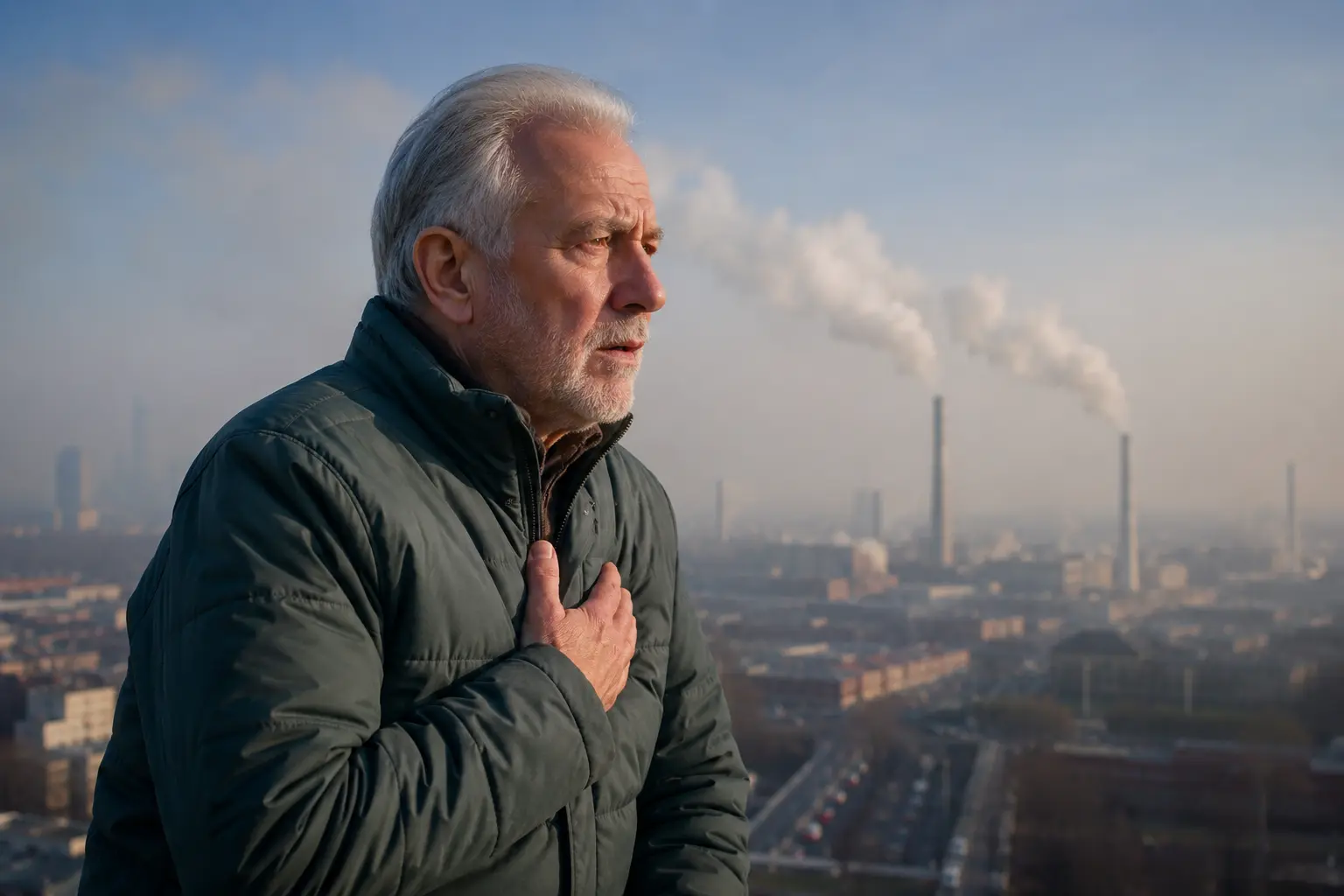
You’re out with friends when suddenly your chest tightens, your breathing becomes shallow, and panic sets in because you know the air quality is terrible today and your COPD and air quality connection means another flare-up is hitting hard.
Understanding COPD flare-ups
COPD, or Chronic Obstructive Pulmonary Disease, is a condition that makes breathing feel like you’re constantly fighting against your own lungs. When air quality drops, pollutants like ozone, nitrogen dioxide, and particulate matter slip into your airways and trigger inflammation. Imagine your lungs as tiny airways that are already narrowed, and then toxic particles come along and irritate them further. That’s when a flare-up hits. You might notice it starts subtle: a slight cough that won’t quit, then wheezing that makes you self-conscious in class or at work. Some days your shortness of breath feels manageable, but on high pollution days, even climbing stairs feels like running a marathon. Understanding this connection between poor air quality and your COPD symptoms is the first step toward taking control of your health.
- Avoid exercising outdoors in areas with high pollution levels.
- Use air purifiers at home to reduce exposure to harmful particles.
- Check daily air quality reports and plan activities accordingly.
Managing COPD symptoms
Managing COPD flare-ups requires a mix of preparation and quick thinking. Your rescue inhaler becomes your best friend, so keep it in your backpack, locker, or car at all times. But beyond medication, learning to recognize your body’s signals matters just as much. When you feel that tightness creeping in, practice slow, deep breathing to calm your nervous system and help your airways relax. Some young adults find that sitting upright, pursing their lips while breathing out, or using a technique called box breathing (inhale for four counts, hold for four, exhale for four) actually helps during episodes. Don’t wait for symptoms to worsen before reaching out to your doctor. If you notice your rescue inhaler isn’t working as well as it used to, or if you’re using it more than twice a week, that’s a signal to get medical advice. Early intervention can prevent a minor flare-up from becoming a serious crisis.
💬 Ready to feel better in 2 minutes?choose where to begin:
Every breath matters
Living with COPD means becoming hyperaware of the air around you, and honestly, that can feel exhausting sometimes. You start checking air quality apps before making plans, canceling outdoor activities when the AQI spikes, and wearing masks in polluted environments even when friends question why. It might feel isolating at first, but these small protective steps genuinely reduce your flare-up frequency. On days when air quality is poor, staying indoors with windows closed and an air purifier running can be the difference between a normal day and one spent struggling to breathe. Some young adults have found that using HEPA filters in their cars and homes, or even investing in a portable air purifier for their dorm room, makes a real difference. The key is remembering that protecting yourself isn’t weakness, it’s wisdom. Your lungs are counting on you to make choices that keep you breathing easier.
Embracing support and education
One of the biggest shifts happens when you stop feeling alone in this. Joining COPD support groups, whether online or in person, connects you with other young adults who genuinely understand what you’re going through. They’ve dealt with the same frustrations: missing outdoor events, managing medication side effects, or explaining to new friends why you need to skip the hiking trip. Education is equally powerful. Learning how your lungs work, what triggers your specific flare-ups, and how different seasons affect your symptoms gives you real agency over your health. Some young adults keep a symptom journal to track patterns, noting which days had worse air quality or which activities caused problems. This data becomes gold when you talk to your doctor because you’re not just describing how you feel, you’re showing concrete evidence of your patterns. Remember, managing COPD is a journey, not a destination, and seeking support and knowledge is how you take back control.
COPD flare-ups from air pollution can be distressing, but understanding triggers, managing symptoms, and seeking support can help young adults navigate their COPD journey effectively.
Can air pollution worsen COPD symptoms?
Yes, air pollution can aggravate COPD symptoms and trigger flare-ups, leading to increased breathlessness and discomfort.
How can young adults protect themselves from air pollution?
Young adults with COPD can protect themselves by monitoring air quality, using air purifiers, avoiding outdoor activities in polluted areas, and seeking medical advice promptly.
Others also read:
Disclaimer: This article is for informational purposes only and is not a substitute for professional medical advice. Always consult a healthcare professional for personal guidance.
This article presents an experience-based perspective and has been reviewed by the GlobalHealthBeacon editorial team in 2026. It provides structured, evidence-based information to support informed health decisions.
