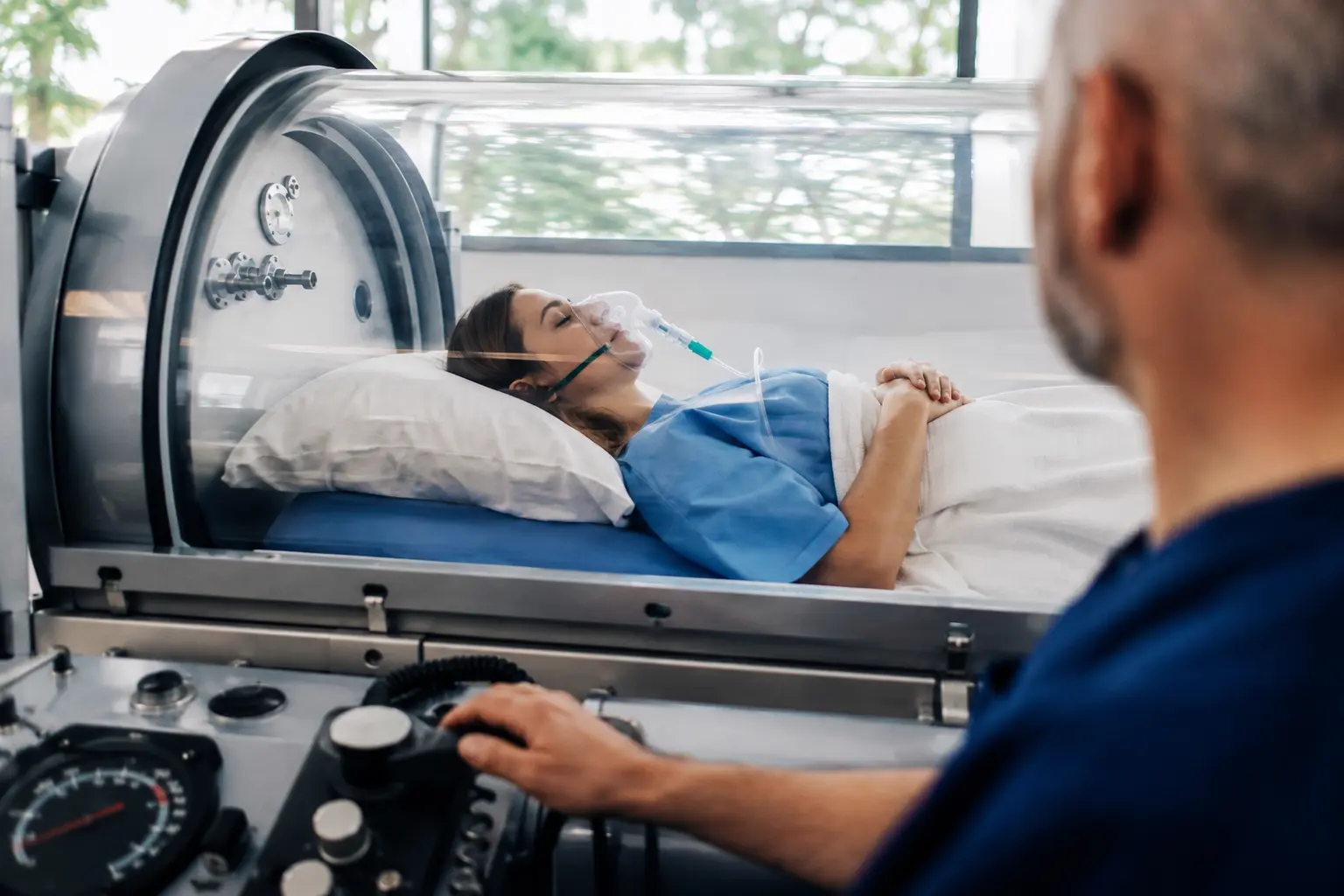
You’re exhausted from slow healing, frustrated with treatments that barely move the needle, and desperate to find something that actually works – hyperbaric oxygen therapy explained is the breakthrough you need to understand right now.
Understanding hyperbaric oxygen therapy
Hyperbaric oxygen therapy works by placing you inside a pressurized chamber where you breathe pure oxygen at levels much higher than normal atmospheric pressure. Think of it like this: your body normally gets oxygen through regular air, but this therapy forces oxygen molecules deeper into your bloodstream and tissues at a cellular level. The pressurized environment creates a gradient that allows oxygen to dissolve directly into your plasma, reaching areas that standard circulation might miss. For a young adult dealing with chronic wounds, sports injuries, or recovery from surgery, this means your body gets the raw materials it needs to rebuild faster. The process takes about 90 to 120 minutes per session, and you’ll typically need multiple sessions spread over weeks. Many facilities let you relax, listen to music, or even work during treatment since you’re simply breathing in a controlled space.
- Enhances oxygen supply to tissues at the cellular level
- Supports wound healing and tissue regeneration
- May reduce inflammation and swelling
Deciding if it’s right for you
Before committing to hyperbaric oxygen therapy, you need a real conversation with a healthcare provider who understands your specific situation. They’ll review your medical history, current medications, and what you’re actually trying to treat. Some conditions respond exceptionally well to this therapy – diabetic foot ulcers, non-healing wounds, radiation injuries, and certain infections show strong evidence. Others might benefit but require a longer commitment. A common mistake young adults make is assuming hyperbaric oxygen therapy is a standalone cure. It’s not. It works best alongside other treatments like wound care, physical therapy, or medication. Your provider will assess whether your body can handle the pressure changes, check for contraindications, and create realistic expectations about timeline and results. Be honest about your health status and what outcomes matter to you.
📘 Fix your day in under 2 minuteschoose where to begin:
Preparing for your sessions
Preparation starts before you walk into the facility. Your healthcare team will give you specific instructions, but here’s what typically matters: avoid heavy meals two hours before treatment, wear loose cotton clothing, and skip any products with petroleum or oils on your skin since they’re fire hazards in the oxygen-rich environment. Some medications can interfere with therapy, so disclose everything you’re taking. Mentally prepare yourself too. The chamber pressurizes gradually, and you might feel ear pressure similar to flying or diving. Learning equalization techniques like the Valsalva maneuver beforehand helps. Bring a list of questions and concerns. Ask about the facility’s safety record, staff training, and emergency protocols. A reputable center will welcome these questions. Some facilities let you do a practice run or tour before your first real session, which reduces anxiety significantly.
During your treatment
Once inside the chamber, the pressurization happens slowly over about 10 to 15 minutes. You’ll feel pressure in your ears and sinuses, similar to altitude changes. Breathe normally and use equalization techniques if needed. The air inside stays comfortable, and you can communicate with staff through an intercom system. Many people use this time productively: catch up on podcasts, read, work on a laptop, or simply rest. The actual oxygen breathing happens through a mask or hood, and you’ll switch between breathing pure oxygen and air throughout the session to prevent oxygen toxicity. It’s painless, though some people report mild tingling or temporary vision changes, which are normal and temporary. The depressurization at the end takes another 10 to 15 minutes. You might feel slightly tired afterward, so plan light activities for the rest of your day.
Aftercare and follow-up
Your treatment doesn’t end when you leave the chamber. Aftercare is where lasting results happen. Your healthcare provider will schedule follow-up appointments to assess your progress, check wound healing, and adjust your treatment plan if needed. Keep detailed notes about how you’re feeling, any changes in pain levels, or improvements in mobility. Some young adults see results within a few weeks, while others need the full course of 30 to 40 sessions. Don’t expect overnight transformation. Healing is gradual. Continue any complementary treatments like physical therapy or wound care as directed. Stay hydrated, eat well, and avoid smoking, which directly undermines oxygen therapy benefits. If you experience unusual symptoms like persistent fatigue, vision problems, or ear discomfort, report them immediately. Many facilities offer post-treatment support groups where you can connect with others going through the same process, which helps with motivation and realistic expectations.
Hyperbaric oxygen therapy involves breathing pure oxygen in a pressurized chamber to enhance oxygen delivery to tissues, support healing, and reduce inflammation. Consult with a healthcare provider to determine if it’s suitable for your specific condition, prepare for sessions by following facility instructions and learning equalization techniques, relax during treatment while your body absorbs oxygen at the cellular level, and maintain aftercare through follow-up appointments and complementary treatments for lasting benefits.
Is hyperbaric oxygen therapy safe?
Hyperbaric oxygen therapy is considered safe when administered by trained professionals in reputable healthcare facilities. However, like any medical treatment, it may have potential risks and side effects, which your healthcare provider can discuss with you. Common temporary effects include ear pressure, mild fatigue, or temporary vision changes. Serious complications are rare when proper protocols are followed.
How many sessions of hyperbaric oxygen therapy are typically needed?
The number of hyperbaric oxygen therapy sessions required can vary depending on the condition being treated. Your healthcare provider will create a personalized treatment plan that outlines the recommended frequency and duration of sessions based on your specific needs. Most treatment courses range from 20 to 40 sessions, typically scheduled five days a week over several weeks.
Others also read:
Disclaimer: This article is for informational purposes only and is not a substitute for professional medical advice. Always consult a healthcare professional for personal guidance.
This guide has been prepared and reviewed by the GlobalHealthBeacon editorial team and reflects current medical research as of 2026. It provides structured, evidence-based information to support informed health decisions.
