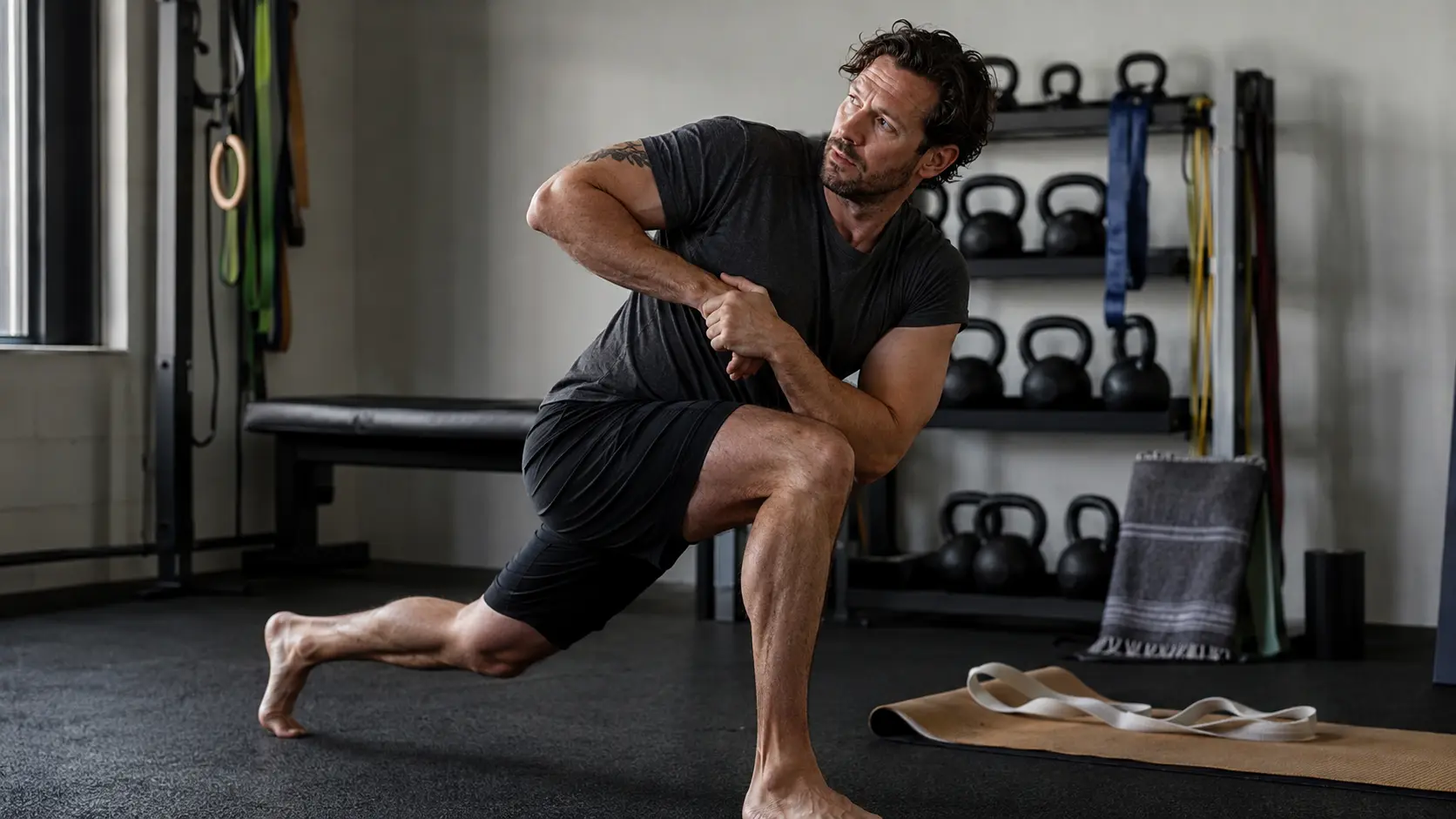
Your shoulders feel locked, your hips won’t cooperate, and you’re not sure if you need to stretch more or move differently, because mobility versus flexibility sounds like the same thing but apparently it’s not, and that confusion is exactly what’s holding you back.
Understanding mobility and flexibility
Most people use mobility and flexibility interchangeably, but they describe two distinct physical capacities. Flexibility refers to the passive range of motion available in a joint, essentially how far your muscles can lengthen when relaxed or gently stretched. Think of it as the raw length your hamstrings can achieve when you bend forward. Mobility, by contrast, is the active range of motion your body can control and use during movement. It combines flexibility with strength, neuromuscular control, and stability. Imagine reaching overhead while holding a weight, or squatting deeply while maintaining perfect form. That requires not just flexibility but the coordinated ability to move through space with control. A young adult might have flexible hamstrings but poor hip mobility if they lack the strength or motor control to use that flexibility functionally. Understanding this distinction matters because training for one doesn’t automatically improve the other, and your body needs both working together for optimal movement patterns.
The importance of mobility
Mobility acts as the foundation for how your body actually performs in real life. When you have good mobility, everyday activities feel effortless. Picking something up from the floor, reaching for a top shelf, or playing sports all require your joints to move through their ranges with control and stability. Poor mobility often leads to compensation patterns where your body recruits the wrong muscles to accomplish a task, creating imbalances and increasing injury risk. For young adults, mobility becomes especially important because this is when movement habits solidify. Someone who sits at a desk eight hours daily might develop restricted hip mobility, which then affects their running form or lifting technique. This compensation pattern, if left unchecked, can lead to chronic issues like lower back pain or knee problems. Research shows that individuals with good mobility experience fewer injuries during athletic activities, recover faster from workouts, and maintain better posture throughout the day. Mobility also supports joint health by distributing forces evenly across joint surfaces rather than concentrating stress in one area, which can lead to premature wear and tear.
Key factors to improve mobility
Improving mobility requires a multifaceted approach that addresses flexibility, strength, and movement quality simultaneously. Start with dynamic stretching before workouts, which involves moving through ranges of motion actively rather than holding static stretches. For example, leg swings, arm circles, and bodyweight squats prepare your nervous system for movement while gently increasing range of motion. Strength training is equally critical because muscles need to be strong enough to control the ranges they can access. A young adult might have flexible shoulders but lack the rotator cuff strength to safely overhead press, limiting functional mobility. Incorporate compound movements like squats, deadlifts, and push variations that challenge stability through full ranges. Specific mobility drills targeting problem areas work well too. If your hips feel tight, 90-90 stretches or pigeon pose can address restrictions. Yoga and Pilates excel at building mobility because they combine movement, strength, and body awareness in flowing sequences. Post-workout recovery matters more than many realize. Foam rolling helps release muscle tension that restricts movement, while massage or stretching when muscles are warm allows deeper tissue changes. Consistency beats intensity here. Three focused 15-minute mobility sessions weekly outperform sporadic intense stretching.
- Engage in dynamic stretching before workouts.
- Include resistance training in your exercise routine.
- Practice yoga or Pilates for overall mobility.
- Ensure proper post-workout recovery with foam rolling or massage.
🔬 Science-backed benefits in 2 minuteschoose where to begin:
The role of flexibility in health
Flexibility provides the raw material that mobility builds upon. Without adequate flexibility, your joints simply cannot access their full ranges, no matter how strong you are. Tight muscles restrict movement and create postural deviations that accumulate over time. A young adult with chronically tight hip flexors from sitting develops anterior pelvic tilt, which shifts their posture and changes how their spine loads during movement. This seemingly small restriction cascades into neck tension, lower back pain, and altered movement patterns. Flexibility also reduces muscle strain risk. When muscles are supple and can lengthen appropriately, they absorb force better during unexpected movements or falls. Someone with flexible hamstrings is less likely to experience a hamstring strain during sprinting because the muscle can lengthen safely under load. Beyond injury prevention, flexibility contributes to daily quality of life. Bending to tie shoes, reaching behind your back, or turning to look over your shoulder all become easier with adequate flexibility. Flexibility also supports circulation and nutrient delivery to muscles. Chronically tight muscles have reduced blood flow, which impairs recovery and increases soreness. Regular flexibility work maintains muscle elasticity, supports joint lubrication, and preserves the movement quality that defines healthy aging.
Finding balance between mobility and flexibility
The most effective approach combines mobility and flexibility training in a single program rather than choosing one over the other. Picture a young adult who runs regularly. They need flexibility to lengthen their hamstrings and calves, but they also need mobility to control their hip and ankle ranges during the running stride. Neglecting either creates problems. A runner with tight calves but good hip mobility might develop knee pain because their ankle cannot dorsiflex adequately, forcing compensation at the knee. Conversely, a runner with flexible calves but weak hip stabilizers might experience hip pain because they lack the strength to control their leg position. The balanced approach looks like this: spend 10 minutes on dynamic mobility work before training, incorporate strength exercises through full ranges during your main workout, and finish with 5 to 10 minutes of static stretching and foam rolling. This sequence addresses all components. Dynamic work prepares your nervous system, strength training builds control through ranges, and static work maintains flexibility. Periodically assess your individual restrictions. If your shoulders feel locked, prioritize shoulder mobility drills. If your hips feel tight, add extra hip flexibility work. This personalized balance maximizes your movement potential and minimizes injury risk.
Conclusion on mobility versus flexibility
The debate between mobility and flexibility misses the point because they work together as complementary systems. Flexibility without mobility leaves you unable to use your ranges functionally. Mobility without flexibility limits how far your joints can move. Young adults who understand this distinction and train both aspects systematically experience better movement quality, fewer injuries, and greater physical confidence. The evidence is clear: neither beats the other. Instead, they amplify each other when trained together. Start by assessing your current movement patterns. Where do you feel restricted? Is it a flexibility issue, a strength issue, or a control issue? Most restrictions involve all three. Then build a simple routine that addresses flexibility through stretching, mobility through dynamic movement, and strength through resistance training. Consistency matters far more than intensity. Even 20 minutes daily of balanced mobility and flexibility work produces noticeable improvements within weeks. As you progress, you’ll notice daily activities feel easier, your posture improves, and your body feels more resilient. This is what optimal movement capacity feels like, and it’s absolutely achievable for young adults willing to invest time in understanding and training both aspects.
Key takeaway: Good mobility and flexibility are essential for physical health and performance in young adults. Balancing exercises to improve both aspects can enhance overall movement capabilities and reduce injury risks.
Is it better to focus on mobility or flexibility?
It’s important to work on both mobility and flexibility simultaneously to achieve optimal physical function and reduce the risk of injuries. A balanced approach can enhance overall movement capacities.
How often should I incorporate mobility and flexibility exercises?
To maintain good mobility and flexibility, aim to incorporate exercises targeting both aspects into your weekly routine. Regular practice can help improve joint health and overall physical performance.
Others also read:
Disclaimer: This article is for informational purposes only and is not a substitute for professional medical advice. Always consult a healthcare professional for personal guidance.
This article has been prepared and reviewed by the GlobalHealthBeacon editorial team and is based on current medical research and published scientific literature available in 2026. It provides structured, evidence-based information to support informed health decisions.
